
POPULAR AT FAMILY HAVEN
POPULAR AT FAMILY HAVEN
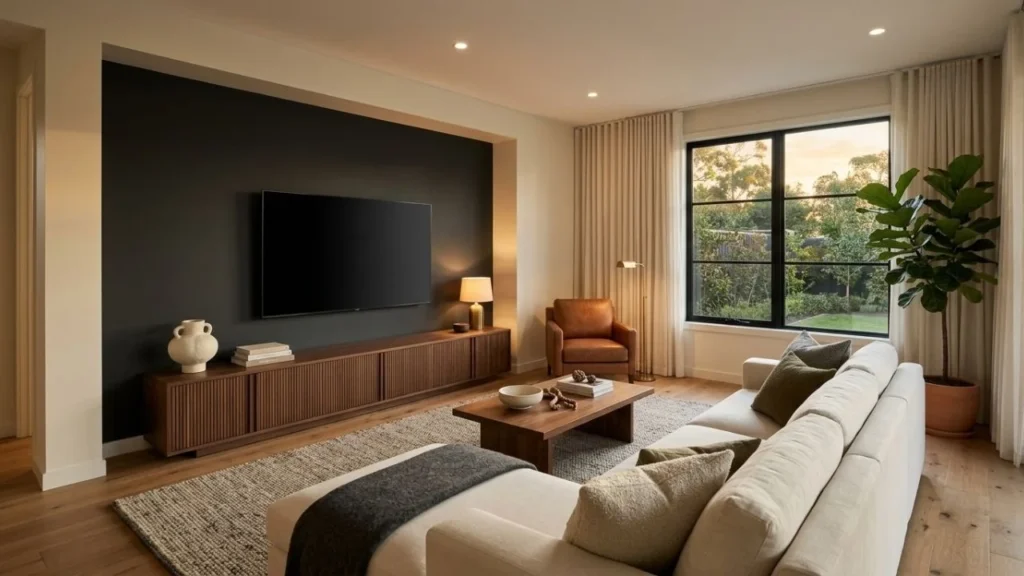
These TV wall ideas for living room spaces begin with viewing comfort, then use color, texture and useful furniture to connect the screen to the rest of the room.
A blank wall with a television bolted to the middle can look less like a design decision and more like the installer left before the room was finished.
The good news is that you do not need custom cabinetry, a slab of stone, and a renovation budget that makes you stare at your bank app in silence. Some of the best TV wall ideas for the living room use darker paint, a longer console, better cord control, or one material change behind the screen.
The first decision is not wood versus stone. It is where the screen should sit.
The suggests starting with seated eye level, while Sony TV mounting guidance also points to eye level, glare, viewing distance, and room position as things to think about before mounting.
That means the prettiest feature wall cannot rescue a screen that makes everyone watch with their chin pointed toward the ceiling.
Once the height and viewing angle feel right, the wall becomes much easier to style. These TV wall ideas for the living room start with inexpensive changes and move toward larger media-wall projects.
Sit where you normally watch television and look straight ahead. The middle of the screen should feel comfortable from that seated position rather than being placed high simply because there is empty wall above it.
Samsung gives about 42 inches from the floor to the center of the TV as a rough living-room reference for an average viewer on a standard sofa, but it also tells owners to adjust for the actual viewers and furniture. Treat that as a starting point, not a universal rule.
Sit in the room at the times you normally watch TV. A window directly opposite the screen or a bright lamp reflected across it can become more irritating than a slightly imperfect console.
Sony includes windows, lamps, viewing distance, corners, and wall conditions among the things to think about before mounting.
Think about the router, game console, streaming box, soundbar, HDMI cables, power, and anything you may add later.
Planning those pieces after the wall is finished is how a clean setup suddenly grows a black cord down the middle.
The mount has to suit both the television and the wall structure. Follow the television and mount instructions for compatible screen size, VESA pattern, wall type, hardware, and load.
If you are unsure what is inside the wall or how it is built, use a qualified installer instead of turning installation day into an unwanted lesson in drywall repair. LG also recommends professional help when the wall type or installation requirements are uncertain.
Dark paint is one of the easiest ways to reduce the contrast between a black screen and the wall behind it. Charcoal, black-brown, dark navy, or very dark olive can make the television feel less like a black rectangle pasted onto a pale wall.
Keep the nearby walls lighter if the room needs more brightness. Add a walnut console and one warm lamp so the setup still has shape after sunset.
A Wooster roller kit is a sensible shopping piece for this idea because the project mainly needs good paint prep and a clean wall finish. The kit includes a 9-inch frame, roller covers, and a tray.
Works best for: renters who can repaint, smaller budgets, and rooms where the television already sits at a comfortable height.
Do not line six tiny objects across the console afterward. The darker wall already did most of the visual work.
Vertical oak slats give a television wall warmth and height without surrounding the screen with lots of little decorations. They work especially well with cream, oatmeal, brown, olive, charcoal, and black furniture.
For a calmer room, run the slats across the full wall and keep the media console low and plain. Let the grain and vertical lines provide the detail instead of adding shelves to every empty patch.
The oak wood slat panels from Art3d come as four fluted panels at roughly 47.2 by 23.6 inches each. Measure the full wall and plan the seams before you order enough material for the project.
If the room already has a strong wood floor, compare the finishes in the same light first.
The woods do not need to match exactly. They just need to look as if they agreed to share a room.
A full slat wall can be too much for a small room or a living room that already has detailed furniture. Instead, make one vertical teak panel a little wider than the television and let the plain wall show on both sides.
That strip gives the screen a clear background without making the entire wall the main event. It also works nicely when the console is wider than the panel, since the different widths create a layered setup.
The teak slat wall panels from Art3d use the same vertical fluted format in a warmer teak finish. Mark the planned panel width with painter’s tape before attaching anything.
Stand across the room and look at that taped outline with the television in place.
Moving tape three inches is much nicer than moving a wall panel three inches.
Not every television needs a decorative wall treatment. Sometimes the setup looks unfinished because the furniture under the screen is simply too small.
A longer walnut console visually supports the television, hides devices, and gives the wall one strong horizontal line. Leave some open space across the top instead of filling it from end to end.
The LCRBOL walnut TV stand is about 54 inches wide with fluted cabinet doors, storage, and cable openings. Check the actual width of your television rather than relying only on the screen’s diagonal size.
If the screen hangs far beyond the furniture on both sides, the arrangement can look top-heavy.
Sometimes the wall does not need more art. It needs furniture with better scale.
Symmetry is not compulsory. If a television sits slightly off-center because of a doorway, window, radiator, or awkward wall, two shelves on one side can make that placement look deliberate.
Keep the shelves visually lighter than the screen. Use a few books, one plant, a small ceramic piece, or a framed photo and leave open space between them.
A black floating shelf set from AMADA HOMEFURNISHING gives you two 15-by-7-inch shelves for a compact arrangement.
Place them outside the television’s edge rather than directly above the screen.
The goal is to balance the wall, not make the TV look as if somebody parked it under a kitchen cupboard.
A gallery arrangement helps a black screen sit among other rectangles instead of standing alone. This suits traditional, eclectic, vintage, and family rooms where framed art already feels natural.
Start with the television as the largest rectangle. Add frames in two or three sizes, repeat one frame color, and leave a little more open wall immediately around the screen than between the smaller pictures.
The upsimples black frame set contains five frames that display 5-by-7 pictures with mats or 8-by-10 images without them. Mix in one or two larger pieces if the television is large.
Lay the arrangement on the floor first and take a quick phone photo before hanging it.
A gallery wall can feel personal.
A ring of tiny frames hugging a 75-inch screen can look like the television brought snacks for kindergarten.
If your television displays artwork when it is not in use, one slim picture light can help it relate to framed pieces nearby. It also adds a warm horizontal line above the screen.
Use the light for atmosphere rather than aiming a bright beam straight at the active television. Sit in your usual viewing spot and check for reflections before you settle on the angle.
The brass wireless picture light from LEEQVHOOLL is 16 inches wide, rechargeable, dimmable, and remote-controlled. That makes it useful when you want the look without opening the wall for new wiring.
Pair the brass with walnut, cream, olive, or warm white.
One good metal detail is plenty. You do not need to repeat it on every object within six feet.
Molding can make the television wall feel connected to the room’s architecture, especially in traditional, transitional, or newer homes that feel a little plain.
Keep the wall frames larger than the television. Tall panels on either side usually look calmer than lots of tiny boxes packed around the screen.
A Birdeco molding panel kit gives you precut, paintable wall frames so the proportions are easier to map than cutting every angle from loose trim. Paint the molding and wall the same shade for a quieter finish.
Draw the complete layout with painter’s tape before attaching the pieces.
Do not discover after the adhesive comes out that the right-hand panel has swallowed the light switch.
Stone texture gives a TV wall more visual weight, but the rest of the room needs to stay calmer around it. Choose a stone color that repeats something already present in the floor, sofa, rug, or nearby fireplace.
For an easier DIY version, use stone-look panels on one central section rather than covering every wall. Keep the console simple and skip a busy gallery arrangement over the same texture.
The faux stone wall panels in the linked YU LI 3DH set use self-adhesive PE foam in a rock-tone finish. They are decorative panels rather than real structural stone, so look closely at the material before using it across a large formal room.
This idea fits casual and contemporary rooms especially well.
The television already brings hard edges. The wall texture does not need to make the room look like a restaurant entrance.
A rental TV wall can still have a clear background. Peel-and-stick wallpaper works behind the console or across a single wall when paint changes are restricted.
Choose a low-contrast pattern if the television is used often. A large black screen plus a tiny high-contrast print can make the wall feel restless very quickly.
The cream peel stick wallpaper from NuWallpaper comes on a 20.5-inch by 18-foot roll and covers about 30.75 square feet. Its pale leaf pattern adds detail without turning the wall dark.
Test a removable product on a hidden area first and check the lease before covering a large wall.
“Removable” is a product description.
Your landlord’s opinion is a separate document.
If the television sits between shelves or storage towers, light the objects beside it rather than putting a bright strip around every edge of the screen. Warm shelf lighting can give the wall depth after sunset while leaving the television area visually quiet.
Use the shelves for books, pottery, framed photos, and a few larger objects. Leaving empty sections helps the room look more relaxed.
The rechargeable shelf light pair from STAR-SPANGLED includes two slim 8-inch lights that can work beneath shelves where permanent wiring is not available.
Keep cords, charging points, and switches accessible.
Shelf lighting should make the room nicer to use, not create a monthly scavenger hunt for the charging cable.
A soft glow behind the television can reduce the harsh black-screen-versus-wall contrast at night and make a simple wall feel more finished. This works especially well on plain painted walls where the light can spread evenly.
Keep the color restrained for everyday viewing. Warm white or a muted tone is usually easier to live with than turning movie night into a nightclub.
The Govee TV Backlight kit is designed for 55-to-65-inch televisions and uses a camera-based system to sync lighting with screen color. Check the size of your television before ordering.
Do not let the strip or loose cable show from the sofa.
The glow should be the thing you notice, not the sticky tape doing the job behind it.
A television and fireplace can share one wall, but this is the section where the finished photo comes second. Heat, ventilation, manufacturer spacing, viewing height, and the construction of the wall all matter.
Samsung currently says it does not recommend mounting its televisions over a fireplace because of heat and viewing-height concerns. A recent article also shows alternatives such as a separate media wall and built-ins beside the fireplace.
If your exact television and fireplace instructions allow the arrangement, keep the wall composition simple. A long low unit or built-ins can visually connect the two large rectangles.
The R.W.FLAME electric fireplace is a 50-inch recessed or wall-mounted model with 750/1500-watt heat settings. Follow its own installation directions for the fireplace and the television maker’s directions for the screen rather than copying spacing from somebody else’s room.
If safe placement pushes the television uncomfortably high, choose another layout.
Neck comfort is a perfectly good design reason.
A side wall often solves the fireplace problem more gracefully. Keep the fireplace as one focal point and place the TV on the adjacent wall where it can sit closer to seated eye level.
A full-motion mount can help when the screen needs to turn toward the sofa. Keep the console beneath it small or skip it if another cabinet already handles the equipment.
The Mounting Dream full-motion mount works with a range of televisions, but the exact screen size, VESA pattern, wall type, and weight still need to match the mount’s specifications.
This arrangement works especially well when the sofa can turn slightly between fireplace conversations and television viewing.
The room does not have to choose one focal point forever.
Sometimes the TV cannot sit exactly in the middle of a wall. Instead of fighting the architecture, use lighting to make the imbalance feel intentional.
Place a pair of sconces where they visually balance the television and nearby furniture. If the screen is slightly to one side, the lamps do not always need to be perfectly mirrored.
The brass plug-in wall sconces from OIYIO come as a pair with light fabric shades and plug-in cords. That gives renters and non-renovators a wall-light option without adding hardwired electrical work.
Hide or route the cords neatly so the lighting does not solve one wall problem by introducing two new dangling ones.
A wall-mounted television looks much cleaner when cables do not drop to the console. If the wall and local electrical rules allow an in-wall solution, use a purpose-made system rather than improvising power wiring.
The is an example of a purpose-made system that separates power and low-voltage cable routing. Follow the exact product directions and use a qualified professional if the wall, wiring, or local rules are unclear.
The ECHOGEAR in-wall cable kit gives you another route with AC power points and a separate path for low-voltage cables.
Plan HDMI and device locations before cutting anything.
A beautifully hidden cable is not helpful if the game console later needs a connection on the opposite side of the room.
On a dark painted wall, black fittings can disappear more easily than white ones. That makes a darker in-wall kit useful when the outlets or openings might be faintly visible around the television or console.
The black ECHOGEAR cord kit includes two AC outlets, two USB-A ports, and a separate low-voltage cable path. Check that the kit suits your wall and intended equipment before installation.
Keep service access in mind.
Future you may need to replace a streaming box, HDMI cable, or soundbar, and future you will not appreciate being trapped behind a beautiful wall panel.
If you rent, have a difficult wall, or simply do not want to cut drywall, a surface raceway is the easier answer. Route it vertically from the television toward the console, then paint it to match the wall when the product allows.
The Delamu paintable cable hider is a 157-inch cuttable raceway system that can be painted. Use only as directed for the types of cords the system is made to contain.
Keep the route straight and deliberate.
A visible cable cover that follows a clean line usually looks better than a bare cord doing a slow-motion snake dance down the wall.
A soundbar sitting on a very low console can leave an odd visual gap between the sound and the picture. Attaching it directly below the television can make the two components read as one setup.
This is particularly useful with a swivel or full-motion TV mount because the sound can turn with the screen.
The XINLEI soundbar TV mount can position a compatible soundbar above or below many televisions and supports soundbars up to the product’s stated limit. Check the television, VESA pattern, soundbar dimensions, and load before buying.
Leave any required ventilation and sensor areas unobstructed.
The goal is one tidy stack, not electronics packed together like carry-on luggage.
In a small living room, the best TV wall may not be the largest wall. A screen mounted near a corner can free the main wall for seating, windows, storage, or art.
A full-motion bracket lets you angle the television toward the sofa when it is in use and move it closer to the wall afterward.
The Mounting Dream swivel mount is one option, but verify your exact television and wall against its compatibility information before installation.
Keep the surrounding wall simple.
A corner screen already creates an angle. It does not need shelves, art, slats, and three plants trying to straighten the situation out.
Custom built-ins can be expensive, but you can get much of the visual effect by using matching freestanding cabinets or bookcases on both sides of a television wall. Paint or choose the units in the same color as the wall so the gaps are less noticeable.
Keep the center console lower than the side units. That creates a clear place for the television without building a giant furniture rectangle around it.
A rechargeable shelf light pair can add warm light under a few shelves and help the arrangement feel more intentional at night.
Do not fill every shelf on installation day.
A built-in look needs open space just as much as a standalone bookcase does.
A 75- or 85-inch television is already the biggest visual object on many living-room walls. Trying to compete with it using lots of little frames, shelves, and ornaments usually creates more noise.
Use dark paint, one long console, hidden cables, and perhaps a soft backlight. Let the room’s rug, sofa, or opposite wall carry more of the decorative detail.
The large Govee TV backlight is designed for 75-to-85-inch televisions and uses a camera-based system with RGBICW lighting. Check screen size before ordering and keep the strip itself hidden behind the television.
LG’s warns against putting TVs in confined spaces such as bookcases and stresses keeping air circulation open.
Large screens need visual calm, but they still need physical breathing room too.
In an open living-dining room, the television wall can give the seating zone a clear boundary. A long media console, darker paint, slat panel, or shallow built-in helps tell the eye where the living room begins without adding another partition.
Keep the wall finish connected to something elsewhere in the open space. Walnut on the console can repeat on the dining table, or a dark blue TV wall can repeat in dining chairs or art.
The LCRBOL walnut media console gives you a warm horizontal anchor without needing a full built-in wall.
Do not extend the feature treatment across every open-plan wall.
One defined zone makes the architecture clearer.
Five different feature walls make the room look like nobody wanted to pick a favorite.
Minimal TV walls are not boring when the proportions are right. Use one well-sized console, place the television at a comfortable height, hide or route the cords, and leave the surrounding wall mostly blank.
This is a good answer for small rooms, homes with strong art elsewhere, or anyone who gets tired of rearranging shelves. One lamp or large object on the console is enough.
The Delamu black cable cover gives you a straightforward surface route when opening the wall is not part of the plan. Paint it to match when appropriate or let black disappear against a dark feature wall.
The empty wall is not unfinished.
It is giving the screen and furniture enough room to look deliberate.
Shelves are only one option. Paint, molding, wallpaper, wood slats, stone-look panels, picture lights, gallery art, built-ins, wall sconces, or a long console can give the television more context without adding storage above it.
The strongest choice depends on what the room is missing.
If the wall feels flat, add texture. If the television feels top-heavy, fix the furniture below it.
If cords are the problem, solve those before buying another vase.
Comfort matters more than geometric perfection.
If the sofa and wall can align neatly, centering the television can look calm. If doors, windows, a fireplace, or the room shape push the seating elsewhere, position the screen for comfortable viewing and use furniture, art, or lighting to balance the wall around it.
This is one reason many use asymmetry, side shelving, sconces, long consoles, and built-ins rather than forcing every screen into the exact architectural center.
A television that is comfortable to watch but slightly off-center is easier to fix visually than a perfectly centered screen nobody wants to sit in front of.
There is no single console width that works for every television, but it should look substantial enough to support the screen visually and still fit the room.
Measure the television’s actual width, not just its diagonal screen number. Then tape the proposed console width on the wall or floor so you can see the relationship from the sofa.
A longer console usually gives devices and cables more room too.
Do not buy something so long that it blocks a doorway, radiator, floor vent, or comfortable walking space merely because the screen is large.
For small spaces, the most useful TV wall ideas for the living room keep the number of visual layers low.
A darker painted wall with a compact console may be enough. You can also use a narrow slat panel, a corner full-motion mount, or a small gallery arrangement if the room needs more personality.
Choose furniture that fits the walking path first.
A narrow room does not become more functional because the media console has six beautiful cabinets you have to sidestep every morning.
Avoid mounting the screen too high simply to fill vertical space. Also avoid finishing the wall before planning equipment, blocking ventilation, using a tiny console under a large screen, leaving cords visible, or crowding the television with many small objects.
The fireplace deserves extra care. Follow the exact instructions for both products, and do not assume a layout is safe because a similar room photo exists online.
When building cabinetry around a screen, leave the ventilation space required by the television manufacturer. LG warns against installing televisions in confined spaces where heat cannot circulate properly.
Start with the wall surface and furniture.
Paint if your lease allows it, try a tested peel-and-stick paper, use a longer freestanding console, add plug-in sconces, hang removable art where appropriate, or route cables in a surface cover that can be removed later.
A renter does not need to recreate permanent built-ins to make a TV wall feel finished.
Often the biggest improvement comes from three things you can take with you: better furniture scale, cleaner cords, and one clear visual background.
Paint is usually the simplest starting point. One darker color behind the television can reduce the visual contrast of the screen without adding panels or new cabinetry.
If the wall still looks odd afterward, check the size of the console before buying more decor.
Yes, especially when the slats are used as one clear material choice rather than combined with many other busy treatments.
Warm oak or walnut-look slats are easier to blend with ordinary living-room furniture than a highly decorative wall with several competing finishes.
Absolutely. A long console, slat wall, darker paint, molding, built-ins, gallery art, stone texture, or clean cable control can make the screen feel connected to the room.
A fireplace is not a membership requirement for a nice media wall.
Use a darker wall, longer console, hidden or neatly routed cables, and fewer tiny objects around the screen.
A frame-style display, gallery arrangement, or restrained backlight can help too, depending on the room.
First decide what problem the wall actually has.
If it feels empty, add one larger element such as slats, molding, art, or paint. If it feels messy, remove small decor and deal with the wires before adding anything new.
That depends on the lease, wall, mount, television, and local rules.
If mounting is not permitted or the wall is unsuitable, use a well-scaled console or TV stand and build the design around furniture, lighting, art, and cable control instead.
Follow the ventilation requirements for your exact television and avoid enclosing it in a tight cabinet.
LG specifically warns against installing televisions in confined spaces where heat cannot circulate properly.
The best TV wall ideas for the living room begin with something far less glamorous than paneling: a comfortable screen height, a wall that can safely hold the setup, a sensible place for the equipment, and cords that have somewhere to go.
After that, choose one visual move. Paint the wall, add wood, use molding, bring in stone texture, build storage, or keep everything quiet and let a good console finish the job.
You do not need to disguise the fact that your family watches television.
You just want the screen to look like it belongs in the room when nobody is arguing over the remote.
To connect the wall to the whole room, explore our living room ideas and wall and lighting ideas. Start with the layout you use every day before adding another decorative layer.
Explore original printables, find another story or save your next creative project.
[…] your television is already controlling the wall, these TV wall setup ideas go further into screen height, console scale, cords and surrounding […]
[…] power, equipment, storage and glare before finishing a television wall. These TV wall ideas can help you think through the area around the […]
[…] a mounted television is part of the plan, Family Haven Studio’s TV wall ideas can help you think through the visual setup around […]
[…] that wall needs more than lighting, these living room TV wall ideas go further into layouts and […]
[…] another room where shelf and media lighting matter, these TV wall ideas go further into shelves, backlighting, and media-wall […]
[…] that wall needs a bigger rethink, these living room TV wall ideas can help you work with the screen instead of decorating as if it is not […]