
POPULAR AT FAMILY HAVEN
POPULAR AT FAMILY HAVEN
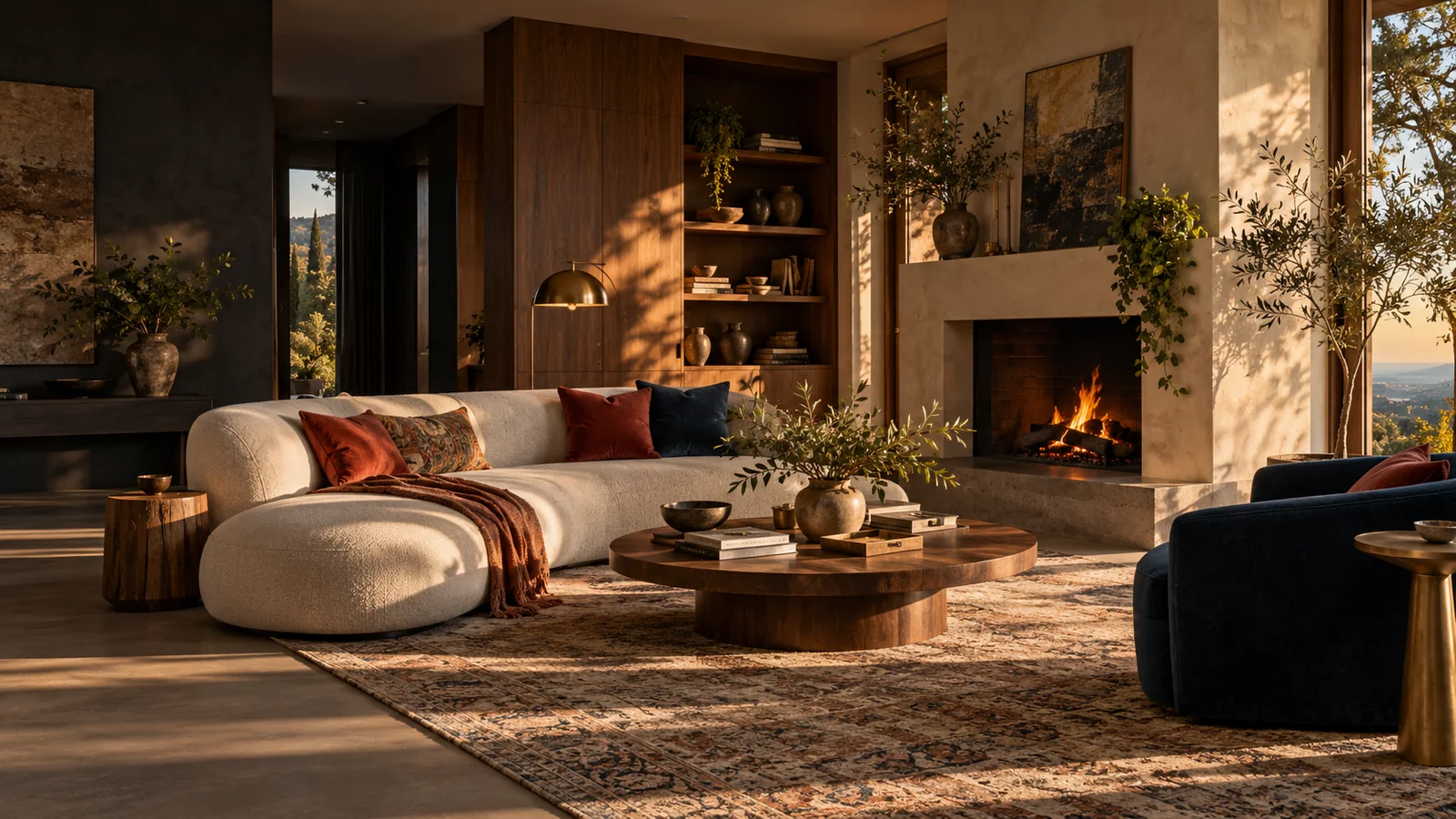
Your room looked good an hour ago.
Then the sun went down, somebody switched on the big ceiling light, and suddenly everything changed.
The sofa looks flatter. The wall color feels colder. The artwork you loved all afternoon almost disappears. That empty corner now looks less “minimal” and more like nobody finished decorating it.
Before you buy another cushion, plant, vase, or side table, try something much simpler.
Change the light.
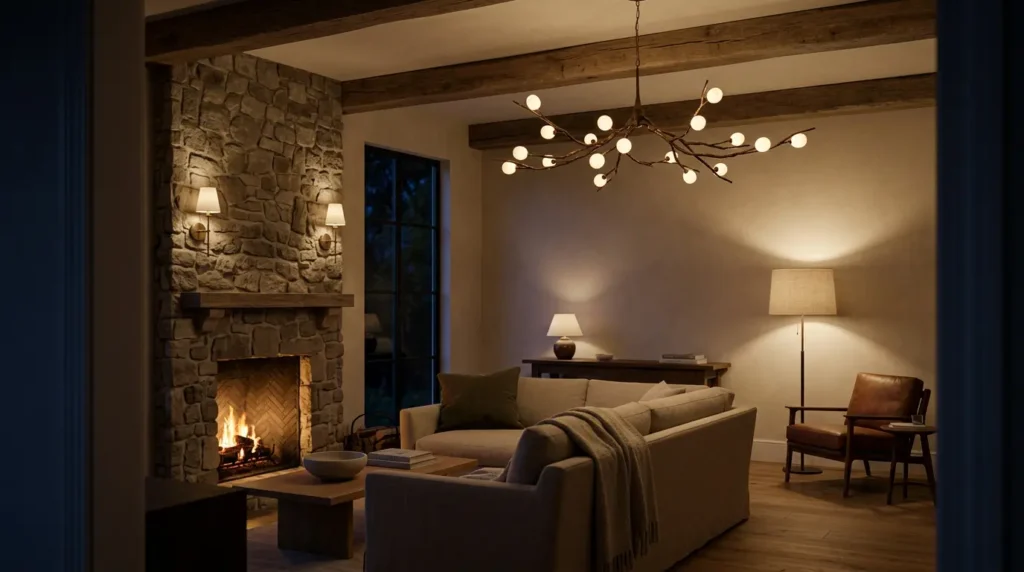
The best ambient lighting ideas are not about making every inch of a room brighter. They are about putting light where you actually need it, letting some areas stay softer, and giving the things you already love a chance to look good after dark too.
You may be surprised by how much better your room feels when the light comes from beside you, behind furniture, across a wall, inside a shelf, or lower to the floor instead of only from the ceiling.
This post may contain affiliate links. If you purchase through one of these links, I may earn a commission at no extra cost to you.
If your room feels flat or harsh at night, start here:
The easiest rule to remember is:
Light the room. Light what you do. Light what you love. Then add atmosphere.
I would not start by asking, “What lamp should I buy?”
I would start with:
What disappears when the sun goes down?
Sit where you normally sit at night.
Look around.
Is the chair too dark for reading?
Does the artwork vanish?
Are all the lamps sitting on one side of the room?
Do the shelves become dark boxes?
Is the television the brightest thing you can see?
Can you see a row of LED dots when you really want a soft glow?
That tells you far more than scrolling through another hundred lighting photos.
Use this quick diagnosis:
| If the room feels… | Start with… |
|---|---|
| Flat everywhere | Add lower lamps in two different areas |
| Dark beside the sofa | Add a floor or table lamp there |
| Empty after sunset | Light art, shelving, curtains, or texture |
| Too bright overhead | Use lamps and switch the main light off when you do not need it |
| Too dim to use | Add stronger task light where you read, work, or get ready |
| Cheap around the LEDs | Hide the strip and let the light reflect off another surface |
| Unbalanced | Add another light across the room |
| Fine but boring | Add one atmospheric light, not five |
Now you know what you are looking for.
That empty corner beside the sofa does not automatically need another plant.
Sometimes it needs light.
Put a floor lamp beside the chair where somebody actually reads, slightly behind the sofa, or in the dark end of a seating area.
An arc lamp can reach over a chair or sofa.
A slim upright lamp works when floor space is tight.
An uplight is useful when you want light to bounce off the ceiling instead of shining directly at you.
The placement matters more than the idea of “having a floor lamp.”
If your favorite reading chair is on one side of the room and the lamp is ten feet away because it “looked good there,” move the lamp.
Your eyes do not care where the empty corner was.
For a small reading spot, these reading nook ideas can help you work the chair, lamp, and storage into the same little area.
Try this tonight: move one lamp you already own beside the chair or sofa you use most. Do that before shopping.
One bright ceiling light makes everything equally visible.
That is useful when you are looking for a missing earring.
It is not always what you want while relaxing after dinner.
Try a table lamp beside the sofa and another on a console, cabinet, or side table across the room.
Now the light comes from two directions.
Some areas get brighter.
Others stay softer.
The furniture gets more shape.
The room suddenly has places your eye wants to rest.
Your lamps do not need to match perfectly either. I would rather repeat one small detail, such as a shade color, ceramic finish, wood tone, or metal, than buy a complete matching lamp set simply because it exists.
If the shade itself needs more personality, these statement lampshade ideas can help you think beyond the plain white drum shade.
No outlet where you want the light? A cordless table lamp gives you another option without running a cord across the room.
A pendant works best when it belongs to something.
The dining table.
The kitchen island.
A little breakfast area.
A bedside spot.
A seating zone in an open-plan room.
That is when it feels connected to the room instead of simply hanging from the ceiling because there happened to be a wire there.
Think about the visual weight too.
A large solid shade can feel heavy in a small room.
Clear glass or a lighter fabric shade can take up less visual space.
And do not expect the pendant to solve every lighting need underneath it.
Your dining pendant can make the table feel special.
A lamp or sconce can still handle softer evening light later.
Different jobs.
Different lights.
Look around your room.
Most of the furniture probably sits in the bottom half.
Sofa.
Coffee table.
Dining table.
Console.
Rug.
A chandelier can pull your eye upward and make the ceiling feel included instead of forgotten.
This works especially well over a dining table or in an open living and dining room where the furniture needs a clearer sense of where one area ends and the next begins.
Just watch the scale.
If the room is large and the fixture is tiny, it can look lost.
If the ceiling is low and the chandelier is huge, you may spend every evening feeling as though the light is hovering over your head.
Before buying, mark the rough width with painter’s tape or cardboard.
Then stand across the room.
Much easier to move tape than return a chandelier.
Sometimes the room needs another light, but it does not need another table.
Put the light on the wall instead.
Sconces work well:
They are especially helpful in small rooms because you gain light without using floor space.
And renters are not automatically excluded.
Plug-in and rechargeable wall lights let you get much of the same effect without opening the wall.
A pair of rechargeable wall sconces can make sense beside a bed or in a spot where hardwiring would be more trouble than the room deserves.
Phone.
Book.
Water.
Glasses.
Charger.
Hand cream.
One mystery receipt that has apparently moved in permanently.
Then you try to add a table lamp.
If your nightstand is fighting for its life, move the light upward.
A small pendant beside the bed gives you back the surface and helps frame the headboard.
I would choose a softer shade if the light sits close to eye level.
Then sit in bed before deciding the final height.
A pendant can look beautiful while you are standing in the doorway and become deeply irritating when you lie down and the bulb is staring directly into your face.
For more bedroom examples, these bedroom lighting ideas show how pendants, sconces, table lamps, and floor lamps can share one room without every fixture doing the same job.
You bought the artwork because you loved it.
Then 7 p.m. arrives and it may as well have left the room.
Give it some light.
A picture light can bring a painting, photograph, print, or small gallery wall back after sunset without making the entire room brighter.
This is one of my favorite fixes for a wall that feels “unfinished” at night.
Sometimes the wall is not missing another piece.
It is missing light on the piece that is already there.
A rechargeable version is useful if you do not want to add wiring.
This is one of the easiest ways to make light feel more interesting.
Point it at something.
Curtains.
Stone.
Wood paneling.
A textured wall.
A large plant.
A plaster finish.
Instead of seeing the fixture first, you see the light moving across the surface.
That creates shadows and brighter areas that you would never get from one central ceiling light.
If you have a beautiful wall finish that disappears at night, this is where I would start.
A small indoor floor uplight can sit close to a wall or plant and throw light upward without becoming another big decorative object.
For more examples of using lower light and reflected glow, these atmospheric lighting ideas are worth a look.
Bookshelves can look lovely during the day and become dark holes at night.
Do not necessarily make the whole room brighter.
Light the shelves you want to see.
You might light:
You also do not have to light every shelf.
In fact, I usually prefer not to.
A little darkness between the brighter areas stops the whole bookcase from looking like a shop display.
If you need a no-wiring option, bookshelf accent lights can work in a few selected areas.
For another room where shelf and media lighting matter, these TV wall ideas go further into shelves, backlighting, and media-wall placement.
Some of the nicest bedroom light is the light you cannot immediately find.
Put a hidden source behind the headboard and let the wall glow.
That can make the bed feel more settled in the room without adding another visible lamp.
Warm white keeps it calm for ordinary evenings.
A soft color can come on later when you want a stronger effect.
This is the part that makes the biggest difference.
You want:
wall glow
not:
a row of tiny glowing squares stuck behind the furniture
Push the strip farther behind the headboard.
Aim it toward the wall.
If needed, use a diffuser so individual points are less obvious.
The rule is simple.
See the light before you see the hardware.
Cove lighting works in the opposite way from a central ceiling fixture.
Instead of looking directly at the light source, you see light bouncing across the ceiling.
That can make a room feel softer, especially when the ceiling or molding already gives you somewhere to hide the strip.
I like this with:
Do not expect cove lighting to handle every job in the room.
You may still need a reading lamp beside the sofa or a brighter light where you work.
Soft does not need to mean useless.
At night, the television can become one bright rectangle floating in darkness.
That is hard for the rest of the room to compete with.
A soft light behind the television or media unit can make the screen area feel more connected to the wall.
Then keep another lamp on somewhere else in the room.
You do not need a rainbow behind the television.
Warm white or one muted color can be enough for normal evenings.
If every color is flashing at once, you may have accidentally turned Tuesday night television into a nightclub.
Keep the strip hidden from the sofa.
The glow should show.
The tape should not.
Look down.
A bed, floating vanity, media console, bench, or cabinet can take on a completely different feel with a soft glow underneath.
The trick is pushing the light far enough back that you do not see the strip sitting on the front edge.
Let the light hit the floor.
That small gap of brightness can make heavier furniture feel less bulky.
Warm white is easiest to live with every day.
Color can work when you want something more dramatic.
This is especially useful in bedrooms, media rooms, and rooms where the furniture already has enough personality and you do not want another lamp sitting nearby.
This is where the mood lighting ideas get more playful.
A water-ripple light can send slow moving reflections over the ceiling or wall and completely change the feel of a bedroom or media room for an evening.
The secret is not decorating everything else to match.
Please do not see moving blue light and immediately buy fish bedding.
Let the light do the strange part.
Keep the bed, furniture, rug, and walls normal.
A calm room with one unexpected light effect feels much more interesting than a room where every object is trying to prove there is an ocean theme.
The ceiling is one of the biggest blank surfaces in a bedroom.
Most of the day, that is fine.
At night, you can use it.
Aurora or galaxy lighting can work in:
I would keep the rest of the room calmer.
Neutral bedding.
Simple furniture.
One or two normal lamps.
Then let the ceiling become the surprise.
That is where bedroom mood lighting works best.
The effect comes on when you want it.
The room still looks like a normal bedroom the next morning.
A sunset lamp does not need to light the whole room.
Aim it at one thing.
A blank wall.
A curtain.
A plant.
A reading chair.
The edge of the bed.
That concentrated amber glow gives one part of the room a warmer feel without changing every bulb.
It is also easy for renters because there is nothing to install permanently.
Use your normal lamps for everyday life.
Bring the sunset light in when you want that one corner to feel different.
This is where the ambient lighting ideas finally come together.
You do not turn every light on at once.
The combination changes with what you are doing.
Reading: floor lamp beside the chair and one softer room light.
Friends over: pendant or ceiling light plus table lamps.
Quiet evening: lamps and sconces.
Movie night: low room lamp plus a soft TV-wall glow.
Want more atmosphere: lower the ordinary lights and add one sunset, ripple, or aurora effect.
A room should have more choices than:
bright
and
off
If you want more examples of making several light sources work together, these layered lighting tips are useful without requiring you to turn the house into a lighting showroom.
Still not sure where to begin?
Use the problem.
Not the prettiest product photo.
| Your room problem | Try first | Why |
|---|---|---|
| Everything feels flat | Floor + table lamps | Brings light down to more than one height |
| Sofa corner is dark | Floor lamp | Puts light where you actually sit |
| Artwork disappears | Picture light | Brings the wall back after dark |
| Wall texture looks dull | Uplight | Makes the surface easier to see |
| Tiny nightstand | Pendant or sconce | Frees the table |
| Shelves disappear | Shelf lights | Brings selected objects back |
| LEDs look cheap | Hide and diffuse | Lets the glow become the feature |
| TV is the only bright thing | Soft backlight + another lamp | Balances the room |
| Rental has no ceiling fixture | Floor, table, and plug-in lights | Adds light without opening walls |
| Room needs a temporary mood change | Sunset, ripple, or aurora light | Changes the feeling without redecorating |
Start with the sofa.
Not the ceiling.
Where do people actually sit after dark?
Put useful light there first.
A floor lamp beside the reading chair.
A table lamp beside the sofa.
Then look across the room.
If all the light is gathered around one end, add something on the other side.
That could be another lamp, a sconce, a picture light, or shelf lighting.
You do not need a magic number of lamps.
A small room might work beautifully with two or three light sources.
A larger room with several seating areas may need more.
The question is not:
“How many lamps should a living room have?”
The better question is:
“Does every part of the room we actually use have the light it needs?”
Then light one thing you love.
Artwork.
Curtains.
A fireplace.
A plant.
Shelves.
A textured wall.
That is often enough.
If you like warmer materials and softer traditional finishes, these rustic lighting ideas go deeper into wood, glass, ceramic lamps, chandeliers, sconces, and room placement.
Wall color matters too. If the room looks completely different once the lamps come on, these cozy living room colors can help you think about paint and lighting together.
And if you are working with a tighter layout, these small-home interior ideas include practical ways to use lamps without filling every bit of floor space.
I would give the bedroom three jobs before worrying about effects.
You should be able to open the wardrobe, find clothes, clean the room, and see what you are doing.
One tiny bedside lamp may not be enough for that.
If you read in bed, put the light near the bed.
Not across the room because that corner happened to look prettier.
A bedside lamp, sconce, or hanging pendant can do the job.
This is where lower lamps, wall sconces, and hidden headboard lighting earn their place.
Turn the brighter room light off when you no longer need it.
Then use the softer layer.
After those three jobs are handled, add color or movement if you want it.
Sunset glow.
Water ripple.
Aurora.
Galaxy.
Those are extras.
A good bedroom should still work on the nights when you do not feel like sleeping under the northern lights.
You can do much more than put one floor lamp in the corner.
Try:
Spread the sources around.
That is the important part.
One tall floor lamp in the middle of the room is still one light trying to do everything.
A renter-friendly room can have light beside the sofa, on the opposite wall, near artwork, and behind a piece of furniture without opening a single wall.
If you are working with an apartment, these apartment living room ideas have more small-space and nighttime ideas you can use without turning the room into a renovation.
You do not have to choose one forever.
Use warm light as the normal base.
It works easily with wood, cream, brown, beige, soft gray, terracotta, and most everyday living-room and bedroom finishes.
Then use color when you actually want the room to change.
Movie night.
Gaming.
Music.
A slow evening in the bedroom.
A dramatic wall.
One glowing corner.
The fact that your smart light offers millions of colors does not mean tonight needs all of them.
If the room starts looking like four different parties are happening at once, choose one color and calm everybody down.
Use it when you need it.
Just do not make it the only option.
Bring some light down to table level.
Put some on the wall.
Maybe bounce some upward.
The room feels different when everything is not coming from one line.
Stand in the doorway.
If one half glows and the other half disappears, move something.
Warm bulbs cannot fix bad placement.
Move the light closer to the people and surfaces that need it.
Hide the strip.
Move it backward.
Let it hit a wall, shelf, ceiling, or floor.
Let a few areas stay softer.
If everything is highlighted, nothing feels highlighted.
Give it a job.
A plant.
Art.
Stone.
Wood.
Curtains.
A shelf.
Tape the rough size out first.
A five-minute check is cheaper than a return.
Pick one.
Your room does not need to audition the whole rainbow.
You still need to read.
Cook.
Get dressed.
Find things.
Good atmosphere should not make normal life harder.
This one costs nothing.
Move a lamp.
Live with it there for two evenings.
Then decide.
Start with the problem.
The room feels flat: add one floor lamp and one table lamp.
The sofa corner is dark: put a floor lamp there.
There is no outlet where you need light: try a cordless lamp.
The nightstand is too crowded: use a wall light or hanging pendant.
The artwork disappears: add a picture light.
The shelves disappear: add a few concealed shelf lights.
The wall needs more depth: try an uplight.
The bedroom needs softer evening light: add hidden headboard glow or a lower bedside light.
You just want one dramatic effect: add a sunset, ripple, or aurora light after the everyday lighting is sorted.
That keeps ambient lighting ideas connected to the room instead of turning your home into a collection of gadgets.
Ambient lighting is the general light that helps you see and move around a room comfortably. It can come from ceiling lights, wall lights, floor lamps, table lamps, or reflected light instead of one central fixture.
Put warm light at more than one height and keep useful lamps near the places where you sit or read. Let a few areas stay softer so the room has contrast instead of looking equally bright from wall to wall.
A warm white is an easy everyday choice for bedrooms because it usually feels softer in the evening. Keep brighter task light where you need it, then use colored light only as an optional effect.
Use floor lamps, table lamps, plug-in sconces, rechargeable wall lights, portable lamps, picture lights, and removable LEDs. Spread them through the room so one portable light is not being asked to replace an entire lighting plan.
When the sun goes down, walk back into the room.
Do not look at the decor first.
Look at the light.
Which corner disappears?
Which chair needs a lamp?
Which artwork vanishes?
Which shelf goes dark?
Is every light on the same side?
Can you see the LED strip instead of the glow?
Is the television the brightest thing in the whole room?
Does the room really need another decorative object?
Or does one part of it simply need light?
Pick one problem.
Fix that first.
Then live with the room for a night or two before adding anything else.
The best ambient lighting ideas do not just make a room brighter.
They help the room work better, feel better, and still look like the place you loved before the sun went down.
Light it so you can use it.
Then light it so you want to stay.
Explore original printables, find another story or save your next creative project.