

POPULAR AT FAMILY HAVEN
POPULAR AT FAMILY HAVEN
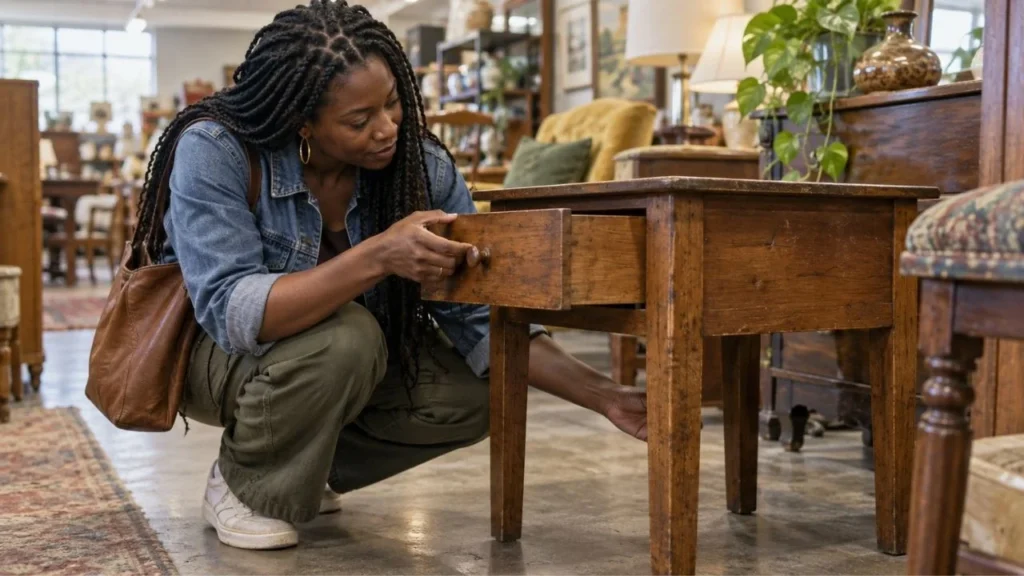
Good thrift flip home decor ideas begin before you buy anything: check the shape, structure and total project cost first.
You know that little rush when you spot a $14 table and immediately see the finished version in your head?
Then you get it home.
It needs sandpaper.
Primer.
Paint.
A new pull.
Wood glue.
Something is wrong with one leg.
And apparently the drawer has decided opening is optional.
Your $14 bargain has developed a personality.
That is why good thrift flip home decor is less about being clever with paint and more about getting good at the part that happens under fluorescent thrift-store lighting.
Can you spot the piece with good bones?
Can you tell the difference between a cosmetic problem and a weekend you are going to regret?
And can you walk away from something cheap when the real project cost is saying otherwise?
That is what these 18 ideas will help you do.
The best thrift find does not need to look beautiful in the store.
It needs to give you something useful to work with.
Look for:
Be more cautious with:
Good Housekeeping recently asked antique dealers what they inspect before buying. Their advice includes checking damage, staining, function, hidden problems, and thinking twice about “project pieces” before excitement wins. Their antique shopping inspection tips are worth reading before your next serious thrift run.
Before the piece reaches your cart, ask yourself five questions.
That fifth question has saved many imaginary weekend projects.
A thrift store may put solid wood, veneer, laminate, MDF, and particleboard within six feet of each other.
They do not all behave the same way.
Look at exposed edges, undersides, drawer parts, and areas where the finish has worn.
With solid wood, the material continues through the piece rather than appearing as a thin decorative layer.
It can give you more room for sanding and refinishing, but “solid wood” does not make a broken piece automatically worth buying.
Veneer is a thin layer of real wood placed over another material.
That is not automatically poor quality.
Older furniture can use beautiful veneer over a solid, well-made core.
The problem comes when that thin face is:
Tip: If you are unsure how thick the surface layer is, put the aggressive sander away.
You cannot sand the wood grain back on.
Small cosmetic damage may be manageable.
Major swelling from water is different.
If the board has expanded, crumbled, or separated badly, paint will change the color, not rebuild the material.
You do not need to chase trends through a thrift store.
But current interiors are making some previously ignored pieces easier to use.
Dark and medium woods, richer browns, worn finishes, aged metals, and pieces that look collected rather than perfectly matched are showing up strongly in current design coverage.
The useful lesson is simple:
Do not automatically paint good wood because the internet taught you that every thrift flip needs a before-and-after.
Good Housekeeping’s 2026 vintage decor trends includes warm woods, vintage metals, glassware, richer color, and pieces that bring age and personality into newer rooms.
Detailed frames are having a much easier time fitting into modern rooms now that homes are becoming less stripped back.
A heavy gilt mirror can sit beside a clean sofa.
An old frame can hold contemporary art.
The contrast is often the interesting part.
Old ceramic, glass, brass, and sculptural lamp bases are worth a second look.
Sometimes the ugly thing is not the lamp.
It is the shade somebody chose in 1987.
Old quilts, ceramics, framed needlework, trays, plates, and objects with visible handwork can make a room feel more personal without requiring much modification.
Real Simple’s current reporting on the “collected-over-time” home describes a move toward mixing vintage and new pieces, warmer palettes, aged materials, and interiors that feel lived in rather than perfectly uniform. Their collected home styling ideas are a useful companion if you are trying to make thrifted pieces belong together.
You do not have to begin your DIY life by stripping a twelve-drawer dresser.
| Thrift find | Skill level | Check before buying | Common extra cost |
|---|---|---|---|
| Picture frame | Easy | corners, glass, backing | art or mat |
| Mirror | Easy | glass, backing, frame | paint, hanging hardware |
| Wood box | Easy | odor, hinges, cracks | felt or finish |
| Plant stand | Easy | wobble, joints | paint or finish |
| Stool | Easy to moderate | leg joints | glue, finish |
| Small table | Easy to moderate | top material, stability | prep, paint, hardware |
| Lamp | Cosmetic work easy | cord, socket, stability | shade, electrical assessment |
| Dresser | Moderate | drawers, joints, top | hardware, prep |
| Bench | Moderate | frame, foam, fabric | upholstery supplies |
| Large upholstered chair | Higher | frame, foam, fabric, odor | fabric, tools, foam |
Beginner tip: Learn a new skill on a small object.
If you want to try upholstery, start with a removable bench cushion.
Do not introduce yourself to the staple gun by dismantling an entire wingback chair.
An old mirror can change a room before you even touch it.
Clean the frame first.
Then put it somewhere with decent light and ask whether you actually dislike the finish or whether you simply expected yourself to paint it.
If it does need a change, try:
Thick paint can bury carving and small grooves.
Use lighter coats around ornate areas so the texture remains visible.
Leave it alone when: the darker edges, worn gilding, or uneven color are what make the frame interesting.
Designers are actively using patina in wood, brass, leather, and other aged materials because those changes can give a room a more lived-in feeling.
A sturdy stool can become a compact table beside:
You may only need to clean it and tighten the joints.
Or you could use:
Push gently from different directions.
Look where the legs meet the seat or stretchers.
A loose joint you know how to repair is one thing.
A split leg is another.
Do not let a $9 price tag negotiate your skill level for you.
A little side table is a much kinder place to learn refinishing than a dining table you need for Sunday dinner.
You can practise:
without committing half your house to the experiment.
Good wood?
Consider keeping it visible.
Poor cosmetic repairs?
Paint may make more sense.
Thin veneer?
Work gently.
If you want a few other manageable home projects before attempting a bigger furniture makeover, these DIY living room ideas include small updates, furniture projects, and beginner-friendly room changes.
Some vintage lamps are one bad shade away from being beautiful.
Look at the base separately.
Does it have:
If yes, try a different shade before repainting anything.
Options include:
Cosmetic work and electrical work are not the same project.
If the cord is cracked, frayed, exposed, unusually hot, or otherwise damaged, do not simply plug it in to see what happens.
ESFI advises using qualified electrical professionals for electrical work and warns about the risks of damaged or improper electrical systems. Their DIY electrical safety advice is the better next read if an old lamp needs more than a new shade.
For more ideas on lamp shapes and materials, these rustic lighting ideas show how ceramic, glass, aged brass, linen, wood, and woven shades can work without everything matching.
A sturdy dresser can handle a stronger color than a little decorative object.
Try:
But test the dresser before choosing the paint.
Open every drawer.
Close every drawer.
Pull them halfway out.
Check:
A boring finish is fixable.
Six bad drawers are the project introducing itself.
Your choices are not simply:
paint everything or paint nothing.
You could:
Frames are some of the easiest thrift flip home decor pieces because most of the transformation comes from what you put inside them.
Mix:
Then create a connection through:
Put the arrangement on the floor.
Move it around.
Photograph the version you like.
Measure.
Then start putting holes in the wall.
Your wall does not need to witness the brainstorming phase.
A basket does not need paint simply because it came from a thrift shop.
Try it first for:
If it needs a little more personality, consider:
If it smells strongly damp or musty in the shop, pause.
Visible mold, broken fibers, staining, or an odor you do not want inside your home can turn an inexpensive basket into a poor buy.
There will be another basket.
I promise the basket industry has not collapsed.
Two-tone finishes are useful when one part deserves to stay visible and another part needs help.
Try:
Do not decide you are staining the top before seeing whether the top is worth showing.
If old filler, deep staining, or uneven repairs dominate the surface, paint may make more sense.
The object gets a vote.
Decorative trays can become wall pieces in:
Look for:
A group of two or three can feel more intentional than a single small tray floating alone.
Do not choose wall hardware by optimism.
Use a mounting method intended for the material and weight of the tray.
Magazine racks often sit ignored because fewer people need a wooden home for monthly magazines.
The shape can still be useful.
Try one for:
Measure the thing you plan to store before buying the rack.
A record holder that is half an inch too narrow is just furniture with confidence.
A bench with a removable padded seat can be a manageable first upholstery project.
Check:
New fabric does not repair a weak frame.
Take a clear picture of the underside first.
It can help you remember:
For a simple seat pad, an Arrow T50 staple gun is a relevant Amazon.com USA option. Arrow’s own T50 documentation confirms the T50 staple system and compatible staple family.
Use the staple length and fastener type suited to the material in front of you.
A bench cushion and a full upholstered armchair are not the same Saturday.
New pulls can make an older dresser or cabinet feel different without covering the original finish.
Before you buy them:
A chunky dresser can swallow tiny knobs.
A delicate cabinet can look strange with enormous modern bars.
The hardware should look like it belongs to the piece, not like it arrived after an argument.
You do not need a complete matching dinner set.
Single thrifted plates are often the interesting ones.
Look for:
Mixing them can make a kitchen or dining wall feel collected rather than purchased as one boxed set.
Designers are currently paying renewed attention to antique ceramics, mirrors, rugs, glass, and other distinctive older pieces because they add individuality to newer spaces.
Plate weight, material, back surface, and diameter matter.
For appropriate decorative plates, invisible plate hanger discs are one Amazon.com USA option.
The original 4-inch invisible adhesive disc format is commonly specified for plates up to roughly 12 inches, but always follow the manufacturer’s sizing and surface directions for the exact object.
I would be much more cautious about adhesive on something valuable, irreplaceable, or fragile.
Small wooden boxes are easy to overlook.
Give one a real job.
Use it for:
You may only need to:
The project does not become less successful because nobody on the internet can tell you changed it.
A plant stand is a good beginner furniture flip because the project is small and the shape is usually simple.
Try:
Then let the plant provide the decoration.
Tip: This is also a good project for testing a paint color before putting it on a dresser.
A wooden rack can move into:
Check:
Dark metal, aged brass, or unusual hooks may be the reason the piece has character.
Clean them first.
Then decide.
New is not a synonym for better.
Quilts, old textiles, needlework, and handmade pieces fit naturally into the current move toward interiors with more history and personality.
An old quilt can live:
Is it common and damaged?
Does it have family history?
Is the handwork unusually good?
Would cutting it destroy what makes it special?
Some objects need imagination.
Others need restraint.
This may be the most important idea in the article.
You find:
Clean it.
Put it in the room.
Wait.
The current move toward patina, warm wood, antique pieces, and collected interiors makes this easier than it was during the years when every thrift tutorial seemed to end in gray paint.
Sometimes the strongest thrift flip home decor decision is recognizing that the object already survived several decades without your paintbrush.
This is where a bargain either survives or falls apart.
| Thrift item | Possible extras | Ask yourself |
|---|---|---|
| Mirror | cleaner, paint, wall hardware | Is the frame worth the work? |
| Stool | glue, paint, finish | Do I understand the loose joint? |
| Table | sandpaper, finish, hardware | What is the top made from? |
| Lamp | shade, professional electrical repair | Is the base good enough to justify it? |
| Dresser | primer, paint, pulls, drawer repair | Do all the drawers work? |
| Bench | fabric, staples, foam | Is the frame sound? |
| Cabinet | hardware, paint, hinge work | Are the doors and shelves usable? |
| Plates | hanging hardware | Will I really display them? |
Include:
Then ask:
Would I still buy this if the finished project total were printed beside the thrift-store price?
That question is far more useful than congratulating yourself for finding a $10 dresser.
Knowing what not to bring home may save you more money than any flip in this article.
If water has caused major swelling, crumbling, or separation, a cosmetic finish will not rebuild the board.
Small scratches and dents are normal.
A crack through a supporting leg, rail, joint, or frame deserves much more caution.
If you dislike the smell in a giant store, imagine it in your bedroom.
Deep staining, damaged foam, strong odors, or anything that makes you uncomfortable bringing it indoors can quickly become a much larger project than new fabric.
An interesting vintage lamp is not worth using with unsafe wiring.
If the cord, socket, or electrical parts look damaged or uncertain, do not treat the problem as a cosmetic flip. ESFI recommends qualified electrical help for electrical work.
This is where enthusiasm needs to wait.
The EPA warns that sanding, scraping, drilling, or otherwise disturbing lead-based paint can create hazardous lead dust. Review its lead safe DIY guidance before disturbing older unknown painted surfaces.
That does not mean every old painted dresser contains lead.
It means you should not use a power sander as your testing method.
You have no room for it.
You do not enjoy this kind of repair.
It is enormous.
But it is $18.
Put it back.
The store will recover emotionally.
DIY itself is not the problem.
Poor prep, too many ideas, and rushing usually are.
Paint does not behave the same way on:
Know what you have before choosing the process.
A side table does not automatically need:
Choose the idea doing the most work.
Let it do the work.
Look at:
The “prettiest” handle online is not automatically the prettiest handle on that dresser.
This is one of the easiest ways to make a thrift flip feel less forced.
A few signs that the object existed before you found it can make newer pieces around it feel more personal.
Good Housekeeping’s mix vintage and modern guide makes the same broader point: newer pieces can handle present-day function while older objects bring individuality and history.
If you own almost no DIY tools, start with:
Once you are comfortable with basic prep:
If you are ready for fabric work:
I would leave these for later or get qualified help:
You do not need to prove anything with your first flip.
You need to finish it.
Frames, mirrors, wood boxes, stools, and plant stands are good starting points.
They are small enough to inspect easily, usually require fewer supplies, and let you practise cleaning, painting, hanging, or basic repair without committing to a huge piece of furniture.
Check the underside, exposed edges, drawer interiors, and damaged areas.
Solid wood generally shows the wood continuing through the material. Veneer shows a thinner decorative layer over a separate core.
If you are unsure, work conservatively rather than sanding hard.
Yes.
Good veneer furniture can be well made and worth keeping.
The condition matters more than the fact that veneer exists.
Be cautious when large areas are lifting, bubbling, missing, or already sanded through.
Start from the finished cost, not the store price.
Add:
Then compare that total with what a finished alternative would realistically cost.
Sometimes.
But first ask whether the original wood, finish, workmanship, wear, or patina is part of the reason you liked the piece.
A damaged mass-produced dresser and an older well-made cabinet do not deserve the same answer.
I would check secondhand first for:
Condition still decides the purchase.
Prepare the surface correctly, use even coats, allow proper drying time, and resist adding five decorative treatments to one piece.
A clean idea usually looks better than a crowded one.
Be cautious if you do not know the paint history.
Disturbing lead-based paint can create lead dust, so review current lead-safe guidance before sanding or scraping older unknown painted surfaces.
Not automatically.
A lamp can have a beautiful base and still need electrical attention.
If the cord, plug, socket, or wiring is damaged or questionable, do not treat it as a simple decor project.
Clean it first.
Put it in the room.
If you already like the wood, patina, age, color, texture, or story, you may not need to change it.
You can always paint later.
Putting original character back is much harder.
The best thrift flip home decor starts in the aisle.
Not in the garage.
Not with a paint chart.
And definitely not three hours into sanding while wondering why you bought the thing.
Pick it up.
Open the drawer.
Look underneath.
Check the joints.
Smell it.
Ask what it is made from.
Think about where it will live.
Then count what the makeover will really require.
You do not need the thrift find with the most dramatic before-and-after.
You need the one that fits your home, your skills, your time, and your budget.
Sometimes that means paint.
Sometimes it means new fabric.
Sometimes it means one careful repair.
And sometimes the best move is wiping off the dust and letting an old piece stay old.
Comments are closed.
Explore original printables, find another story or save your next creative project.

[…] you enjoy turning secondhand finds into decor, these thrift flip decor ideas will give you plenty more places to go with that […]
[…] you like decorating with secondhand pieces, these thrift flip home decor ideas can help you look at old items […]