
POPULAR AT FAMILY HAVEN
POPULAR AT FAMILY HAVEN
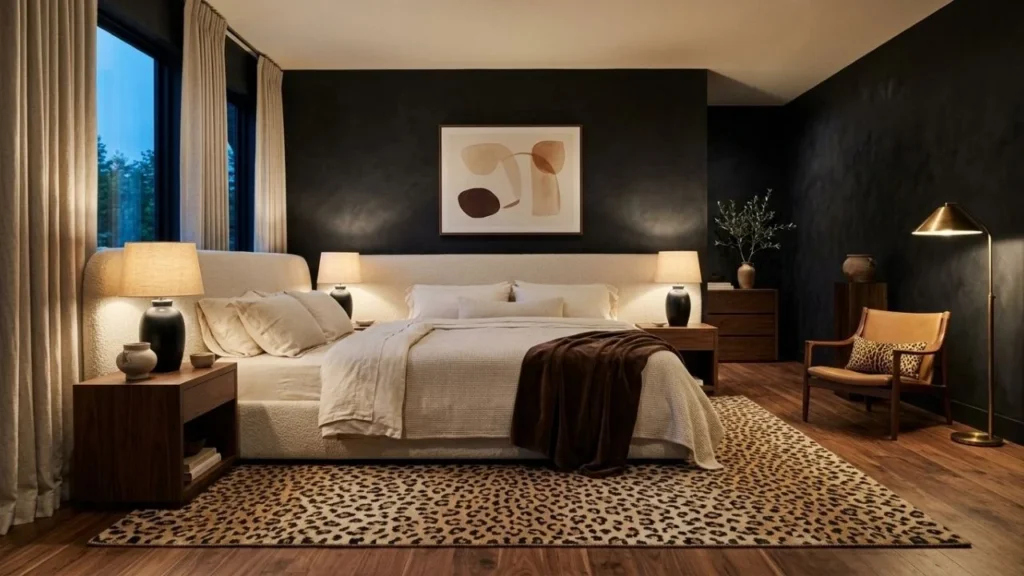
Leopard print bedroom ideas start with one main patterned feature, then use warm colors and simpler textures to keep the room balanced.
A leopard print bedroom can look polished, playful, moody, feminine, cozy, or gloriously dramatic. It can also cross the line into “the cat now owns the mortgage” if every soft surface starts wearing spots.
The easiest way to keep the room stylish is to decide what leopard is doing. Is it the main event on the floor, a flash of pattern on the bed, or the detail that wakes up a quiet room?
Designers interviewed by Southern Living say animal print can behave almost like a neutral when its colors sit comfortably with the rest of the room, especially around warm wood, stone, metal, and layered textiles. Their animal print styling advice also points to lower-contrast prints as an easier choice on larger surfaces.
That gives you far more room to play than the old “one tiny leopard cushion and behave yourself” rule.
Use one hero, one echo, then quiet support.
Your hero is the first spotted piece the eye notices. That could be the rug, duvet, wallpaper, bench, chair, or curtains.
The echo is smaller. Think one lumbar pillow across the room, a folded throw, or a little upholstered stool.
Everything else can support those pieces through color, texture, and shape instead of more spots.
| If leopard leads here | Keep these calmer | Easy supporting colors |
|---|---|---|
| Bedding | Rug, curtains, large wall art | Cream, cocoa, olive |
| Rug | Duvet, headboard, curtains | Ivory, black, camel |
| Wallpaper | Bedding, floor, lamps | Oatmeal, walnut, dusty pink |
| Curtains | Bed, rug, wall art | Cream, brown, black |
| Bench or chair | Bedding and floor | Burgundy, olive, warm white |
You can break this rule if you love maximalism. Just do it on purpose, not because the leopard duvet somehow met the leopard curtains, rug, pillowcases, and lampshade in your cart at 1:14 a.m.
If you want leopard without making it the room’s entire identity, start at the foot of the bed. Use white, ivory, or warm cream bedding, then fold a thick leopard throw across the lower third so the pattern reads as a confident strip instead of a full mattress of spots.
This looks especially good with walnut nightstands, black lamp bases, cream curtains, and a soft tan rug. The plain bedding creates enough visual space for the throw to look deliberate, while the wood keeps the room warm instead of stark.
A leopard faux fur throw is an easy way to try this without changing anything permanent. The linked version comes in 50-by-60 and 60-by-80-inch sizes, so the smaller size suits a neat foot-of-bed fold while the larger size gives you more drape.
Try this if: you already own neutral bedding and want an easy weekend update.
Leopard looks softer when it sits against oatmeal instead of bright white. Start with a warm beige duvet, add two plain sleeping pillows, then place one or two leopard cushions in front so the print feels tucked into the room rather than pasted onto it.
Bring in a medium wood nightstand, a ceramic lamp, and one woven basket on the floor. That mix gives the room texture without adding another pattern, which matters because leopard already has plenty to say.
A warm beige duvet gives you the quiet base, while these leopard square pillow covers can handle the pattern. The linked set contains two 18-inch covers.
Keep the curtains plain. Your pillows have already volunteered for attention.
A dark bedroom does not need pale decor everywhere to stay balanced. Black or charcoal walls can make a brown-and-cream leopard rug look richer because the darkest spots connect visually with the room instead of sitting alone.
Use a warm white bed, cocoa or camel throw, and medium wood furniture so the room still has warmth. Then let the floor carry the pattern.
A washable leopard area rug works as the main spotted piece, especially if you want something easier to care for than a thick rug. The linked version is a 5-by-7 low-profile rug made with faux-wool fibers.
For a queen bed, that size works better as a lower-bed accent than as a rug meant to surround the entire frame.
Olive and leopard share earthy brown and muted green notes, so the pairing feels natural rather than themed. Paint the room a smoky olive, use cream or stone-colored bedding, then place one long leopard pillow at the front of the bed.
Add dark walnut furniture and a little aged brass or bronze through lamp bases or drawer pulls. Current 2026 bedroom trend report coverage points toward richer wall colors and tactile bedroom layers, which suits this quieter interpretation.
The leopard lumbar pillow cover is useful here because its 12-by-20-inch shape gives you one clear hit of pattern instead of a pile of matching cushions.
Keep plain: curtains, rug, and most of the bedding.
Burgundy gives leopard a grown-up, almost clubby mood without making the room feel stiff. Use a cream duvet, a leopard throw or pillow, then place two burgundy velvet cushions behind it.
Finish with dark wood, amber-toned lighting, and one black-framed print over the bed. The mix feels layered because velvet and faux fur do different jobs even though both are soft.
These burgundy velvet pillow covers give you a plain color block beside the leopard. The linked set has two 18-inch covers, which is enough to add the color without turning the bed into a pillow warehouse.
This is an easy way to make leopard feel right for fall without decorating the whole room around a season.
Pink and leopard can go childish when everything is bubblegum, shiny, and matched. Dusty rose, muted blush, or plaster pink takes the idea in a much softer direction.
Use pink on the walls or one large upholstered headboard, then keep the leopard itself in classic tan, brown, cream, and black. White bedding can sit between the two so the room has a visual pause.
The easiest shopping move is one leopard lumbar pillow cover centered on the bed. Add plain blush or cocoa pillows behind it if the bed needs more depth.
Current Pinterest leopard-bedroom discovery branches into pink, black, dark feminine, dorm, and adult bedroom directions, so you do not have to choose between feminine and grown-up.
You do not need a full wall to make leopard wallpaper feel intentional. A narrow panel centered behind the headboard can work almost like oversized artwork, especially in a rental or small bedroom.
Measure the headboard width, then make the panel slightly narrower or slightly wider so the relationship looks planned. Leave the surrounding wall plain and repeat one wallpaper color in the bedding or lamp base.
A leopard peel stick wallpaper gives you a removable route for this idea. Test a small hidden area first if the wall finish is delicate or your lease has strict rules.
For paint beside patterned paper, Better Homes & Gardens recommends pulling a main or secondary shade from the paper so the wall and pattern feel related. Their wallpaper paint pairing tips are worth checking before you choose the surrounding paint.
If you genuinely love leopard, a full wall can look spectacular. The trick is to stop treating every other surface as a second chance to repeat the pattern.
Put the wallpaper behind a simple upholstered bed in oatmeal, camel, or cream. Use plain bedding, solid curtains, one warm wood dresser, and simple lamps with fabric shades.
The same leopard peel stick wallpaper can work for a larger area if the wall is smooth and you calculate enough material before starting.
Skip: leopard rug, leopard curtains, leopard duvet.
Yes, technically you can use all three. You can also wear every necklace you own to brunch.
Permission is not always the issue.
Curtains take up more visual space than people expect, so leopard drapes can carry a bedroom almost by themselves. This works best in a room with plain bedding, a calm rug, and furniture with simple lines.
Try cream walls, a walnut or black bed frame, white bedding, and leopard at the window. If the room already has a strong headboard or busy rug, plain curtains will probably look better.
A pair of brown leopard curtain panels gives you the pattern at the window. The linked set contains two polyester rod-pocket panels measuring 42 by 84 inches each.
That choice is worth making before checkout, because patterned curtains are not background decor. They arrive with opinions.
A bench gives leopard a strong shape and clear boundary. It is a smart choice if you like the pattern but do not want it touching the pillows, curtains, or walls.
Use a solid bed in ivory, cocoa, rust, olive, or black, then place the bench at the foot with clear walking room around it. Keep the rug quiet so the bench reads as furniture instead of another layer in a pattern pile.
A leopard faux fur bench gives you a larger spotted feature without changing the whole bed. The linked rectangular version measures 46 inches wide, 16 inches deep, and 22 inches high.
Works best for: medium and larger bedrooms with comfortable space at the foot of the bed.
A tiny bedroom does not need tiny personality. It just needs pieces that do more than one job.
Instead of a full bench, place a small leopard ottoman beside a vanity, under a wall hook, or near the bed. Use plain bedding and leave the floor mostly quiet so the spotted piece feels playful rather than crowded.
This leopard storage ottoman is compact at 17 by 13 by 13 inches and includes hidden storage.
That gives socks, chargers, spare pillowcases, and the usual bedroom odds and ends somewhere to live besides The Chair. We all know The Chair.
A layered bed can handle one strong pattern because the rest of the shapes are orderly. Start with a plain duvet, two large back pillows, two smaller pillows, then finish with one leopard lumbar.
Use cream, white, or oatmeal through the larger bedding, then bring in texture through linen, velvet, or a ribbed throw instead of another print. Black or bronze bedside lamps can frame the bed and make the setup feel complete.
The leopard lumbar pillow cover suits this layout because the long rectangle gives the bed a clear center point.
If your pillow insert is old and sad enough to fold itself in half, replace that too. Leopard cannot fix everything.
Pattern mixing works better when two prints do not compete at the same scale. Leopard has an irregular rounded shape, so a narrow stripe gives your eye something different to read.
Use striped bedding with a leopard pillow, or a leopard rug with one striped throw. Keep both prints in a related palette such as brown, cream, black, or muted green.
A brown striped duvet set gives leopard accents a calmer backdrop. The linked queen set is cotton and uses brown-khaki striping.
Do not add floral curtains, checked pillows, and a geometric rug simply because you have discovered pattern mixing. We are decorating a bedroom, not conducting an experiment on your eyeballs.
Leopard can sit beautifully in a vintage room when the surrounding pieces have age, texture, and weight. Think medium or dark wood furniture, a fabric lampshade, framed art, cream bedding, and one spotted textile.
Instead of making the whole room “retro leopard,” let one piece feel slightly unexpected. A throw over an antique-style chair or one leopard cushion on the bed can do the job.
These small brass table lamps can push the room toward a traditional look without adding another print. The linked set includes two metal-base lamps with fabric shades.
The room should look as if leopard wandered into a good vintage bedroom and decided to stay.
Sometimes the leopard is not the problem. The room around it simply needs clearer edges.
If the bedding feels a little too playful, place simple black frames over the bed or dresser and repeat black in the lamp base, curtain rod, or small side table. Those dark lines pick up the deepest parts of the print and make the palette feel connected.
A black gallery frame set makes it easy to group art or personal photos without introducing another decorative pattern. The set contains five 8-by-10 frames that can also display 5-by-7 images with mats.
This is especially useful in a first apartment where you already own leopard bedding and do not want to replace it.
Leopard already gives you movement. The next layer can come from texture instead of another busy motif.
Try a woven basket, rattan tray, natural wood stool, linen curtain, or chunky cream throw. Those materials make the room feel fuller without making the eye work harder.
A set of natural seagrass storage baskets can sit near a dresser, under a console, or beside the bed while keeping smaller items out of sight. The linked set contains three sizes.
Designers quoted by Southern Living also point to animal prints sitting comfortably beside warm wood, stone, metals, and layered textiles.
If plain cream feels too safe, go deeper with muted green. Use olive walls, green velvet pillows, dark wood, and one classic brown leopard piece for contrast.
Let green repeat through solid surfaces rather than buying green leopard everything. That creates a clearer color story and lets the spotted piece stay recognizable.
These olive velvet pillow covers work as a plain layer behind a leopard lumbar or throw. The linked covers are 18-inch squares sold as a pair.
Current muted green decorating advice also points to soft earthy greens working well in bedrooms with warm wood, creamy whites, linen, ceramics, and other natural materials.
This palette is easy for someone who loves leopard but hates fussy decorating. Use cream bedding, black furniture or lamps, classic leopard, and warm light.
The warmth matters. Cool blue-white light can make cream read grayer and make the whole room feel harder than you intended.
A pair of black bedside table lamps gives you strong dark anchors on both sides of the bed. The linked pair uses black metal bases and fabric shades with adjustable height.
If the room feels too severe, bring in one wood tone before adding another color. A little walnut can do more than three new decorative pillows.
Full leopard bedding can be fun, but you do not have to display every spotted inch. Use leopard sheets under a plain duvet so the pattern appears at the pillow line and when the top bedding folds back.
That gives you a private little hit of pattern without turning the whole room into a matching set. It works especially well with black, cream, dusty pink, or cocoa on top.
A leopard queen sheet set gives you that hidden printed layer while a plain duvet controls how much of it shows.
This also makes seasonal changes easier. Keep the sheets and change the upper bedding from cream to burgundy, olive, or black.
If subtle is not your personality, do not force yourself into one lonely leopard cushion because somebody on the internet declared that tasteful. A maximalist leopard print bedroom can work when the room repeats colors and shapes instead of repeating the exact same leopard on every surface.
Try one large leopard rug, striped or solid bedding, olive or burgundy velvet, framed art, warm wood, and one smaller spotted detail across the room. Current 2026 bedroom decor trends include richer color, upholstered beds, wallpaper, layered fabrics, and more personality, so a room does not need to be stripped down to feel current.
Use the washable leopard area rug as the largest pattern, then bring in burgundy or olive velvet instead of buying a matching leopard bed set.
Maximalism works when the room feels collected. Matching everything is often the part that makes it less interesting.
Classic leopard already contains tan, brown, cream, and black, which makes it easier to pair than people expect.
For a calmer bedroom, start with cream, oatmeal, camel, cocoa, or warm white. For more mood, try olive, burgundy, black, deep blue, or dusty rose.
A useful shortcut is to pull one color sitting close to the leopard piece and repeat it twice elsewhere. If the rug has warm brown in it, repeat warm wood at the nightstand and a cocoa throw on the bed.
If the wallpaper has a cream background, use cream curtains or bedding. That creates a visual connection without buying a matching set.
There is no useful percentage that works for every room. The better test is what you can see from the doorway.
If leopard appears on the bed, floor, curtains, wall, and chair at the same time, remove one large spotted surface and look again. If your eye can settle somewhere plain, the room usually feels easier to live with.
Lower-contrast leopard is easier to use across a larger area, while a sharp black-and-cream version asks for more quiet space around it. Designer advice from Southern Living makes the same distinction between animal print behaving like texture and animal print becoming the room’s main statement.
You do not need to drain all the fun out of the room. You need a few pieces that give the pattern some structure.
Try:
People discussing more mature bedroom updates on Reddit repeatedly point toward stronger bedding, intentional art placement, and warm layered lighting rather than getting rid of every playful thing.
The goal is not to make your room look older than you. It is to make it look chosen.
Yes. Put it on one piece that earns its space, such as a pillow, ottoman, throw, or narrow wallpaper section.
Keep the largest surfaces calmer so the room has visual breathing room.
Yes. Choose a stripe that is clearly smaller or simpler than the leopard pattern and keep the colors related.
One leopard piece plus one stripe is much easier to live with than three competing prints.
Not automatically. If the duvet is fully leopard, keep the rug, curtains, headboard, and most pillows plain.
If you want a quieter look, use leopard sheets or a throw under plain top bedding instead.
Cream, warm white, cocoa, olive, black, dusty pink, burgundy, and deep blue can all work.
Choose the wall color based on the mood you want, then let the leopard piece connect to at least one color already in the room.
Yes, especially when the room uses good texture, warm lighting, plain supporting fabrics, and fewer matching accessories.
The fastest way to make it look cheaper is usually not the print itself. It is piling the same print onto every object.
No. Brown-and-black leopard works easily with dark wood, black metal, olive, charcoal, cream, leather tones, and simple striped bedding.
The surrounding colors and furniture decide the mood far more than the print alone.
A good leopard print bedroom does not need to whisper, and it does not need to shout from every surface either. Decide where the pattern should lead, give it one smaller echo if the room needs it, then let color, wood, lighting, and texture finish the rest.
Start with the piece you can change most easily, live with it for a few days, and add the next layer only if the room still feels like you. If the leopard starts asking for matching curtains, sheets, rug, wallpaper, and a tiny ceremonial throne, you are allowed to say no.
For another approach to a personal sleeping space, explore our bedroom ideas. Start with the colors and furniture you love before adding another strong pattern.
Explore original printables, find another story or save your next creative project.