
POPULAR AT FAMILY HAVEN
POPULAR AT FAMILY HAVEN
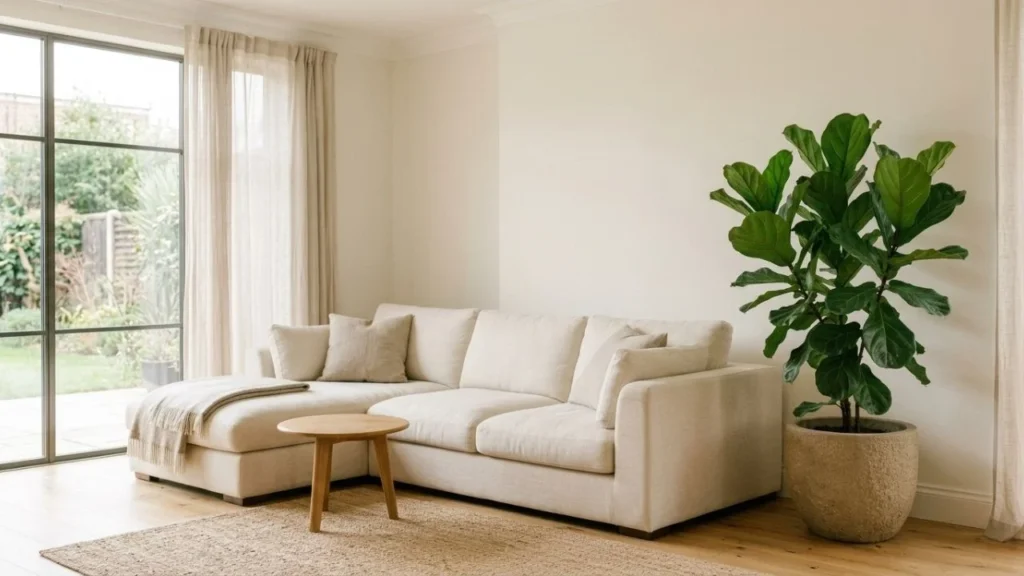
To decide how to decorate home with indoor plants, first consider where your room feels empty, flat or cluttered before choosing more greenery.
Affiliate disclosure: This post contains Amazon.com links. Family Haven Studio may earn a commission from qualifying purchases at no added cost to you.
You can own a dozen healthy plants and still feel as if none of them belongs in the room.
One is squeezed beside the television. Three are fighting for the same windowsill. A vine has slowly taken over the bookshelf. And somehow the empty corner you wanted to fix still looks empty.
That is the part people miss when learning how to decorate home with indoor plants.
You do not need greenery everywhere. You need each plant to have a reason for being where it is.
A tall plant can fill an awkward corner. A trailing one can soften a stiff shelf. A small pot can add life to a bare table. And sometimes the best decorating decision is to leave a surface completely alone.
Here are 15 practical ways to make plants feel like part of your home instead of extra things you need to find space for.
Before you buy anything, stand across the room and ask one question:
What actually looks wrong here?
That answer tells you much more than a plant trend ever could.
| If the room feels… | What may be missing | Try this first |
|---|---|---|
| Empty | Height | One larger floor plant |
| Flat | Different levels | Floor + shelf greenery |
| Hard | Softer shapes | Trailing leaves |
| Cluttered | Clearer focus | Group existing plants |
| Dark | Suitable conditions | Low-light choice or grow light |
| Small | Vertical interest | Shelf or narrow stand |
| Too neutral | Natural contrast | Rich green foliage |
| Unfinished | One clear focal point | A strong plant grouping |
Before placing a living plant, check that the spot can actually support it. The houseplant growing guide from the Royal Horticultural Society gives simple guidance on light, temperature, and humidity.
A gorgeous corner is still the wrong corner if the plant slowly gives up on life there.
Empty corners often collect little objects because we are trying too hard to make them look finished.
A basket appears.
Then a tiny table.
Then a floor lamp.
Then three little pots.
Now the corner is no longer empty. It is just busy.
Try one larger floor plant first.
A wide empty corner can handle a fuller plant with broad leaves.
A narrow gap beside a sofa may look better with a slimmer upright shape.
Stand back and compare the plant with the furniture around it.
If a large sectional makes the plant look tiny, the scale may be wrong. If the leaves block half the walkway, you have gone too far the other way.
Start with one.
Add another only if the area still feels visually thin after the first plant is in place.
Small-space tip: One well-sized floor plant often looks calmer than several tiny pots spread around the floor.
Plants and books work beautifully together because one brings order and the other brings loose, natural shapes.
But the bookshelf still has a job.
It needs to hold books.
Start with one trailing plant near the top or outer edge. Add a smaller upright plant lower down only if the shelf needs it.
Then mix in:
Yes, empty space is part of the arrangement.
If every shelf has books, candles, frames, baskets, plants, and a vine trying to escape, your eye has nowhere to rest.
Try:
books + one personal object + greenery + breathing room
You do not have to repeat that formula on every shelf. It is simply a useful starting point.
If you are working with a soft neutral room, these neutral living room ideas can help you connect greenery with the rest of the space.
Use a waterproof saucer or keep the living plant inside a nursery pot placed within a decorative outer pot.
If watering tends to get messy, carry the plant to the sink.
Your favorite hardcover does not need to join watering day.
A large sofa, media unit, console, or reading chair can make a little tabletop plant disappear.
This is where height matters.
Place a taller plant:
The plant should feel connected to the furniture rather than floating alone in the corner.
Do not style only from three feet away.
Walk to the opposite side of the room.
Can you still see the plant clearly?
Does it balance the furniture?
Does it block a doorway, window, television, or lamp?
That longer view catches problems you miss while standing beside the pot.
If every plant is the same height and shape, the arrangement can feel flat even when the individual plants are beautiful.
Try mixing three forms:
This is useful when figuring out how to decorate home with indoor plants because it gives every plant a different visual job.
Plant stylist Ryan Klewer also recommends mixing plant heights, colors, and textures rather than simply placing a large collection together. His indoor plant styling ideas give a useful look at grouping plants with more intention.
You do not need groups of three everywhere.
A tall plant and one lower, fuller plant can be enough.
Shape and scale matter more than following an odd-number rule.
One plant on the television stand.
One on the desk.
One beside the kettle.
One on the dresser.
One on the bathroom counter.
One little pot occupying the final six inches of the windowsill.
That is how greenery starts to feel like clutter.
Try creating two or three stronger plant areas instead.
For example:
Then let other surfaces stay plant-free.
Before buying another plant, gather a few existing pots in one place.
Move them around.
Change the heights.
Remove one.
Add another back.
You may discover that the room already had enough greenery. It was simply spread too thin.
That is free, and free is a perfectly respectable decorating budget.
Look around the room.
The television is rectangular.
The bookshelf is rectangular.
The window is rectangular.
The console is rectangular.
Your rug probably received the same memo.
Trailing foliage breaks up all those straight lines.
Use it on:
Do not let the plant cover the whole bookcase.
You should still be able to see the furniture, books, and objects underneath it.
If the vine has hidden half the shelf, trim it or move it.
The contrast between the clean furniture line and softer leaves is what makes the idea work.
The pot is part of the decorating.
A single plant can feel completely different in a cream ceramic pot than it does in terracotta or dark stoneware.
Look around the room before choosing planters.
Try:
Try:
Six identical planters can start looking more like a store shelf than a home.
Instead, repeat one element:
If your room already has warm white walls, these white wall color pairings can help you choose surrounding colors that work with the greenery.
A chair, lamp, little table, and plant can turn an ignored corner into somewhere you actually want to sit.
Place the plant slightly behind or beside the chair.
You want the leaves to frame the area, not greet you across the face every time you sit down.
A useful reading nook needs:
If your corner is tight, these small reading chair ideas can help with the furniture side of the layout.
The side table should still hold a cup.
The lamp should still light the page.
The plant should not make sitting down an athletic event.
A home can look good and still behave like somebody lives there.
Windows are natural places for greenery, but you do not need to cover every inch of glass.
Try:
This gives the plants access to useful light while keeping daylight available for the room.
The Royal Horticultural Society notes that indoor light changes by season, and some plants may need a different position as conditions change. Their best houseplant placement guide gives options for trickier rooms.
Before choosing the plant, notice:
Pick the spot.
Understand the spot.
Then choose the plant.
That order causes far fewer headaches.
Some corners simply do not get much daylight.
You have three reasonable choices.
Do not assume “low light” means “no light.”
Check the needs of the exact plant.
A grow light can make a difficult spot more useful for living greenery.
The RHS explains that artificial lighting can help plants in areas where natural light is too weak. Their indoor plant lighting guide covers the basics without turning the subject into a science lesson.
A full spectrum grow bulb can fit into a compatible E26 fixture and may be easier to work into a room than a large plant-light setup.
Check the bulb and fixture requirements before using it.
A dark corner does not become morally superior because you keep sacrificing living plants to it.
Good faux greenery is fine.
Use the option that makes sense for the actual room.
Plants can soften all the hard surfaces found in bathrooms:
But a tiny bathroom does not need another object beside the toothbrush holder.
Use vertical or unused areas first.
Try:
A steamy bathroom can still be dark.
Choose living greenery based on the actual conditions rather than assuming every plant loves a bathroom.
If there is almost no useful natural light and you do not want artificial plant lighting, faux greenery may make more sense.
Bedrooms usually benefit from less visual activity, not more.
You do not need plants on:
Try one or two strong placements instead.
A taller floor plant can fill a bright corner.
A compact plant can sit on a dresser.
A trailing plant can soften a secure shelf.
A high shelf, dark guest room, or difficult-to-water corner can be a good place for artificial greenery.
A realistic faux palm tree adds floor-level height without needing a bright window.
If the base looks too small, place it inside a larger decorative pot or basket.
That small change helps the whole thing feel more settled in the room.
When floor space is limited, look upward.
Plants can live on:
A tiered wood plant stand can gather smaller pots vertically instead of spreading them across the floor.
Measure first.
Check:
Product photos have a remarkable ability to make a compact stand look like it owns half the room.
If you have to turn sideways to pass the plant display, it is not working.
Small rooms need fewer pieces doing more useful jobs.
If the whole living room needs attention, not just the greenery, these DIY living room ideas offer other lower-cost changes you can combine with plant styling.
Sometimes the collection does not need another plant.
It needs contrast.
Look at what you already have.
If all the leaves are small and rounded, a larger broad-leaf plant may change the grouping.
If everything grows upright, try a trailing shape.
Mix:
ABC Gardening’s indoor plant styling guide also uses shape, texture, and color as part of plant styling.
Green works easily beside:
If the rest of your room is neutral, the plants may already be giving you all the contrast you need.
You do not automatically need another accent color.
This may be the hardest idea if every trip past a garden center ends with “just one more.”
Leave something empty.
One shelf.
One table.
One corner.
One side of the window.
Empty space gives the greener parts of the room more impact.
It also keeps the house from feeling like a greenhouse that happens to contain a sofa.
Use one simple rule:
Decorate the places that need something, not every place that can hold something.
If the table already has a lamp, books, and a useful tray, it may be finished.
If the corner already has a chair, basket, lamp, and floor plant, adding another plant probably will not fix anything.
Editing is part of decorating.
Different rooms need plants to do different jobs.
| Room | Best use for plants | Watch for |
|---|---|---|
| Living room | Height, softness, focal areas | Blocking walkways |
| Bedroom | Calm greenery | Crowded surfaces |
| Kitchen | Small fresh accents | Heat, grease, lost prep space |
| Bathroom | Soften hard finishes | Poor natural light |
| Home office | Break up work surfaces | Losing desk space |
| Small room | Add vertical interest | Too many floor pots |
| Dark room | Add greenery carefully | Choosing by looks alone |
Use larger plants to fill empty height and smaller ones to soften shelves.
Keep the television, doors, walkways, and seating usable.
Choose one or two areas rather than covering every flat surface.
A little greenery goes a long way.
Keep pots away from burners, grease-heavy areas, and places where you prepare food.
A bright sill or shelf can work if the plant suits the conditions.
Use greenery to soften tile and glass, but check the light before choosing a live plant.
A shelf or floor plant can add softness without eating into your working area.
Somewhere it does not interfere with:
That sounds obvious until one heroic leaf starts appearing in every video call.
Use this quick check first:
You may save yourself money by realizing the new plant you were about to buy has no job.
A plant can look perfect beside the sofa and still be the wrong choice for your home.
The ASPCA recommends checking the exact plant because some common houseplants can cause problems if cats or dogs chew or eat them. Use their pet plant safety guide before bringing an unfamiliar plant home.
Do not rely on a shop label that only says “tropical foliage.”
And do not assume putting a toxic plant slightly higher solves the issue if your cat treats shelving as a personal climbing course.
If your pet may have eaten a plant and you are concerned, contact your veterinarian or a pet poison service promptly.
You do not have to buy a whole new plant collection.
Try:
If the room still needs help, consider:
Custom shelving and large mature plants can look beautiful, but they are not required.
The point is not to own an impressive collection.
The point is to make the plants you choose work with the room.
Start with the visual problem in the room. Use a taller plant for empty height, trailing foliage for hard furniture lines, smaller plants for shelves, and grouped plants when scattered pots look messy. Keep surfaces and walkways useful.
Use vertical areas before filling the floor. A slim floor plant, narrow plant stand, shelf plant, or trailing plant can add greenery without stealing much walking room.
Not automatically.
One narrow, taller plant can look calmer than several little floor pots. Check its width and make sure it does not block light or movement.
Start with empty corners, shelves, areas beside large furniture, windows, and consoles. Then make sure the location suits the living plant’s needs.
There is no required number.
Two plants with different heights may look better than three similar ones. Start small and add only if the grouping still needs something.
Use one trailing plant near the top, then one compact plant lower down if needed. Mix the greenery with books and personal objects, and leave some open shelf space.
Yes.
Use living plants where the conditions work, then use good faux greenery in dark, awkward, or hard-to-reach areas.
The room does not need every leaf to submit proof of roots.
Group them into a few stronger areas instead of putting a pot on every surface. Mix heights and leaf shapes, then leave some surfaces empty.
Plant safety depends on the exact species. Check a trusted pet-safety database before buying, even if the plant is commonly sold as an indoor plant. The ASPCA maintains detailed toxic and non-toxic plant information.
If you are still working out how to decorate home with indoor plants, do not spend this weekend trying to redo the whole house.
Pick one place that has been bothering you.
Maybe the bookcase feels stiff.
Maybe the corner beside the sofa looks empty.
Maybe six little pots are scattered across the living room and none of them feels connected to anything.
Start there.
Move what you already own. Change the height. Remove one thing. Add something only if the room still needs it.
Then stand back.
The best plant-filled rooms do not work because they contain the most greenery.
They work because the plants make sense beside the furniture, the light, the people, the pets, the books, and everything else that makes the home yours.
Start with one awkward spot and make the plant earn its place.
Comments are closed.
Explore original printables, find another story or save your next creative project.

[…] year-round placement and styling, these indoor plant decorating […]
[…] If you want more ideas for mixing greenery with shelves without making everything feel crowded, see these style shelves with plants. […]