
POPULAR AT FAMILY HAVEN
POPULAR AT FAMILY HAVEN
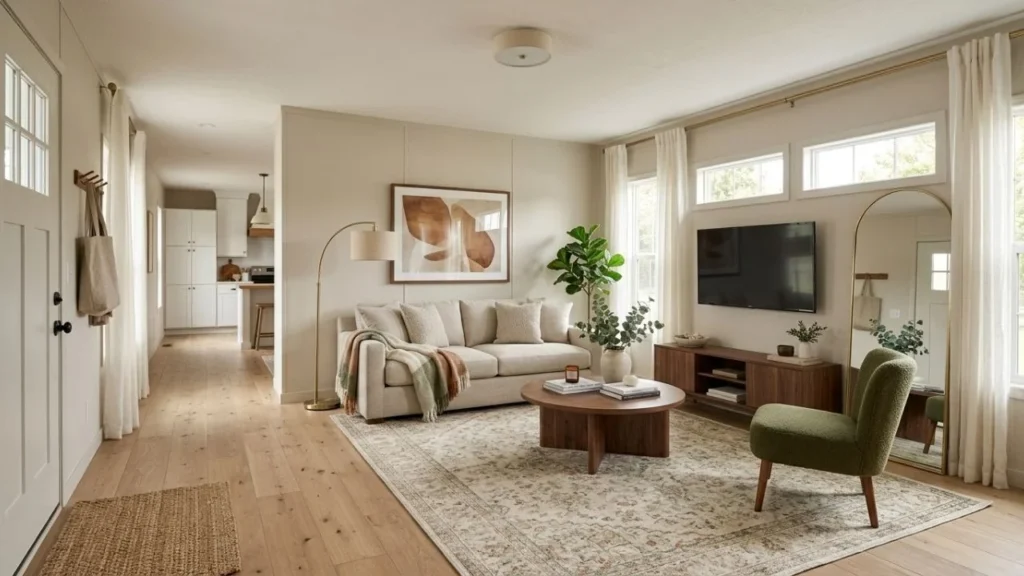
Mobile home interior ideas work best when you protect the everyday walkways, keep the main furniture comfortable and use the walls for useful storage.
You know that moment when a sofa looked perfectly normal in the store, then arrived home and suddenly seemed large enough to have its own mailing address?
Mobile homes expose furniture mistakes fast.
A table that sticks six inches too far into the walkway gets noticed every single day. A deep TV cabinet can make a narrow living room feel tighter. A kitchen cart can be brilliant in one gap and completely useless in another.
That is why the best mobile home interior ideas begin with how you actually move through the house.
You want your home to feel warm, stylish, personal, and comfortable. You also want to walk from the sofa to the kitchen without doing a small obstacle course around the furniture.
And mobile home does not automatically mean tiny. Current Clayton manufactured home plans include layouts above 2,000 square feet, while other current models sit closer to 850 or 1,000 square feet. The room size changes, but the same lesson holds: furniture placement matters.
If your main problem is not style but stuff with nowhere to go, these small-space storage ideas can help you go deeper on storage before you start buying more furniture.
Before you start changing every room, use one simple rule:
Path first. Function second. Pretty third.
The pretty part still matters. It just works better when you can open the closet door without moving a chair.
| If the room feels… | Start here | Think twice before adding… |
|---|---|---|
| Long and narrow | Shallower furniture | Another side table |
| Dark | Sheer curtains and lamps | Heavy dark window fabric |
| Choppy | Repeat wall or wood colors | A different palette in every room |
| Short on storage | Use walls and hidden spaces | Another deep cabinet |
| Dated | Paint, hardware and lighting | A full rip-out |
| Crowded | Remove one piece | More organizers |
Current small room staging advice also makes a useful point: you do not have to shrink every piece of furniture. A comfortable main sofa or bed can stay, while the secondary pieces become lighter, narrower, or easier to move.
That is much more livable than filling the room with six tiny pieces that still somehow manage to be in your way.
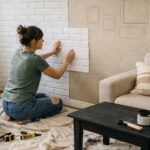
Older manufactured homes may have vinyl-coated gypsum wall panels with battens covering the seams. Those walls can look dated, but paint can change the room dramatically when the surface is prepared for the coating it already has.
A soft mushroom, warm white, muted sage, light taupe, or gentle blue-gray can brighten the living room without making the walls feel cold.
Do not treat the battens as something you have to disguise at any cost.
Painting the wall and battens in the same shade can make the lines much less obvious while saving you from turning a paint job into a seam-repair project.
The current vinyl wall painting guide from Mobile Home Living recommends cleaning VOG surfaces and using suitable primer and paint rather than treating the glossy surface like ordinary painted drywall.
Test your primer and finish in an out-of-the-way spot first. If you know the wall maker or have the home’s paperwork, check that information too.
A useful starting product is Zinsser Bulls Eye primer, which is sold as a bonding primer for several surface types.
Once the walls calm down, furniture, art, curtains, and wood tones suddenly have a much easier job.
A sofa should not be chosen by how big the empty wall looks.
Measure its full width and depth, then mark those measurements directly on the floor before buying.
ScotchBlue painter tape works well for laying out the footprint without moving actual furniture around.
Once the rectangle is taped down, walk your real route.
Go from the entry to the kitchen. Open the nearest door. Walk toward the hallway. Pretend you are carrying groceries or a laundry basket.
If you keep stepping across the tape, the sofa is already stealing your walkway and it has not even arrived yet.
A comfortable main sofa can work beautifully in a smaller room. The pieces around it simply need to respect the remaining space.
If the room is tight, a coffee table that only holds a candle and the remote is getting a lot of floor space for a very easy job.
A storage ottoman gives you a place for throws, games, extra pillow covers, toys, pet things, or the charger collection that somehow multiplies when nobody is looking.
A SONGMICS storage ottoman can work as a soft coffee-table alternative with storage inside.
Add one flat tray when you need a firmer surface for drinks.
If hidden storage is one of your biggest headaches, the small-space storage ideas guide has more ways to use space you already have before adding another bulky unit.
A long room already has plenty of straight lines.
The walls are straight. The sofa is straight. The TV unit is straight. The hallway probably continues the same direction.
A round coffee table breaks that pattern and removes sharp corners from the middle of a busy seating area.
The VASAGLE round coffee table gives you a round top plus a lower shelf, which can work well in a compact conversation area.
Keep the shelf simple.
A basket, two books, or a game is useful. Fifteen decorative objects under the table are just clutter wearing a downstairs apartment.
A tiny rug under only the coffee table can make a small living room look even more broken into pieces.
Try to choose a rug that lets at least the front part of the main seating sit on it.
A soft neutral such as the Soalmost beige area rug gives the living room a base without adding another loud pattern.
If the room already has wood, black, sage, rust, blue, or brown in the furniture, choose a rug that picks up one or two of those shades.
The rug should make the sofa and chairs look like they belong to one sitting area.
It should not look like the coffee table got its own private island.
A mirror is not useful just because somebody said small rooms need mirrors.
Its position matters.
Place one near a window or where it can reflect a brighter part of the room. That gives the wall more light and depth without adding another large cabinet.
A BEAUTYPEAK arched floor mirror gives you height without needing a wide dresser underneath it.
If children visit or live in the home, secure large furniture and mirrors properly. The CPSC furniture anchoring guidance recommends anchoring furniture and TVs to reduce tip-over risk.
Short curtains can make a small window look even shorter.
Mounting light curtains a little higher and letting them fall close to the floor gives the wall one long vertical line.
The OWENIE white sheer curtains are a simple choice for filtering daylight without putting a heavy dark block around the window.
Use a shade or another privacy layer where needed.
If the living room and dining area share the same wall, using the same curtain color across both areas can quietly connect the spaces.
A ceiling light may make the room visible, but that does not mean the room feels good at night.
Add light at different heights.
A floor lamp beside the sofa, a small lamp near the opposite side, and the ceiling fixture give you choices depending on what you are doing.
The Brightech Montage floor lamp works without needing another side table underneath it, which is useful when floor space is already limited.
Place the lamp beside a seat where somebody will actually use the light.
Do not exile it to the far corner just because the corner looked empty.
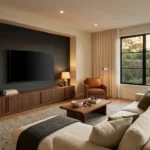
A TV cabinet can quietly steal a surprising amount of floor.
If your living room is narrow, look at the depth of the unit before you fall in love with the front of it.
The mopio Ensley TV stand is listed at 13.7 inches deep and 59 inches wide, so it gives you useful storage without the depth of some larger entertainment units.
Keep the surface mostly open.
A lamp, one framed photo, or one larger object can sit beside the television. You do not need a parade of tiny decorations lined across the top.
If you like a warmer, lived-in home rather than a stripped-back look, these cozy home decor ideas show how texture and lighting can add comfort without making the room crowded.
Sometimes the cabinets are not the real problem.
The handles are.
Old bright brass, chunky plastic, or an awkward shape can date a kitchen even when the cabinet doors are still solid.
A set of Ravinte black cabinet pulls can give simple cabinets a cleaner line without changing the entire kitchen.
Do not order from a photo alone.
Measure from the center of one existing screw hole to the center of the other. If the new handles use the same spacing, the change is much easier.
If they do not, you may be filling and drilling holes.
That is a different Saturday.
A compact kitchen often has less wall area, which means the backsplash becomes easier to notice.
Keep the pattern simple if the counters and cabinets already have visible grain or color.
Art3d subway backsplash tiles can give a kitchen a lighter background without bringing in another large piece of furniture.
Check the product directions for the exact surface and location before applying peel-and-stick material.
In a narrow galley kitchen, keeping counters clearer and finishes connected from one side to the other can make the room feel calmer.
That odd space beside the fridge or cabinet may be too narrow for normal furniture but wide enough to be useful.
A SPACEKEEPER slim rolling cart can hold pantry packets, bottles, cleaning items, or laundry supplies in a narrow gap.
Measure the space at the floor and higher up.
Baseboards, counter edges, pipes, and appliance handles can steal space you did not notice at first glance.
Put heavier items lower down and the things you reach for often closer to hand.
The cart should slide out easily. If moving it requires a wrestling match with the refrigerator, the gap was not the right gap.
You may need room for four people at dinner.
You probably do not need that full table taking up the walkway all day.
A Ashley Hammis drop-leaf table can stay smaller for everyday use, then open when more table space is needed.
Tape the open and closed footprint on the floor before buying.
Also mark where the chair will sit when somebody pulls it out.
A table can technically fit and still make the trip from kitchen to living room annoying every single day.
Under the bed is some of the most useful storage in a small bedroom, but only when there is enough clearance to reach it.
A KD Frames platform bed sits higher than a low upholstered platform and leaves usable space beneath the rails.
Measure the height of the storage bins you plan to use.
Then compare that measurement with the actual open space below the bed frame, not the total bed height.
Store things you do not need every morning: extra bedding, off-season clothes, luggage, or spare towels.
Do not put the one pair of shoes you wear three times a week under there unless you enjoy getting on the floor before breakfast.
Closets fill quickly when blankets, spare sheets, winter clothes, luggage, shoes, and everyday clothes are all competing for the same shelf.
Amazon Basics underbed bags give soft items a place to live without adding another dresser.
Group by purpose.
One bag for spare bedding and one for seasonal clothes is much easier than two bags containing a little bit of everything.
If you label them, label what is actually inside.
“Miscellaneous” is not a storage category. It is a warning.
The space beside the bed can be surprisingly tight once you account for closet doors, the bedroom door, and the route you use to make the bed.
A VASAGLE charging side table gives you a narrower bedside piece with storage and charging in one spot.
Keep the top for what you actually use in bed.
Lamp. Water. Phone. Book.
The pile of receipts from three weeks ago is not part of the bedroom design.
You do not need identical nightstands either. If one side has more room, give that side the fuller table and use a smaller solution on the tight side.
A small bathroom can run out of floor space before it runs out of things that need a home.
The wall above the toilet is often one of the easiest places to add storage without narrowing the walkway.
A Simple Trending toilet rack gives you open shelves for towels, extra paper, baskets, and daily toiletries.
Measure the toilet, wall, pipes, and shelf depth before ordering.
Keep the storage light enough that the bathroom does not feel as if a pantry moved in.
One basket for smaller bottles, folded towels, and a little open shelf space will usually look calmer than packing every inch.
A row of little bathroom mats can make a small floor look chopped into even smaller sections.
One rug placed where your feet actually land after the shower is usually enough.
An OLANLY gray bath rug gives you a soft neutral option that can sit beside white, beige, black, light wood, or cooler bathroom colors.
Check that the bathroom door clears the rug.
There is nothing relaxing about opening the door and dragging the bath mat halfway across the room every time.
Shoes, bags, coats, packages, and pet leads all arrive through the same door.
Give at least some of them a home right there.
A SONGMICS white shoe bench is narrow enough for smaller entries while giving you a seat and shoe storage in the same piece.
Measure the open door swing before ordering.
You should still be able to walk into the home without the front door trying to negotiate with the furniture.
Keep everyday shoes at the entry and move out-of-season pairs somewhere else.
Your shoe bench does not need to represent your complete footwear history.
A standing coat rack can eat floor space in a narrow entry.
Wall hooks keep coats and bags close to the wall and leave the walkway open.
The Umbra Flip hook rack has retractable hooks, so the unused hooks fold back rather than sticking into the room.
Mount hooks with hardware suited to the actual wall and expected load.
If the entry sits near a tall cabinet or other furniture, the CPSC furniture anchoring guidance is also worth reading, especially where children live or visit.
A big round hamper can take up more floor than the laundry itself deserves.
Look for the empty strip beside the washer, dresser, vanity, or closet.
An efluky slim laundry hamper uses a tall, narrow shape rather than a wide round footprint.
Make sure you can still lift or pull it out once it is full.
If you have to move two pieces of furniture before laundry day can begin, the storage spot is too clever.
Not every dark cabinet or shelf needs a rewiring project.
Rechargeable lights can help beneath kitchen cabinets, inside a closet, under a laundry shelf, or in another spot that needs task light.
MCGOR under cabinet lights are rechargeable motion-sensor lights that can work in smaller work areas where permanent wiring is not necessary.
Use them where the light has a job.
A kitchen prep surface makes sense. The shelf where you keep holiday plates you touch twice a year probably does not need its own lighting ceremony.
For electrical work that goes beyond plug-in or rechargeable lighting, use home-specific guidance and a qualified professional when needed.
Hallways can feel like leftover space because nobody really decorates them.
A runner can give that strip of floor a purpose while repeating colors from the rooms on either end.
The RELEANY washable runner rug comes in a narrow 2-by-6 format that can suit a hall, galley zone, laundry path, or other skinny floor area.
Leave some floor showing along the sides if the hall width allows it.
Pick a runner with one color already used nearby, such as rust, olive, brown, cream, charcoal, or muted blue.
That tiny repeat can make two rooms feel related without making them match.
Small wall does not automatically mean small art.
One larger picture over a sofa, dining table, console, or bed can look calmer than a crowd of little frames trying to fill every inch.
An MCS black poster frame fits an 18-by-24-inch print and can hang vertically or horizontally.
Choose art with a color already present in the room, then let the frame have some blank wall around it.
If you want more room ideas before choosing the overall look, these dream house interior ideas have more whole-room inspiration you can pull from.
You do not need a quote above the couch reminding everyone that this is a home.
The sofa, family photos, laundry basket, and missing remote have already confirmed it.
Start by looking at the room from the front door or the main entrance into the living area.
Where does your eye stop first?
If it stops at the side of a bulky recliner, deep TV unit, or sofa arm blocking the path, solve that before changing the wall color.
A good narrow-room setup might use:
The recent mobile home space guide also recommends furniture that does more than one job and storage that uses the room efficiently.
Do not automatically shove every piece against the wall.
Sometimes moving the sofa forward a few inches makes the seating arrangement look intentional and gives curtains more room to hang behind it.
Open living, dining, and kitchen areas can look bigger when they feel like parts of one home instead of three mini rooms trying different personalities.
Pick a small family of finishes and repeat them.
For example:
The living room can use a sage cushion. The kitchen might have a green plant or tea towel. The bedroom can use sage bedding later.
Nobody needs matching furniture from room to room.
You just want little clues that tell your eye, “Yes, these spaces know each other.”
If you love a soft, comfortable home, our cozy home decor ideas can help with warmer lighting, fabric, and easy room details without filling every surface.
Start with the things you see and touch constantly.
Cabinet handles, backsplash, lighting, the amount of stuff on the counter, and how well the storage works will change how the kitchen feels long before a complete cabinet replacement becomes necessary.
Try this order:
That order can save you from choosing a wall color around clutter or buying storage that does not fix the actual problem.
If the cabinets, plumbing, walls, electrical work, or other parts need major repair, separate that project from decorating.
Paint, rugs, curtains, furniture, lamps, removable decor, and small storage changes live in a different world from removing walls or changing major building systems.
HUD says significant additions or structural alterations to a manufactured home may require local permits and could affect HUD Code compliance or the home’s warranty. Read the HUD homeowner guidance and check with the right state, county, local agency, manufacturer, or qualified professional before making those changes.
That is not meant to make decorating scary.
It simply means the moment a project changes from “I am painting this wall” to “I wonder if this wall can disappear,” stop and get home-specific information first.
Cut second.
The wall measurement is not enough.
Measure the place where the furniture will sit, the doors it must pass through, and the route people will use after it is there.
Small home does not mean dollhouse furniture.
One comfortable sofa and one useful table often look calmer than five undersized pieces filling the same area.
Vertical storage can help, but not every empty wall needs shelves.
Storage looks best when it gives something a home. Empty shelves that exist just because the wall was blank quickly become clutter shelves.
You can absolutely use more than one color.
Just repeat a few tones or finishes so the rooms feel related.
First decide what actually needs to stay in the room.
Then buy storage for what remains.
Otherwise, you can spend money organizing things you did not need in the first place, which is a slightly expensive way to keep clutter.
Yes in many homes, but identify the wall surface first.
Some manufactured homes use vinyl-coated gypsum panels, while others have different wall finishes. The vinyl wall painting guide explains cleaning, primer, paint, and battens for VOG walls.
Protect the main walkway first.
Use one comfortable main sofa, a smaller secondary seat, a round or compact coffee table, and a shallow TV unit. Then add one rug to connect the seating rather than squeezing in more furniture.
No.
Light colors can help a dim room feel brighter, but dark green, navy, charcoal, brown, and other deeper shades can look beautiful when the room has enough light and contrast.
You can also use a dark shade on one smaller wall, a bedroom, cabinetry, or built-in furniture if you are nervous about painting the whole room.
Furniture that leaves a comfortable route through the room.
That may mean a regular-size sofa with slim side pieces in one home and a smaller sofa in another. Measure your actual room instead of shopping from the label “small-space furniture.”
Focus on consistency rather than stuffing in more decor.
Good lighting, full-length curtains, one larger rug, clean cabinet hardware, a repeated wood tone, fewer tiny accessories, and better furniture placement can change a room faster than a basket full of decorative objects.
Use space that is already there.
Try under-bed storage, an ottoman with a lid, the area above the toilet, a narrow kitchen gap, wall hooks, and a slim laundry hamper before buying a large freestanding cabinet.
Do not decide by looking at the wall.
A structural change can affect code compliance, permits, building systems, or a warranty. Check the home-specific information and local requirements before removing or altering an interior wall.
The strongest mobile home interior ideas are not the ones that squeeze the most furniture, baskets, wall art, and trendy pieces into every room.
They are the changes that make Tuesday morning easier.
The sofa no longer blocks the path. The shoes have somewhere to go. The kitchen counter is usable again. The bathroom floor is not covered in five little mats. The bedroom finally has somewhere for the spare blankets.
Then the pretty part gets easier.
Start with the room that annoys you most and fix one real problem first. After that, add the paint, fabric, wood, light, and art that make the home feel like yours.
You do not have to finish the whole house this weekend.
One good decision can make the next room much easier.
Explore original printables, find another story or save your next creative project.

[…] your room is already fighting for walking space, these small-space furniture ideas show the same “path first, furniture second” thinking in another type of compact […]
[…] you want a few other manageable home projects before attempting a bigger furniture makeover, these DIY living room ideas include small updates, furniture projects, and beginner-friendly room […]
[…] is the same path first principle I use in these small-space furniture ideas: keep the main bed comfortable, then make secondary storage slimmer, shallower, or vertical before […]
[…] same “path first” principle works well in other compact rooms too. These small-space layout ideas go deeper into furniture footprints, walkways, and using narrower secondary pieces when space gets […]