
POPULAR AT FAMILY HAVEN
POPULAR AT FAMILY HAVEN
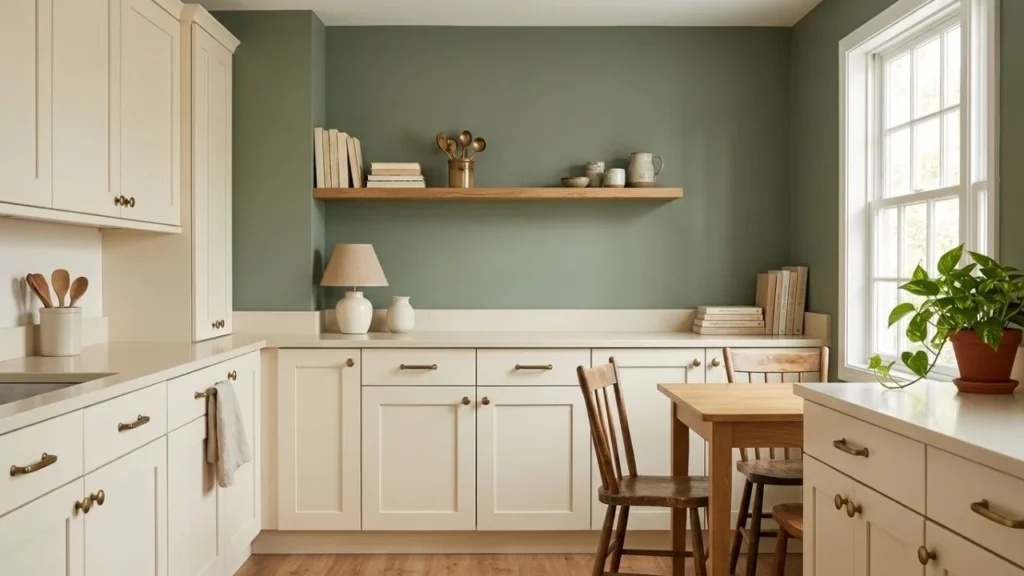
These sage green and cream kitchen ideas start with the countertop, flooring and wood already in your room, so the new colors feel like they belong.
A sage kitchen can look soft and warm in one photo, then somehow look gray, yellow, or dull when you try the same colors at home.
Usually, the problem is not sage itself.
The green is reacting to something already in the room. Your cream paint may lean yellow. The countertop may be cool gray. Your oak floor may have strong golden tones. Even the light coming through the window can shift what you see.
That is why the best sage green and cream kitchen ideas are not about copying somebody else’s room piece by piece. They are about learning where to put the two colors, what to pair with them, and how to make the look work in the kitchen you already have.
Before the 20 ideas, there is one decision that will save you from repainting later.
Look at what cannot easily change first.
That usually means:
Then choose your sage and cream around those finishes.
Sage is not one exact green.
Some shades lean yellow or olive. Others contain more gray or blue.
Cream changes too. One cream can look soft beside sage, while another suddenly looks yellow.
A simple rule helps:
Put the samples beside each other and beside the finishes they must live with.
Do not judge them from opposite sides of the room.
For more help before committing to cabinetry, this kitchen cabinet planning guide covers cabinet styles, materials, layout, and other decisions that affect the finished kitchen.
A paint sample that looks lovely at noon can feel completely different after dinner.
Check it:
That little test is cheaper than staring at twenty freshly painted cabinet doors and realizing the green is not the green you thought you bought.
This is one of the easiest ways to bring green into the kitchen without letting it take over.
Sage on the bottom gives the cabinets visual weight. Cream uppers keep the room lighter around eye level.
It works especially well in:
Use a pale cream counter or backsplash between the two colors so the change feels intentional.
Lower cabinets collect shoe marks, crumbs, pet hair, splashes, and fingerprints.
Choose a cabinet paint made for surfaces that need regular wiping. A dreamy color is much less dreamy if cleaning it removes the finish.
Budget option: If your existing upper cabinets are still good, paint only the lower run.
Half the painting. Plenty of change.
If you already have cream cabinetry, do not repaint perfectly usable cabinets just to follow a color scheme.
Use the island.
A sage island becomes the main color moment while the cream cabinets keep everything else quiet.
Add:
If you are choosing an island from scratch, think about walking room before color. A beautiful island that turns the dishwasher into an obstacle course is not an improvement.
Sage cabinetry can carry more of the color when the walls stay light.
Cream makes the contrast softer than a sharp white, especially in rooms with wood, beige stone, brass, or warm flooring.
A useful combination is:
| Surface | Try |
|---|---|
| Cabinets | Muted sage |
| Walls | Warm cream |
| Counter | Soft white or cream |
| Floor | Oak or medium wood |
| Hardware | Brass, bronze, or nickel |
You do not need every finish to be warm. You just want the room to stop looking as if half of it belongs to a different kitchen.
Cabinet painting is a job.
Wall painting is a much easier Saturday.
If your cream cabinets are still in good condition, sage walls give you the color without turning the kitchen into a renovation.
This works especially well when you have:
Tip: Start with one wall or breakfast area if you are unsure. Live with the color before painting every available surface.
A kitchen with only sage, cream, and pale hard surfaces can start looking a little flat.
Wood changes that quickly.
Natural oak brings grain, warmth, and variation without needing another strong color.
Use it through:
You do not need custom oak cabinetry.
Sometimes the table you already own is the missing piece.
For more pairing ideas, the sage green styling guide gives useful examples of sage with cream, soft neutrals, wood, and deeper accents.
Brass can make a muted green kitchen feel warmer without adding another paint color.
Use it sparingly through cabinet knobs, pulls, pendants, or a faucet.
If the kitchen already has stainless appliances, that is fine. Your refrigerator does not have to join a metal-matching club.
The better question is:
Does the new finish repeat enough to look intentional?
Two or three brass moments can be enough.
If you are changing existing pulls, measure the distance between the screw holes before buying replacements. These brushed brass cabinet pulls are one Amazon.com USA option with multiple size choices.
A cream countertop can sit beautifully above sage cabinetry, but avoid choosing from a tiny sample alone.
Veining that looks subtle on a four-inch square can become the loudest thing in the kitchen when repeated across a full slab.
Look for movement that works with:
Warm beige, soft taupe, and quiet gray-green movement can all work, depending on the sage.
Take a cabinet sample to the slab or bring a large countertop sample home.
Do not choose stone from memory.
Human eyes are not paint scanners.
Butcher block adds instant warmth beside sage.
It works especially well for cottage, farmhouse, relaxed traditional, and casual family kitchens.
But wood counters are not maintenance-free.
Water around sinks, food prep, hot pans, and regular wiping can take a toll. Follow the finish maker’s care instructions and use cutting boards rather than treating the whole surface like one.
If you love the look but not the upkeep, use butcher block on:
You can get the wood warmth without putting it around every sink and stove.
Cream tile does not have to disappear.
Texture can do the work that pattern usually does.
Try:
Keep the grout close to the tile color if you want a quieter background.
Dark grout creates a grid. That may be exactly what you want, but it changes the whole feel.
If you are still comparing material directions, these timeless kitchen color schemes show how color, wood, and neutral finishes can share a kitchen without every surface fighting for attention.
A small kitchen does not have to become an all-white box.
Try putting the deeper shade below the counter line and cream above it.
That gives you color while keeping the upper half lighter.
For a narrow galley, keep the rest simple:
Tip: In a tight kitchen, function beats styling. Check that pulls, stools, rugs, and open cabinet doors do not steal needed walking room.
Sage and cream do not automatically mean farmhouse.
Flat-front cabinetry changes the mood completely.
Use:
The color becomes the interesting part instead of decorative cabinet detailing.
This is a useful direction if you like the softness of sage but do not want a cottage kitchen.
Shaker cabinets sit comfortably between plain and decorative.
That makes them a good fit for sage green and cream kitchen ideas because the door profile adds a little shadow and texture without taking over.
Pair them with:
You can make the same cabinet style feel cottage, transitional, or classic depending on what you place around it.
A sage wall behind cream or pale wood shelves creates an easy little color moment.
Use open shelves for items you actually reach for:
That keeps the shelves useful rather than turning them into a display you are afraid to touch.
Open shelves get dusty.
In a kitchen, they can also collect cooking residue.
If wiping every shelf sounds miserable, use one short section and keep the rest behind doors.
Good enough still counts.
If you have a long wall of sage cabinetry, a cream range hood can give the eye somewhere to rest.
It also connects the upper half of the kitchen back to cream walls or tile.
You can go in three directions:
| Look | Range Hood |
|---|---|
| Soft | Cream |
| Warm | Natural wood |
| Strong contrast | Dark wood |
Keep the shape related to the rest of the kitchen.
A giant decorative hood in a tiny room can look like it arrived from another house.
Do not limit the color story to the cooking area.
A nearby breakfast nook can repeat sage through:
Keep larger pieces cream or wood.
The kitchen and nook should feel related, not cloned.
This is especially helpful in open-plan spaces where one little repeated color can connect two zones.
This is a small project with a noticeable result.
Cream glass-front cabinets become much more interesting when the back panel is sage.
White dishes, glassware, and cream pottery stand out against it without adding clutter.
A ScotchBlue painter tape roll is one Amazon.com USA option if you need tape for the edges.
This gives you sage without committing to an entire wall of green cabinetry.
A runner can test the palette before you touch the cabinets.
Look for a pattern that includes some combination of:
A bit of pattern also hides everyday crumbs and marks better than plain ivory.
If your household includes children, pets, or enthusiastic tomato-sauce eaters, check the care label before falling in love with the color.
A rug that cannot survive your actual life is décor with a countdown timer.
If painting still feels too permanent, start smaller.
Try:
Then stop for a week.
Look at the room again.
If the green feels right with the cabinets and counters, you can move to paint later.
This is one of the simplest sage green and cream kitchen ideas for renters and anyone trying to spend less.
Sage, cream, pale oak, pale stone, and pale flooring can sometimes leave the room without enough depth.
One dark wood can fix that.
Try walnut or a deeper brown through:
Do not scatter five dark woods around the room.
One repeated deeper tone is easier on the eye and simpler to work with.
Once you choose sage cabinetry or a sage island, you do not need a matching green kettle, green rug, green curtains, green dishes, green clock, and green toaster.
Repeat the color lightly.
For example:
Option one
Option two
Three touches are often enough for the room to feel connected.
The goal is a kitchen with a color story, not a kitchen wearing a uniform.
The easiest way to narrow the list is to start with what you are actually willing to change.
| Your situation | Start here |
|---|---|
| Cabinets are staying | Sage walls, rug, art, accessories |
| Cream cabinets already work | Sage island or walls |
| Small kitchen | Sage lower cabinets, cream above |
| Dark kitchen | Lighter sage, cream walls, better lighting |
| Limited budget | Paint, hardware, textiles, existing wood |
| Rental | Runner, ceramics, art, removable changes |
| Busy family kitchen | Washable fabrics, wipeable finishes, closed storage |
| Full renovation | Cabinets, counter, backsplash, flooring, lighting together |
That one decision keeps you from buying small things for a room that actually needs a bigger change, or starting a renovation when paint would have been enough.
Wood is the easiest answer.
Oak, walnut, woven fibers, stone, and pottery give the room texture that flat paint cannot.
A ceiling light alone can make even a nice kitchen feel harsh.
Where practical, use a mix of:
The room should work when you are chopping onions at 7 p.m., not only when sunlight happens to hit the cabinets perfectly.
Do not automatically replace every cream surface with crisp white.
Cream is doing an important job in this palette. It softens the green and creates warmth.
Your countertop covers too much visual space to ignore.
Choose paint beside it.
Warmth does not mean turning the kitchen yellow.
Stainless appliances, nickel hardware, or a cooler stone can give the room needed balance.
Give the green a stopping point.
Cream, wood, stone, and open wall space help the sage look intentional.
That pale runner looks lovely.
So does cream grout.
So does an entire wall of open shelving.
Then Tuesday happens.
Choose the version you are willing to clean.
Do not remove good cabinets just because a saved photo uses a different door style.
Paint, new hardware, better lighting, or one wood detail can change the room without sending usable materials to the dumpster.
You can approach sage green and cream kitchen ideas in stages instead of paying for everything at once.
Tip: Start with the part of the room creating the biggest visual problem. Ten little purchases rarely fix one large problem.
A warm off-white or cream often sits comfortably beside muted sage, but there is no single cream that works in every kitchen.
Check it beside the sage, countertop, flooring, and wood. A cream that looks soft on its own can turn yellow beside the wrong green.
Cream quartz, soft white quartz, warm-veined stone, butcher block, and some darker surfaces can work.
The deciding factor is the undertone.
For a deeper look at finish combinations, this sage cabinet color guide discusses countertops, flooring, backsplash, and hardware alongside sage cabinet colors.
Yes.
A lighter sage on lower cabinets, paired with cream uppers or walls, gives you color without putting the deeper tone across every surface.
Good lighting and a simple material palette matter too.
Brass and bronze bring warmth. Nickel can feel clean and balanced. Black creates stronger contrast.
Look at your appliances, faucet, lighting, and other metals before choosing.
You do not need every metal to match.
Yes.
Stainless steel can add a cooler, cleaner break between sage, cream, and warm wood.
Repeat another finish elsewhere so the appliances do not feel isolated.
No.
Shaker cabinets, vintage-style lighting, and warm wood can give the palette a cottage or farmhouse feel.
Flat cabinet fronts, simple counters, clean lighting, and restrained hardware can make the same colors feel much more modern.
Sage remains a useful muted green because it can work with cream, wood, stone, and a range of cabinet styles. Current 2026 coverage still includes sage among kitchen and cottage color directions, even as deeper greens and other stronger colors also gain attention.
The better question is not, “Is everybody still using sage?”
It is:
Does sage work with the fixed finishes and light in your kitchen?
That answer matters more than the calendar.
You do not need to copy all 20 sage green and cream kitchen ideas.
Pick the one that solves the problem you actually have.
If the room feels cold, add warmth through cream and wood. If everything feels pale, add sage lower down. If the cabinets are fine, leave them alone and change the walls. If money is tight, start with paint, fabric, or what you already own.
And if your finished kitchen looks beautiful but there are cereal bowls on the counter, a paw print on the floor, and somebody left the cabinet open again?
That is still a beautiful kitchen.
A home does not need to stay ready for a photo all day to feel good to live in.
Explore original printables, find another story or save your next creative project.