
POPULAR AT FAMILY HAVEN
POPULAR AT FAMILY HAVEN
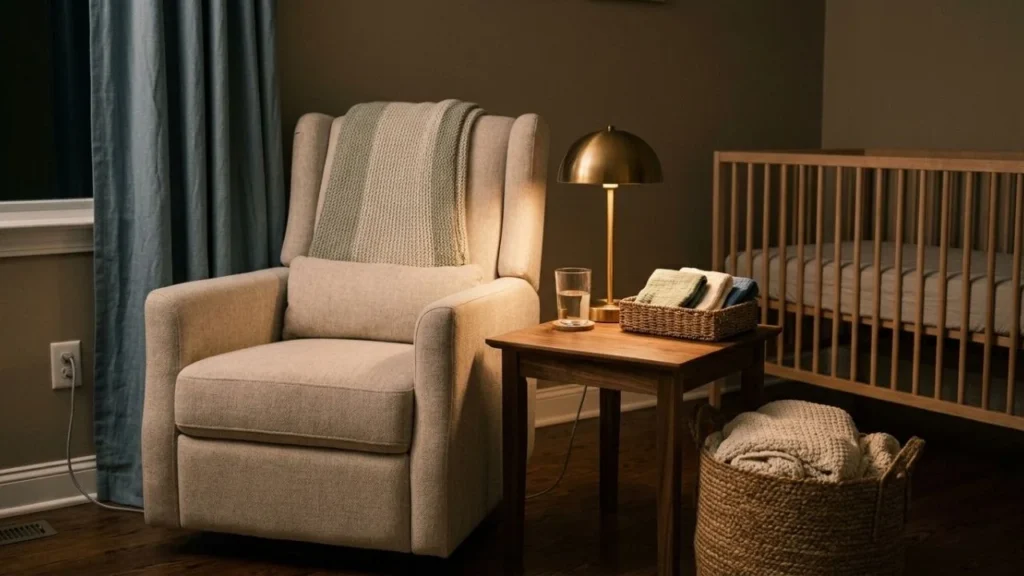
The best neutral baby nursery ideas for 2026 have moved beyond rooms filled with one shade of beige. Warmer browns, natural wood, muted greens and blues, traditional patterns, wallpaper and personal details are giving neutral nurseries more character, while parents are also thinking harder about storage, room size and furniture that can stay useful after the baby stage.
You can make a nursery so neutral that the room almost disappears.
Cream wall. Cream rug. Cream chair. Cream basket. Cream curtains. By the time you add another beige cushion, you may start wondering why the room you carefully planned still feels unfinished.
That is the problem I want these neutral baby nursery ideas to solve.
A calm nursery does not need seventeen colors. It does need enough difference in tone, texture, wood, pattern and shape for your eye to have somewhere to go.
Current 2026 nursery design is giving parents more freedom here. Babylist’s 2026 nursery trend report points to color-led rooms, traditional details, vintage touches and modern woodland styling, while its baby-gear team is seeing neutrals deepen into taupe, mocha and richer brown, with parents also leaning toward pieces that last longer and work in smaller homes.
That makes neutral decorating much more interesting.
You can still start with cream, oatmeal or warm white. Then bring in walnut, sage, cocoa, dusty blue, gingham, toile or one piece of art that actually means something to your family.
The strongest neutral baby nursery ideas right now share four changes. You do not need to use all four. Think of them as options for getting away from the flat, everything-matches nursery.
| What is changing | What it looks like | Try it when… |
|---|---|---|
| Neutrals are getting deeper | Mushroom, mocha, cocoa, walnut, taupe | Cream and pale beige feel washed out |
| Muted color acts like a neutral | Sage, olive, dusty blue, muted clay | You want color without a bright theme |
| Older patterns are returning | Gingham, toile, paneling, vintage-style art | Plain walls feel unfinished |
| Rooms are planned to last longer | Flexible furniture, useful storage, adult-friendly seating | You do not want to redo the room in two years |
Babylist’s current nursery coverage points to color as the room’s main theme, preppy and traditional styling, vintage pieces and updated woodland rooms. Its 2026 gear research also notes that buyers are choosing longer-lasting pieces and richer neutrals rather than staying only with pale oat and cream.
Architectural Digest’s nursery planning advice makes a similar case for rooms that connect with the rest of the home, furniture that can stay useful as the child grows, muted colors and organic materials.
Sage is a good example.
Project Nursery now describes sage as a nursery color that has stayed around long enough to behave more like a classic than a short-lived fad. Its sage nursery styling guide pairs the color with wallpaper, natural materials and quieter furniture rather than turning the whole room green.
The same idea works with olive, dusty blue, mushroom and cocoa.
They give you color, but they are soft enough to sit beside cream, warm white and wood without the room feeling loud.
The nursery can have art, color, wallpaper and texture. The crib needs a much simpler plan.
Health Canada recommends a firm, flat mattress with a fitted sheet and no pillows, loose blankets, bumper pads, toys or other soft objects in the baby’s sleep space. It also advises placing the crib away from windows, accessible cords and nearby furniture, and securing nursery furniture to the wall. Its safe nursery setup explains the room layout in plain language.
The American Academy of Pediatrics gives similar safe sleep guidance for keeping loose bedding and soft objects out of an infant’s sleep area.
So when I mention cushions, throws or softer textiles below, I mean the adult chair, rug, storage or another part of the room, not the baby’s crib.
These neutral baby nursery ideas use different approaches, not seventeen versions of beige. Some begin with color. Others use pattern, wood, wall detail, family pieces or a smarter floor plan.
If bright white feels sharp and pale beige feels too familiar, oatmeal with walnut gives you an easy middle ground.
Oatmeal keeps the walls soft. Walnut gives the room enough darkness to keep the crib, dresser and artwork from disappearing into one pale block.
Try:
I would stop before adding brown to every small accessory. Let the furniture carry the deeper tone.
Quick tip: Look at the paint sample beside the actual wood furniture. A warm beige can suddenly look gray beside a redder walnut finish.
Mushroom sits between beige, taupe and soft brown, depending on the light. That makes it useful when standard beige feels too yellow but gray feels cold.
Try mushroom walls with cream curtains, a warm white rug and oak furniture. Add one darker brown or black detail so the softer tones do not blur together.
If your nursery already has white walls, these colors with white walls can help you compare warmer and cooler pairings before you choose curtains or furniture.
Test mushroom paint on more than one wall.
Cool daylight can pull gray forward. If that happens, move toward a warmer taupe, oatmeal or beige with a brown undertone.
Sage can give the room color without making it feel themed.
You do not need four green walls. One sage wall, a sage dresser or sage curtains can be enough beside cream, warm white and natural wood.
A simple palette could be:
sage + warm cream + oak + soft brown
Project Nursery’s current sage coverage also uses the color with natural textures, wallpaper and warm neutrals rather than treating it as a stand-alone statement.
Go a little deeper.
Muted olive, eucalyptus or gray-green can give you the same connection to nature with less of the familiar sage-and-beige look.
Olive gives a nursery more weight than pale sage.
I would use it on one larger element, such as the curtains, lower half of the wall or dresser, then keep the crib area lighter with ivory, warm white or pale wood.
This pairing works well if the rest of your home already uses green, brown, black or wood. The nursery feels connected to the house instead of looking like it came from a completely different design plan.
Worth knowing: Olive can become muddy beside cool gray. Warm white, cream, walnut and oak are usually easier partners.
Brown is one of the most useful directions in 2026 because it solves a common neutral-room problem: not enough contrast.
Babylist’s 2026 gear research notes a move from pale oat and cream toward taupe, mocha and richer browns.
You can use cocoa through:
Then keep the largest lighter pieces ivory or cream.
A nursery does not become dark because it contains one brown element. It often looks warmer because something finally has enough depth to stand apart.
Dusty blue can behave like a neutral when it has enough gray in it.
Pair it with taupe, walnut and cream rather than stark white and silver-gray. The warm materials stop the blue from making the room feel cold.
This is one of my favorite neutral baby nursery ideas for someone who wants color but has already seen enough sage to last until preschool.
Try dusty blue on the curtains or one wall first. You can always add more later.
Muted clay gives a pale nursery a small amount of earthy warmth.
Use it through artwork, curtains, a rug or another accent that can be changed without repainting the room.
Try:
sand + cream + muted clay + warm oak
That gives you warmth without turning the room orange.
If you already have reddish flooring or cherry-toned wood, use clay carefully. Too much red-brown in one small room can make everything feel heavier than you planned.
Gingham is useful because the pattern is easy to understand from across the room.
A sand, mushroom, sage or faded blue check can add movement without bringing in a bright nursery theme.
Babylist’s current nursery wallpaper ideas includes gingham among the patterns showing up in newer nursery rooms, with both traditional and removable options available.
Use the pattern on one wall, then let the crib and dresser stay plain.
A removable wallpaper can make sense, but test a sample on the actual painted wall first.
Paint condition and wall texture can affect how removable products behave. The phrase “peel and stick” should not become a promise that your landlord will never notice it was there.
Toile can bring in animals, landscape or storybook detail without using cartoon characters.
I would look for a quieter version in soft blue, taupe, sepia, olive or cream. Pair it with warm wood and simple furniture so the pattern gets enough room.
Traditional styling is one of the clearer 2026 nursery directions in Babylist’s trend report, which points to plaid, houndstooth and other older-style details returning alongside more playful nursery pieces.
Do not combine toile, gingham, stripes and another large wallpaper in one small room.
Pick the pattern you actually love.
Woodland nurseries have not disappeared. They are getting less literal.
Babylist’s trend coverage describes the newer version through muted forest colors, abstract tree forms, deeper greens and traditional animal or tree patterns rather than a room filled with cartoon woodland characters.
A modern woodland nursery could use:
The mural already tells the story.
You do not need fox bedding, fox baskets, fox wall hooks and a fox lamp cheering it on from every corner.
A Scandinavian-leaning nursery can stay light without becoming washed out.
Use pale oak or birch for the crib and dresser, then repeat a small amount of black through a frame, lamp base or hardware.
Black gives the eye a few clear stopping points.
I would keep the darker details small if the room itself is compact. You want enough contrast to define the space, not so much that every edge becomes a feature.
If wallpaper is not your thing, simple paneling can change the wall through shape rather than print.
Try beadboard, slim wall molding or a paneled lower section painted mushroom, taupe, warm white or muted green. Keep the upper wall lighter if you want the room to feel more open.
This works especially well in a traditional nursery because the detail can stay after the crib is gone.
Keep heavy frames, shelves and other wall objects away from positions where they could fall into the crib. Health Canada recommends placing wall decor away from the baby’s sleep space.
A neutral room can have wallpaper without becoming busy.
Look for low-contrast patterns in cream, mushroom, oatmeal, faded green or soft blue. Small florals, loose stripes and quieter abstract patterns can give the wall movement while keeping the palette restrained.
Architectural Digest’s nursery designers also point to wallpaper as a way to add interest while using softer colors and furniture that can stay useful later.
If the pattern is doing a lot, let the rug and curtains calm down.
One strong surface is enough.
When the colors are quiet, materials matter more.
Try smooth wood beside a woven basket, a low-pile rug beside linen-look curtains or a soft chair beside painted paneling.
A useful mix might be:
| Smooth | Soft | Woven |
|---|---|---|
| Oak dresser | Upholstered chair | Storage basket |
| Painted wall | Curtains | Small hamper |
| Wood frame | Rug | Cane detail |
If you want more ideas for mixing soft neutrals without making everything identical, these neutral linen bedroom ideas use tone, wood and fabric differences in a similar way.
Keep loose blankets and decorative cushions in the adult area rather than the crib.
A neutral room can look calm and still feel like your family.
Use one or two pieces with a reason for being there:
If faith is part of your home, these Christian nursery decor ideas include Scripture, symbolism and personal wall-art directions you can adapt to a softer neutral palette.
You do not need a gallery wall of twelve matching prints.
One piece you care about can do more for the room than a full set chosen only because the colors matched.
A nursery is not only a room you photograph.
Someone may be sitting in that chair at 2:14 a.m. trying to feed or settle a baby while functioning on very little sleep.
Start with:
If your room feels harsh after dark, these warm rustic lighting ideas show how smaller lamps and softer shades can change a room without relying only on the ceiling fixture.
Only the things you use repeatedly.
If you have to stand up every five minutes because the wipes, water, cloth or charger lives across the room, the pretty corner is not helping enough.
If the nursery is small, do not begin with a theme.
Begin with:
sleep + changing + feeding
The crib takes care of sleep.
A dresser can often hold changing supplies and clothing instead of adding a separate piece of furniture, as long as your setup follows the furniture manufacturer’s safety guidance. A comfortable chair and nearby surface handle feeding and settling.
Then look upward for storage that is positioned safely away from the crib.
A simple small-room priority list:
This is one of the neutral baby nursery ideas I would use even in a larger room because it forces every major piece to have a reason for being there.
You do not need to choose from all 17 equally.
Start with the problem you are trying to solve.
| If your nursery feels… | Start with… |
|---|---|
| Too pale | Cocoa, walnut or soft black |
| Too beige | Sage, dusty blue or clay |
| Too plain | Gingham, toile or paneling |
| Too busy | One main neutral + one deeper tone |
| Too cold | Oatmeal, walnut, cocoa or warm cream |
| Too small | Three-job floor plan |
| Too generic | Meaningful art or family details |
| Too baby-specific | Flexible furniture + mature wall color |
| Too dark | Cream, pale oak and one muted color |
Pick one thing you already own and like.
Maybe it is the crib wood, rug, chair or wall color.
Build outward from that rather than starting with seventeen saved photos that belong to seventeen different homes.
If your crib is walnut, try warm cream and sage.
If the dresser is pale oak, try mushroom and dusty blue.
If the walls are already white, choose a warmer textile and one deeper frame or wood tone before you decide the whole room needs repainting.
The finished room needs to work when nobody is thinking about decorating.
Before you call it done, ask:
This is where consumer behaviour matters more than another pretty picture.
Parents are increasingly choosing baby products and rooms with longevity, smaller-space use and life beyond the nursery in mind, according to Babylist’s current 2026 buyer and gear reporting.
That means the most useful nursery purchase may not be the most nursery-looking one.
Neutral is broader than white, gray and beige.
Warm white, cream, oatmeal, mushroom, taupe, cocoa, sage, olive, dusty blue and muted clay can all play a quieter role when you pair them with wood and softer tones.
The room matters more than the label on the paint chip.
No.
The strongest neutral baby nursery ideas now use deeper brown, muted green, dusty blue, pattern and warmer wood alongside cream and beige. Current 2026 nursery coverage is moving toward more personality, color-led rooms, traditional pattern and richer neutral finishes.
Add one kind of contrast.
That could be darker wood, a muted color, gingham, toile, paneling, wallpaper, black frames or meaningful artwork.
You do not need to add all of them.
For infant sleep, keep the crib bare apart from the proper mattress and fitted sheet. Loose blankets, pillows, soft toys, bumper pads and similar soft items should stay out of the sleep space.
Wallpaper can be part of the room, but keep loose or heavy decor away from positions where it could fall into the baby’s sleep space.
If you use removable paper or decals, check them over time and deal with any peeling edges before a child can reach them.
Use what can leave with you.
Try removable wall treatments after testing them, curtains, rugs, art, freestanding storage and furniture with finishes you like.
Let the permanent wall color act as the base rather than assuming you need to repaint.
Spend more thought on the pieces that are hardest to replace.
A dresser, chair, storage, rug and wall color can usually stay longer than strongly baby-specific furniture or a full character theme.
Use smaller art, removable wallpaper and easy-to-change accents for the pieces you expect to update.
The best neutral baby nursery ideas do not ask you to remove every strong color or hide every sign of personality.
Start with a calm base.
Then give the room one thing with enough character to matter.
Maybe that is walnut against oatmeal walls. Maybe it is a muted toile, an olive dresser, a dusty blue curtain or a piece of family art that you would keep even if it stopped matching the rug tomorrow.
And before you worry about the last basket or picture frame, check the room at the level that matters most.
Can you move through it?
Can you reach what you need?
Is the baby’s sleep space simple and safe?
Does the room still feel like your family lives there?
If the answer is yes, you are much closer to finished than another shopping trip will make you.
Explore original printables, find another story or save your next creative project.