

TL;DR
- The best small backyard playground ideas give kids more ways to play without turning the whole yard into one giant structure.
- Start with what your child already loves doing outside: digging, pouring, building, balancing, planting, hiding, drawing, watching bugs, or running.
- Use fence lines, awkward corners, containers, and vertical space before filling the middle of the yard.
- Test an idea cheaply before you build it for good. If the simple version gets ignored, the expensive version probably will too.
- Keep water, raised features, ropes, swings, and anything that supports body weight on a stricter safety check than simple ground-level play.
A small backyard can feel crowded fast. Add a playhouse, a water table, two ride-on toys, and suddenly you are doing a sideways shuffle just to reach the garden hose.
That is why the smartest small backyard playground ideas are not about fitting more stuff outside. They are about giving your child more ways to play while keeping the yard useful for everyone else.
If your child spends twenty minutes digging in one flowerpot while ignoring the expensive outdoor toy, pay attention. That is useful information.
I would build around the play your child already chooses.
Nature play can be surprisingly simple too. Soil, water, leaves, sticks, stones, plants, insects, containers, and things children can move around can create plenty to do without needing a huge lawn. The Australian Institute of Family Studies has more nature play activity ideas for families using backyards and other small outdoor spaces.
Plan the Yard Before You Build Anything
A small yard needs a little planning before the fun stuff starts. Keep the middle as open as you can, use awkward edges first, and decide which activities really deserve a permanent spot.
Keep the Middle Open
The center of a small yard can do more than one job.
Kids can run through it. You can put down a picnic blanket. The dog can move around. Adults can still sit outside without stepping over a mini obstacle course every evening.
Use fence lines, patio edges, side yards, and corners for fixed or semi-fixed play.
Small-yard hack: If a feature can sit along an edge without blocking a gate, walkway, hose, or seating area, start there.
Do a Five-Minute Yard Check
Before adding anything, walk outside and look for the things that will annoy you later.
Check:
- where rainwater collects
- where afternoon sun gets harsh
- the route everyone takes to the gate
- where the dog runs or toilets
- where muddy shoes will end up
- what can be seen from your kitchen or patio
- what needs to come inside in winter
- what already makes the yard feel cramped
Those five minutes can save you from building a lovely little play zone in exactly the wrong place.
Watch What Your Child Repeats
Before buying anything, watch your child outside for a few days.
Do they:
- dig
- pour water
- collect stones
- line up sticks
- build little houses
- draw with chalk
- look for bugs
- run the same route
- balance on every curb they see
That repeated behavior is your clue.
A child who loves collecting and building may get more use from one loose-parts bin than a large fixed toy.
Test Before You Build
Start with the cheapest workable version.
Use an old table before building a permanent mud kitchen. Use a wide tub before building a digging bed. Use movable stepping pieces before installing a fixed balance trail.
Budget tip: Give the test setup two or three weeks. If your child keeps coming back, then it may deserve an upgrade.
10 DIY Nature Play Ideas That Earn Their Space
The ideas below are meant to do more than look cute in a photo. Each one gives your child a different kind of play without asking for half the backyard.
1. Build a Slim Fence-Line Mud Kitchen
A mud kitchen gives you pretend play, sensory play, scooping, pouring, mixing, dirt, and water in one narrow strip.
You do not need to build a miniature designer kitchen.
Start with:
- one low bench or sturdy table
- a removable bowl or basin
- old spoons, cups, scoops, and pans
- one bucket for water
- one container for soil or mud ingredients
- one basket for cleanup
If your child keeps using the simple version, this mud kitchen building guide shows how a more permanent outdoor version can be put together.
Tiny-Yard Setup Hack
Keep the counter shallow and place it along a fence or wall edge.
A removable basin is easier to empty, rinse, and store than a setup that keeps water sitting around after play.
Keep the Mess in One Zone
Put the mud kitchen near a surface you do not mind rinsing.
Keep it away from outdoor cushions, the back door, and your main walking route.
Parent reality check: Mud has excellent aim.
2. Turn One Corner Into a Digging Zone
A digging patch gives kids somewhere to scoop, bury, uncover, move soil, and drive toy trucks without giving up the space needed for a full sandbox.
This is one of the easiest small backyard playground ideas to test before spending much money.
Cheapest Way to Start
Use a wide, sturdy tub or clearly mark one patch of soil.
Add:
- one shovel
- one scoop
- one cup
- two or three trucks
- a few larger stones
That is enough to see if digging has staying power.
Pet-Proofing Tip
Keep the digging area away from the pet toilet zone and check it before play.
If you use a container, choose a cover that suits the setup without trapping wet soil for days.
Renter tip: A movable tub gives you the fun without changing the ground.
3. Make a Loose-Parts Builder Bin
Loose parts are simple objects kids can move, stack, line up, combine, sort, carry, and turn into something else.
One small bin can become a road-building kit, pretend café, tiny village, animal home, construction site, or whatever your child decides that afternoon.
Useful pieces may include age-suitable:
- pinecones
- larger smooth stones
- sticks without sharp ends
- tree discs
- small crates
- old pots
- fabric pieces
- buckets
These nature play backyard ideas show how simple natural loose parts can become forts, building materials, mud play, and other changing activities.
Rotation Hack for Less Clutter
Do not put everything out at once.
Keep a smaller group available and rotate pieces that stop getting used. The yard feels fresh again without adding another plastic toy.
Make It Work for Different Ages
A younger child may fill, dump, sort, and stack.
An older child may build a bridge, shop, maze, fort wall, or game with rules.
Safety note: Remove splintered wood, rotten pieces, exposed fasteners, sharp edges, and small objects that do not suit the child using them.
4. Create a Low Balance Trail
A low balance trail adds active play without filling the yard with a tall climbing structure.
Use a narrow strip along the edge and keep the first version close to the ground.
Make It Harder Without Making It Higher
Change:
- the distance between stepping spots
- the direction of the route
- the width of each step
- the order kids must follow
- the object they carry across
That gives you new challenges without turning the route into a homemade climbing tower.
The Canadian Paediatric Society makes a useful distinction between a challenge a child can see and judge and a hidden hazard the child cannot reasonably identify, such as unstable equipment. Their outdoor risky play guidance is worth reading when you are deciding how much challenge to leave in outdoor play.
Common Mistake
Do not make the first version so hard that an adult has to hold the child through every step.
Give them something they can return to and slowly master.
5. Add a Pack-Away Water Station
Water play can hold attention in a tiny area because the activity keeps changing.
Kids can pour, fill, drain, float leaves, wash toys, squeeze sponges, use funnels, or move water between containers.
Easy Water Play Ideas
Try:
- cups in different sizes
- funnels
- sponges
- watering cans
- floating leaves
- short removable channels
- toy washing
Cleanup Hack
Give the leftover water one last job.
Water the garden, rinse the mud-kitchen bowl, or pour it into a safe drainage spot.
Then empty the containers fully.
The American Academy of Pediatrics says filled open-top water containers should not be left unattended and should be emptied after use. Young children also need close, constant supervision around water. young-child water safety
Safety note: Water play ends when supervision ends.
6. Grow a Touch-and-Smell Play Garden
A child-friendly planting pocket can add smell, texture, watering, insects, seasonal changes, and simple responsibility without taking much floor space.
The key is making it a garden children are allowed to interact with.
Easy Garden Missions for Kids
Try:
- find two different leaf textures
- count new flowers
- look for an insect visitor
- water the pots that need it
- sketch one plant
- notice what changed after rain
Container Version for Renters
Use pots, troughs, or grow bags instead of changing the ground.
You can move the garden, rearrange it, or take it with you later.
Worth knowing: Check plant choices for the children and pets in your household before planting anything meant for touching or tasting.
7. Make a Little Ground-Level Nature Den
A small nature den gives pretend play a home without using the footprint of a full playhouse.
One quiet corner can become a café, reading nook, campsite, animal clinic, ticket booth, or secret base.
Change the Theme Without Rebuilding It
Give the child one or two pieces they can move.
A crate can become a counter, seat, stove, ticket desk, or treasure chest. A simple sign can change the whole story.
Keep It Simple
Ground-level setups are easier to fit into small yards and easier to change later.
Skip improvised hanging or climbing features made from ropes, pet leashes, or random cords attached to play equipment.
8. Use Vertical Space for a Nature Maker Wall
If floor space is tight, let a wall or fence area handle some of the play.
A weather-suitable chalkboard, removable panel, clip rail, or freestanding easel can hold leaf rubbings, chalk maps, nature patterns, and signs for the mud kitchen or den.
For more ways to use fences, gardens, chalkboards, sand, and other kid-friendly backyard zones, these outdoor kids space ideas are a useful source of inspiration.
No-Drill Renter Hack
Use a freestanding board instead of attaching anything to the fence.
You can move it into shade, bring it under cover in bad weather, and take it with you later.
Keep Supplies Small
One box for chalk, clips, paper, and washable tools is enough.
If the art station needs its own storage shed, the small-yard plan has wandered off course.
9. Create a Mini Bug and Wildlife Spot
Not every play area needs running, climbing, or noise.
One planted corner can become a place for watching birds, bugs, leaves, shadows, clouds, and seasonal changes.
Simple Nature-Hunt Ideas
Ask your child to:
- find three leaf shapes
- count birds
- look for a spiderweb
- sketch one insect
- compare two stones
- find one thing that changed since yesterday
A notebook and pencil may be all you need.
If your child likes getting a closer look without handling insects, the Carson BugView tool is one optional Amazon.com USA item that fits this activity. The HU-10 model uses a magnifying viewer and quick-release design.
Nature tip: Looking already counts. Kids do not need to catch every creature they find.
10. Build a Five-Minute Nature Obstacle Course
A temporary obstacle course gives kids movement and then gives you the yard back.
Use age-suitable ground-level pieces for stepping, weaving, following lines, carrying objects, stopping at stations, or moving around natural features.
These budget outdoor play ideas also show how simple found and reused materials can become outdoor activity stations.
Change the Course Without Buying More
Turn the same setup into:
- an animal trail
- a slow-motion route
- a delivery game
- a color hunt
- a nature scavenger course
- a balance challenge
One-Bin Storage Hack
Keep the reusable pieces together.
If setting up the course takes three trips to the garage and a family meeting, simplify it.
Small Backyard Playground Ideas by Space, Mess, and Upkeep
Use this table to pick the idea that fits your yard, your child’s favorite kind of play, and your tolerance for cleanup.
| Idea | Best for | Space | Mess | Packs away | Renter friendly |
|---|---|---|---|---|---|
| Mud kitchen | Pretend + sensory play | Narrow edge | High | Partly | Yes |
| Digging zone | Digging + trucks | Small corner | High | Yes in a tub | Yes |
| Loose parts | Building + pretend play | Minimal | Low to medium | Yes | Yes |
| Balance trail | Movement + balance | Narrow strip | Low | Depends | Yes if movable |
| Water station | Pouring + experiments | Tiny temporary zone | Medium | Yes | Yes |
| Play garden | Growing + sensory play | Border or pots | Low | Partly | Yes |
| Nature den | Pretend + quiet play | Corner | Low | Yes | Yes |
| Maker wall | Drawing + making | Vertical space | Low | Often | Yes |
| Wildlife spot | Observation | Tiny planted edge | Low | Mostly | Yes |
| Obstacle course | Active play | Temporary open lane | Low | Yes | Yes |
7 Small-Yard Hacks That Keep the Play Area From Taking Over
Good small backyard playground ideas should make the yard easier to enjoy, not harder to walk through.
1. Give Every Movable Activity One Home
Loose parts get one bin.
Water tools get one basket.
Chalk and art supplies get one box.
Obstacle-course pieces get one tote.
If the container is full, rotate something out before adding more.
2. Store Up, Not Out
Use vertical storage where it is safe and practical.
Hooks, narrow shelves, and adult-height storage can keep the ground clearer than another wide box sitting in the yard.
3. Keep One Area Visually Quiet
Not every corner needs a feature.
An open patch makes the yard feel calmer and gives kids room for games that need space.
4. Put Messy Play Near Easy Cleanup
Mud, water, paint, and digging are easier to live with when cleanup does not mean carrying everything across the yard.
Your future self will appreciate this one.
5. Plan Around the Dog
Keep loose parts and digging areas away from the pet toilet zone and main running path.
Your dog may also have strong opinions about which stick belongs to whom.
6. Think About Winter Before Winter
Ask where bins, tools, loose parts, and movable equipment will go when the weather changes.
If the answer is “probably beside the back door,” fix the storage plan before buying more.
7. Make Storage Earn Its Footprint
A small outdoor box can work for chalk, scoops, balls, and obstacle-course pieces.
The Keter City storage box is one compact Amazon.com USA example with a 30-gallon format that can also work as a small patio side table.
Measure first.
A storage box meant to solve clutter should not become the largest thing in the play area.
Budget Tips for Building the Play Area for Less
You can create a lot of backyard fun without buying a full playset.
When you compare small backyard playground ideas, start with what you can test using things you already own.
Shop Your House First
Look for:
- old mixing bowls
- plastic cups
- buckets
- crates
- sturdy tubs
- chalk
- unused kitchen tools
- plant pots
- scrap fabric
- suitable natural materials already in the yard
Spend on What Has to Survive
If you build something permanent, spend first on sound outdoor materials, stable construction, drainage, and hardware that suits the job.
For other practical ideas you can build around the yard, these budget backyard DIY projects cover storage, planters, paths, benches, and other useful weekend projects.
Do Not Buy the Final Version First
This is the money-saving rule I would keep.
Try the cheap version.
Watch what gets used.
Then spend.
Make One Play Area Work for Different Ages
You do not need separate backyard zones for every child.
Keep the basic feature and change the job.
A younger child may scoop soil. An older child may plan a road system through the digging patch.
A younger child may carry loose parts. An older child may build a structure.
A younger child may water pots. An older child may track growth, measure water, or choose what gets planted next.
Sibling hack: Keep small pieces and harder challenges separate from younger children who are not ready for them.
Keep the Yard Usable After Dark
You do not need to light the play equipment itself.
Light the route back to the house, gate, seating area, and other places your family actually walks after sunset.
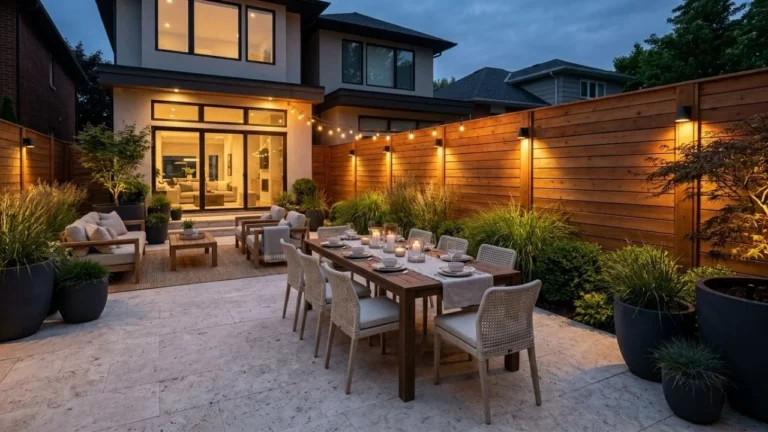
In a small yard, keeping lighting around the perimeter can also leave the middle feeling less busy. These small-yard fence lighting ideas show ways to use fence-mounted or low-level lighting without filling the overhead view.
Quick Safety Checks Before Play Starts
Keep safety simple but serious.
Check:
- loose pieces
- splinters
- rot
- sharp edges
- standing water
- slippery surfaces
- unknown plants or berries
- pet contamination
- small objects around younger children
- blocked sightlines
- ropes or cords near play equipment
- weather damage
Anything raised, swinging, suspended, anchored, or built to support body weight needs more care than a tub of dirt or a chalkboard.
The U.S. Consumer Product Safety Commission’s home playground safety guide covers planning, installation, surfacing, entrapment, falls, structural issues, and maintenance for residential play equipment.
The Canadian Paediatric Society also separates a challenge a child can see and assess from a hidden hazard the child cannot reasonably identify or manage.
Remove the hidden hazard.
Then let the play still feel like play.
FAQ
What Can I Use Instead of a Swing Set in a Small Backyard?
Try a mud kitchen, digging patch, loose-parts bin, low balance trail, water station, sensory garden, nature den, or temporary obstacle course. These options use less permanent space and give you more room to change the yard as your child grows.
What Is the Cheapest Backyard Play Idea to Start With?
A digging tub, loose-parts bin, chalk area, or simple water station can start with things you may already own. Test the activity first, then spend only if your child keeps returning to it.
How Do I Make a Small Backyard Fun for Different Ages?
Use activities that can get harder without getting bigger, such as balancing, loose-parts building, gardening, water play, and obstacle routes. Change the task, rules, or materials instead of adding another permanent structure.
How Do I Keep a Kids’ Backyard From Looking Cluttered?
Use the edges, keep one open area, assign each movable activity one storage home, and rotate materials instead of leaving everything outside. A small yard usually feels calmer when fewer things are visible at the same time.
Start With One Corner
The smartest small backyard playground ideas do not begin with a shopping list.
They begin with your child.
Watch what they already choose to do. Pick one underused corner and make that activity easier to repeat.
If it gets used, improve it.
If it gets ignored, change it before spending more money.
Your backyard does not need to look like a playground catalog. It needs a few good reasons for your child to want to stay outside.
Choose one corner and build around the play your child already loves.