
POPULAR AT FAMILY HAVEN
POPULAR AT FAMILY HAVEN
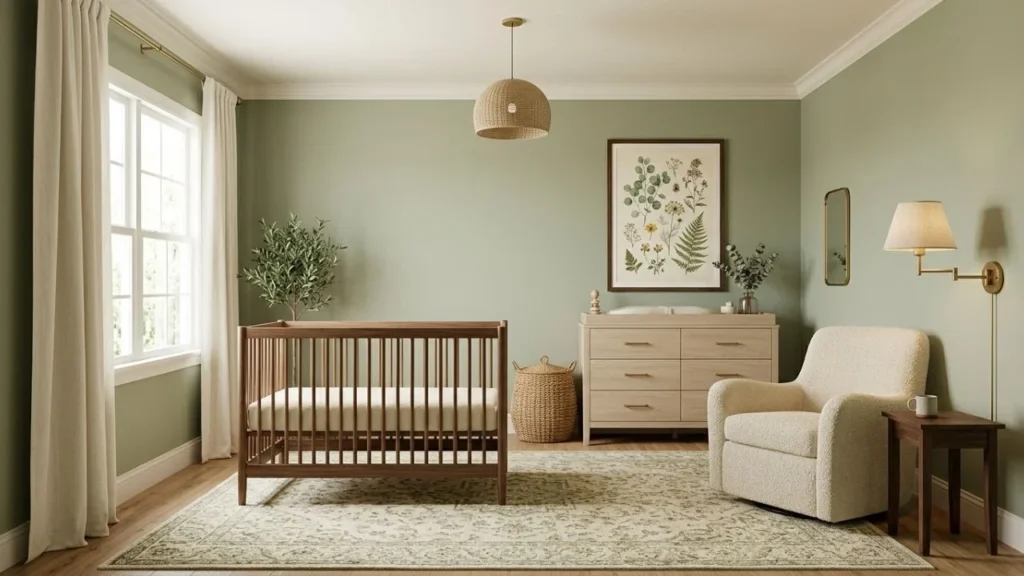
The best sage green nursery ideas use the color as a starting point, not the whole personality of the room.
You picked sage because it looked peaceful.
Then the paint sample went gray before breakfast, olive at noon, and suspiciously beige by dinner.
Now one quiet little green has somehow become a family meeting.
That is where a lot of sage green nursery ideas go wrong. The color gets treated like the answer to the whole room, when what really matters is what you put beside it, how the light changes it, and how the nursery needs to work once a baby actually moves in.
A beautiful nursery should still make sense when you are tired, holding a baby, looking for a burp cloth, and wondering why one tiny sock has vanished again.
So these 17 ideas are not seventeen excuses to buy decor. They are seventeen different ways to make sage feel warmer, more personal, easier to live with, and less like a room copied straight from a saved image.
Sage is not one fixed color.
Some shades lean gray. Others lean olive, blue, brown, yellow, or mint. The direction becomes much more obvious once the paint is sitting beside your floor, furniture, trim, and natural light.
A useful nursery-specific reference is this sage nursery styling guide, while this broader sage color pairing guide explains how cream, pink, brown, wood, and other greens change the way sage reads.
| Your room | Sage direction to test first | What may need balancing |
|---|---|---|
| Cool northern light | slightly warmer, olive-leaning sage | very gray greens |
| Strong warm sunlight | softer gray-green | yellow-heavy sage |
| Small dim nursery | lighter muted sage | deep green on every wall |
| Bright white room | medium sage | icy white beside gray-green |
| Warm wood furniture | gray-green or olive sage | too much yellow-green |
| Walnut furniture | softer pale sage | another very dark green |
Do not judge the paint from one little card.
Paint larger samples and look at them:
Your baby may never complain about the undertone.
You, however, are going to look at those walls during a lot of feeds.
Sage is not disappearing, but nursery style around it is changing.
Current nursery coverage is moving toward color-led rooms, more mature woodland themes, selective vintage pieces, and traditional details such as wallpaper, checks, scallops, and softer pattern.
| Current direction | What it means in a sage nursery |
|---|---|
| Color as the theme | Let sage itself lead instead of adding a literal theme everywhere |
| Modern woodland | Use trees, animals, and nature more quietly, with wood and deeper greens |
| Selective vintage | Add one or two older-looking pieces instead of making the whole room retro |
| Traditional pattern | Bring in stripes, gingham, florals, or wallpaper in one planned area |
If you want to compare those directions before choosing yours, this current nursery trend guide is useful.
Pinterest’s 2026 color data also includes Jade, a green sitting between mint and moss, among its major colors for the year. That does not mean sage needs replacing. It does suggest that green is moving toward richer, more expressive pairings instead of being treated only as a pale neutral.
Sage does not have to whisper from one small accent wall.
If you already know you love the shade, using it around the room can make the nursery feel more connected. Keep the trim or ceiling lighter if you want a visible edge around the color.
I would consider full sage walls when:
If the room is tiny and dark, test before committing.
A beautiful sample on a sunny phone screen and four walls of that color at 7 p.m. are not the same experience.
If four green walls feel like too much, do not automatically retreat to one predictable rectangle behind the crib.
Try sage on:
Then leave the upper wall warm white or cream.
This gives the room a clearer shape and lets you use a stronger sage without surrounding every piece of furniture with it.
Tip: This also works well when you already have neutral walls you do not particularly want to repaint.
One of the easiest ways to make sage feel soft without making the nursery pale from floor to ceiling is to add a warm light neutral.
Try:
Bright blue-white can make some gray-green sages feel colder.
Cream gives the color a little warmth without fighting it.
If you want more ideas for mixing warm neutrals and texture without ending up with one large beige block, these neutral linen bedroom ideas use similar principles.
If your room is:
sage + cream + pale oak + white
and still feels unfinished, the answer may not be another soft color.
Try one medium tone such as walnut, cocoa brown, muted clay, or aged brass.
That gives your eye somewhere to rest.
Sage and wood already understand each other.
You do not need to explain the relationship with twelve accessories.
Try:
Wood grain adds variation that a plain painted surface cannot.
A white crib can sit beside a wood dresser.
A walnut side table can sit beside pale oak shelving.
A nursery often feels more relaxed when everything is related but not identical.
A complete matching furniture suite can make the room feel as though it arrived in one delivery box.
A room where every object is brand new can sometimes feel a little too polished.
One vintage or vintage-looking piece can soften that.
Consider:
The key word is one.
You do not need an antique crib, six old frames, three dark wood pieces, and a lamp that looks as though it has survived two wars.
Current nursery design is using older pieces more selectively, which lets the room feel personal without turning it into a period set.
Woodland style still works beautifully with sage.
It just does not need a cast of forty-seven woodland creatures.
Choose two or three references.
For example:
That is enough to tell the story.
Modern woodland nursery design is moving toward deeper greens, wood tones, abstract trees, and more traditional animal patterns rather than purely cartoon styling.
For more real-room green examples, these green nursery design ideas are useful inspiration.
Ask yourself:
Would this still work when the child is four?
A muted tree print probably will.
Forty smiling fox faces may have a shorter contract.
Wallpaper can save you from adding lots of little objects.
One patterned surface can bring:
all at once.
Try:
If the wallpaper already has plenty happening, the same wall probably does not also need:
Let the pattern have some room.
That empty space is doing more than it seems.
Botanical sage nurseries are beautiful.
They are also everywhere.
If you want the room to feel less expected, try a different pattern.
Good options include:
A sage stripe on curtains or one checked rug can give the nursery personality without turning the color scheme upside down.
Tip: Pick one pattern family first. Wallpaper, curtains, chair, rug, and storage bins do not all need separate opinions.
The nursery is not only a room you decorate for the baby.
You are going to spend time there too.
Set up the chair so you can actually use it.
Think about:
The chair itself does not need to be sage.
Cream, oatmeal, warm beige, mushroom, or brown can give the green walls a useful pause.
If the nursery is small, do not squeeze in an oversized chair and ottoman because the inspiration picture had both.
You need somewhere to sit.
You also need somewhere to walk.
A nursery can look lovely in daylight and become completely impractical after bedtime.
Use more than one light level if the room allows it.
That might mean:
Then test it at night.
Sit where you will feed the baby.
Can you see what you need without turning on one harsh overhead light?
If not, fix that before buying another decorative object.
A lamp that solves a nightly problem deserves the space more than a third ornamental basket.
Curtains can bring sage into the nursery without painting, but the window needs to work before it looks pretty.
Think about:
CPSC recommends cordless window coverings when young children are present and advises keeping cribs, beds, furniture, and toys away from windows and window-covering cords.
The full cordless window safety guidance is worth reading before finalizing the window wall.
If you prefer the color on the curtains instead of the walls, these sage blackout curtain panels are a current Amazon.com USA example in a sage 52-by-84-inch two-panel option, according to the manufacturer’s listing.
Measure first.
And keep the crib away from the window rather than designing the room around a perfect curtain photograph.
Sage does not need six supporting colors.
It needs one good partner.
| If you want the room to feel… | Try… |
|---|---|
| Soft and sweet | dusty blush |
| Earthy | muted terracotta |
| Richer | plum or burgundy in small amounts |
| Natural | warm brown |
| Airy | cream |
| Traditional | aged brass |
| Slightly cooler | dusty blue |
The sage color pairing guide is useful if you want to compare cream, pink, wood, and deeper tones before settling on the final palette.
Start with one or two places:
You can always add more.
It is much easier than trying to remove an entire second color scheme after everything arrives.
Sage, cream, and light wood can become very soft.
A little warm metal gives the room definition.
Try aged brass on:
One or two touches are usually enough.
You do not need to change every handle in the room because one brass frame looked nice.
The goal is a small repeat, not a metallic takeover.
If the walls are plain, the floor can do more.
A rug can add:
without putting another object on the wall.
For a sage nursery, I would look at:
Check:
A pretty rug that catches the door every morning will very quickly lose some of its charm.
If you want a washable example, this sage washable nursery rug is an Amazon.com USA option in a low-pile botanical sage palette with cream, pink, and plum. The listing includes multiple sizes, including 5-by-7, and describes it as machine washable with a non-slip backing.
You do not need green walls to have a sage green nursery.
Bring the color through:
This is also useful if you change your mind about colors often.
Paint commitment is real.
No judgment.
If faith-based art is part of what you want for the nursery, these Christian nursery decor ideas give you ways to add scripture, faith themes, and meaningful wall details without starting a completely separate color story.
Nurseries collect things at an alarming rate.
Diapers.
Creams.
Wipes.
Blankets.
Clothes that seem impossibly small until three weeks later when they somehow no longer fit.
Closed storage earns its space quickly.
Use:
Then let one shelf carry the prettier objects.
Try:
Then leave some shelf visible.
The nursery will still look designed.
It simply will not require you to dust a small museum every Saturday.
This may be the most useful of all the sage green nursery ideas.
The crib is tempting because it looks like the natural centerpiece.
That does not mean it needs pillows, blankets, stuffed toys, bumpers, and decorative layers.
AAP guidance recommends a firm, flat sleep surface with a fitted sheet and keeping pillows, blankets, toys, bumpers, and other loose soft objects out of the baby’s sleep area.
Read the full safe sleep crib guidance before styling the sleep area.
Use:
HealthyChildren also advises keeping the crib away from windows and limiting over-crib decor to painted walls and wallpaper rather than picture frames and mirrors.
The crib does not need a decorative pile to look finished.
A baby will be occupying it.
That is already a fairly significant feature.
The most useful sage green nursery ideas depend on the room you actually have.
| Your nursery | Start here | Add next | Be careful with |
|---|---|---|---|
| Small nursery | pale sage + warm white | vertical storage + one pattern | lots of tiny decor |
| Dark nursery | warmer sage | cream + light wood | overly gray sage |
| Bright nursery | muted sage | walnut + cream | yellow-heavy green |
| Rental | sage curtains or rug | art + storage | permanent wall changes |
| Modern nursery | color-led walls | clean wood + simple pattern | theme overload |
| Woodland nursery | muted sage | wood + one nature motif | cartoon animals everywhere |
| Vintage nursery | soft sage | one older piece + faded rug | too many period details |
| Very neutral nursery | sage accent | brown or brass | another layer of beige |
| Faith-based nursery | sage base | meaningful art + warm wood | overcrowding the walls |
Tip: Pick the row closest to your real room before saving another twenty-five ideas.
More inspiration is not always the missing piece.
Sometimes you simply need to decide.
If your room still feels undecided, narrow the palette before adding more decor.
Soft, warm, and easy to live with.
Add medium wood so everything does not become too pale.
Warm without needing another big color.
This works especially well for a gender-neutral nursery.
Good when pale sage needs more weight.
Use walnut on one or two pieces rather than every surface.
Gentle without becoming overly sweet.
Keep the pink muted if you want the room to grow easily.
Warmer and more earthy.
Use the clay tone on a rug, art, or one textile.
Simple and often overlooked.
Brown can make green feel more settled and less pastel.
Best as a small detail.
It works particularly well when the sage has a cooler gray undertone.
A nursery can go from “almost done” to “why is there so much stuff in here?” very quickly.
Use this order.
Choose one:
Usually:
Light oak for softer contrast.
Walnut or medium brown for more depth.
Blush.
Clay.
Brown.
Plum.
Brass.
Not all five.
Wallpaper, rug, curtains, or another textile can carry it.
One pattern can be enough.
Can you:
Look at:
CPSC recommends anchoring furniture such as dressers and bookcases to reduce tip-over risk as children begin climbing and pulling themselves up.
Take away one decorative object.
If the room still looks finished, leave it out.
Your future dusting schedule sends its thanks.
Screens are useful for ideas.
They are not reliable paint samples.
Test the actual color.
Sage can sit beside olive, moss, or a darker forest green.
Small changes in green often feel more natural than forcing every object into the exact same shade.
A room made from sage, cream, beige, and pale oak can become hazy.
Give it one medium or deeper note.
A woodland nursery does not need woodland wallpaper, bedding, art, rug, toy storage, curtains, mobile, and lamp.
Choose the strongest two or three references.
If the chair is uncomfortable or badly lit, you will notice long after you stop noticing the wall decor.
Keep decorative pillows, blankets, stuffed animals, and other loose soft items outside the baby’s sleep area.
Use another wall for frames, mirrors, and shelves. HealthyChildren advises limiting decor directly over the crib to paint or wallpaper.
Yes. Sage remains widely used in current nursery design, but the styling around it is changing.
Color-led rooms, deeper woodland palettes, vintage pieces, and traditional patterns are giving green nurseries more personality than the older sage-plus-beige formula.
Cream, warm white, natural wood, walnut, dusty blush, muted terracotta, brown, aged brass, and soft blue can all work.
The best choice depends on the sage undertone and the light in your room.
Yes.
Sage does not belong to one nursery style or gender. Its supporting colors and patterns can take it in many different directions.
Warm white, natural wood, medium oak, and walnut are all useful options.
White gives you clearer contrast. Natural wood warms the room. Walnut gives pale sage more depth.
Test a warmer sage with a slightly olive undertone and place it beside cream or wood instead of cool white.
Lighting also changes the appearance, so check the sample at different times of day.
Yes.
Use a lighter or medium sage, keep large secondary pieces fairly light, and reduce the number of small decorative objects.
A small room does not need to be colorless.
Use sage on larger removable pieces.
Curtains, rugs, art, baskets, and other accessories can establish the color clearly without changing the walls.
HealthyChildren recommends limiting over-crib wall decoration to paint or wallpaper rather than frames and mirrors.
Use the dresser wall, reading area, or another section of the nursery for heavier decorative pieces.
AAP guidance recommends a firm, flat sleep surface with a fitted sheet and no loose bedding, pillows, bumper pads, stuffed toys, or similar soft objects in the sleep space.
The best sage green nursery ideas do not come from collecting every green object you can find.
They come from giving the color good company.
Cream beside it.
Wood underneath it.
One useful pattern.
A little brown or brass.
A chair you actually want to sit in.
A soft light you can use at night.
And enough empty space that the room still feels like a room once the baby supplies arrive.
Start with your sage.
Choose one warm partner.
Keep the crib simple.
Then build the rest around the life that is actually going to happen there.
That is the nursery worth finishing.
Explore original printables, find another story or save your next creative project.