
POPULAR AT FAMILY HAVEN
POPULAR AT FAMILY HAVEN
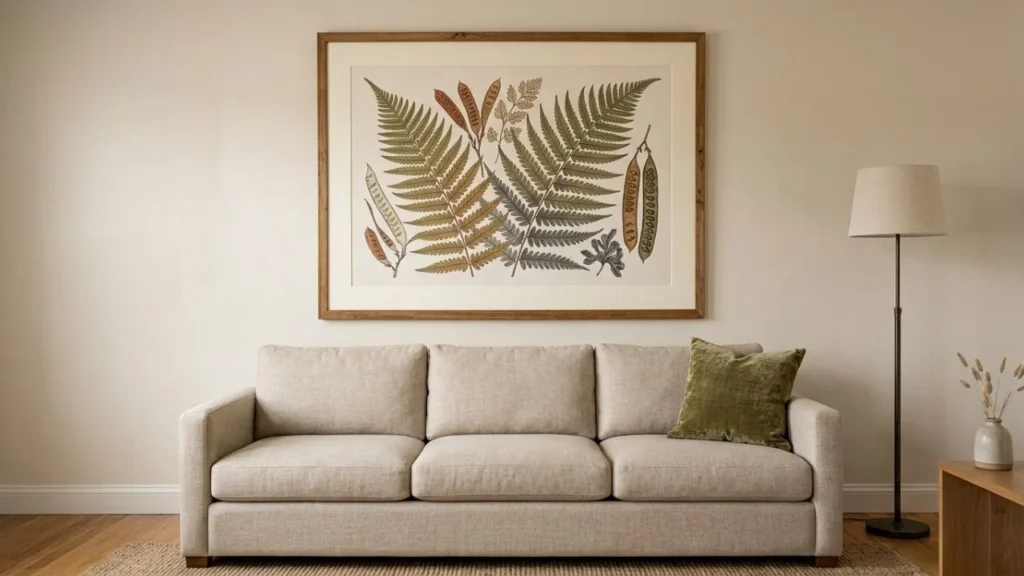
A blank wall rarely needs more random stuff. First work out whether it needs scale, texture, color, light, storage or something personal.
Measure the furniture below the wall, test the proposed size before buying, and fix the biggest problem first. If you rent, check your lease and wall surface before attaching anything. And if the wall already feels busy, your cheapest decorating move may be taking something down.
As an Amazon Associate I earn from qualifying purchases.
You can have the sofa exactly where you want it, the curtains hung, the rug in place and the lamps switched on, yet still walk into the room thinking, Something is off.
Then you look at the wall.
Maybe one tiny frame is floating above a long sofa. Maybe every surface is smooth, so the room feels flat. Maybe you bought four inexpensive decorations because each looked good separately, but together they look as though nobody introduced them.
That is why the affordable wall decor ideas that work best do more than cover empty paint.
They solve a problem.
Your wall might need more width. More texture. Something personal. A useful shelf. A mirror that brings light into a dim corner. Or it may need fewer objects, not more.
Before you spend another dollar, work out what you are actually trying to fix.
If the whole room feels unfinished rather than the wall alone, these budget DIY living room ideas can help you sort out the bigger problem first.
The easiest way to waste money on wall decor is to begin shopping before you know what bothers you.
Stand where you normally enter the room and look at the whole setup, not just the blank wall.
Ask yourself one question:
What exactly feels wrong?
| If the wall feels… | Check this first | Try this |
|---|---|---|
| Empty | Is the existing decor too small? | One larger piece or one substantial grouping |
| Flat | Is everything smooth and framed? | Textile, woven baskets, shelves or dimensional decor |
| Dark | Is there useful light to reflect? | Mirror |
| Cluttered | Are there too many little pieces? | Remove items and create one main focus |
| Impersonal | Could this wall belong to anybody? | Photos, art, keepsakes or collected objects |
| Narrow | Are you fighting the wall’s shape? | Tall art, stacked frames or a narrow mirror |
| Short on storage | Could this wall also be useful? | Floating shelves or a grid |
| Awkward above furniture | Does the decor relate to what sits below? | Fix width, height and placement |
| Temporary | Are you renting? | Lower-commitment options your lease allows |
| Dominated by a TV | Are you filling random gaps around the screen? | Treat the screen and furniture as one zone |
Quick tip: If your first instinct is “I need more decor,” check whether your existing decor is simply too small or spread too far apart.
That one question can save you from turning an empty wall into a cluttered one.
Your sofa, bed, console, dresser, fireplace or television is already part of the wall arrangement.
Measure it too.
For art above a sofa, professional stagers quoted by Real Simple use roughly 60% to 75% of the sofa’s width as a practical starting range, with the artwork commonly sitting about 8 to 12 inches above the sofa. These are starting points, not laws.
Their sofa art sizing guide is worth reading before you order an expensive oversized piece.
Here is that width range translated into something you can actually use:
| Sofa width | Approximate display width |
|---|---|
| 72 inches | 43–54 inches |
| 84 inches | 50–63 inches |
| 90 inches | 54–68 inches |
| 96 inches | 58–72 inches |
That “display width” can be:
Do not let the calculation boss the room around.
Use it to get into the right neighborhood, then look at the actual wall.
Mark the outside dimensions on your wall before ordering.
For this job, I checked the exact Amazon.com USA listing for ScotchBlue painter’s tape. The selected listing is the 0.94-inch by 60-yard single roll. Amazon currently identifies it as ScotchBlue Original Multi-Surface Painter’s Tape.
Once your outline is on the wall:
A print can look enormous in your hands and somehow turn into a postage stamp the second it goes above an eight-foot sofa.
These affordable wall decor ideas are arranged around the problems they solve, not around what somebody happens to sell.
Best for: almost no budget, family homes and walls that feel impersonal.
Before you shop, check your own drawers, cupboards and other rooms.
You may already have:
Try moving one larger piece from another room.
Swap the art inside an existing frame.
Group related photos rather than scattering them around the house.
Sometimes the cheapest wall decor idea costs exactly nothing because the object was never the problem. The arrangement was.
Your frames do not need to match perfectly.
Repeat one thing:
A little repetition makes unrelated pieces feel as though they belong together.
Best for: a large visual change without buying several decorative objects.
Paint can do the work of wall decor all by itself.
Try:
The shape should help define something that already exists.
A painted rectangle behind a console can connect the furniture and art above it. An arch can make a desk or reading chair feel like its own little area.
If choosing the color becomes harder than painting the wall, these cozy living room colors give you useful starting families without pretending one shade works in every room.
Worth doing first: mark the entire shape on the wall and check it from across the room.
And once the paint has done enough, let it.
A painted feature does not automatically need three shelves, eight prints, two sconces and a plant trying to squeeze onto the guest list.
Best for: a large wall when oversized finished art feels too expensive.
One larger piece often gives a wall more presence than several little things bought simply because each one was cheap.
This Old House recommends public-domain artwork, secondhand pieces and ready-to-hang options as ways to cover larger walls while controlling costs. Its budget wall art guide also recommends planning gallery arrangements before making holes.
Among the affordable wall decor ideas in this post, this is one of my favorites for a wall that needs real scale.
Try:
Use this order:
That order protects your budget from a beautiful print that turns out to be the wrong size for the wall.
Best for: family photographs, art collections, travel memories and a wall that needs personality.
A gallery wall gets better when the interesting part is what is inside the frames.
Mix:
House Beautiful’s current gallery wall planning guide recommends starting with a dominant piece, arranging the other work around it and keeping the gaps between frames consistent. Two to three inches is one useful starting range.
Put everything on the floor before touching the wall.
Move the pieces around.
Take a photo.
Move something again.
This is the stage where changing your mind is free.
Once the layout works, transfer the arrangement to the wall.
For suitable frames and compatible smooth surfaces, I also verified the exact Amazon.com USA listing for Command picture hanging strips. The selected listing contains 14 pairs of large white strips. The Amazon listing says to check the frame size, surface and product limits and warns against wallpaper, fresh paint, over-bed use and valuable items.
Do not treat an adhesive strip as permission to ignore the wall.
Best for: large walls, bedrooms and rooms with lots of hard surfaces.
A textile brings softness that another framed print cannot.
Consider:
This works well when the room already contains a lot of glass, metal, hardwood, tile or square furniture.
A textile can cover a large area without introducing another heavy frame.
Before hanging: check how the material should be supported. A delicate heirloom and a modern woven hanging do not need the same treatment.
Best for: dim rooms, smaller rooms and walls that need shape as well as decoration.
A mirror has two jobs.
It decorates the wall, and it reflects whatever you place opposite it.
So before you buy one, stand where the mirror would hang and turn around.
What will you see?
A window?
A plant?
Part of the room you love?
Good.
The laundry basket and the side of the refrigerator?
That view probably does not need a sequel.
Homes & Gardens’ mirror placement guide explains how mirrors can help spread natural light and why the reflection itself deserves attention.
A round or arched mirror can also break up a room full of rectangles.
If the rest of the room uses cream, wood, linen, rattan or muted colors, these neutral living room ideas can help you layer texture without filling the room with more color than you want.
Best for: people who like rotating photos, art or seasonal pieces.
A picture ledge lets your frames lean instead of assigning each one a permanent position.
It works well:
Start with:
Then stop.
Look at it.
You can always add something tomorrow.
It is harder to see what the ledge needs when twelve objects are already elbowing one another for space.
If you are decorating a smaller corner rather than a whole room, these small-space reading nook ideas can help you combine the wall, seating and lighting without overcrowding the area.
Best for: home offices, small living rooms, entries and rooms short on floor space.
Sometimes the wall needs to help.
A shelf can hold:
Do not fill every inch the day you install it.
Leave open space between groups so you can see what is there.
Before mounting: decide what the shelf will hold.
Two small frames and a row of heavy books do not ask the same thing from the wall or hardware.
If you are unsure about the wall structure, load or fixing method, use the full shelf manufacturer’s instructions or get qualified help.
Best for: neutral rooms, large walls and spaces where another print would feel too flat.
Use baskets in related tones but vary:
You get shape and texture without adding another rectangle.
Treat the outside edge of the whole arrangement as one piece of decor.
Three six-inch baskets over a long sectional do not become large wall decor simply because there are three of them.
Scale the group to the wall.
Best for: dining rooms, kitchens, collected interiors and people who already own decorative pieces.
Look around the room.
Doors.
Windows.
Television.
Frames.
Cabinetry.
Most rooms already have plenty of straight lines.
A group of round plates can break that pattern.
You might use:
Put the largest piece down first and work outward.
Test the entire layout on the floor before hanging it.
And use hardware suited to each item’s weight.
A decorative plate hitting the floor at two in the morning makes quite an impression, just not the one you planned.
Best for: sentimental walls, bedrooms, hallways and anyone who wants decor that feels personal.
The value here comes from the story.
You could frame:
One item can be enough.
Give it breathing room inside the frame.
If you make a set, repeat the frame or mat treatment so the pieces still feel connected.
Best for: bedrooms, nurseries, dorm rooms and some rentals.
Do not scatter small decals evenly across an entire wall and hope for the best.
Give them direction.
Try:
Keep the palette related to the room.
And always check the actual wall and product instructions.
“Removable” describes a product feature. It does not tell you what your paint, wallpaper or lease will think about it.
Best for: home offices, student rooms, creative corners and family spaces.
A wire or memo grid can change whenever your life does.
Clip on:
Leave some spaces empty.
You are making a display.
You are not playing Tetris.
Using clips in one finish also helps a mixed collection look less random.
Best for: adding pattern without covering an entire wall.
A leftover wallpaper piece or beautiful fabric remnant can become low-cost framed art.
This works especially well:
Choose a pattern containing one color already present elsewhere.
Maybe the fabric repeats:
The whole room does not need to match.
One or two little connections are enough.
Best for: family rooms, faith-based homes and spaces where words genuinely matter to you.
I am not against word art.
I am against walking through the front door and immediately being instructed to:
LIVE.
LAUGH.
LOVE.
DREAM.
BREATHE.
DRINK COFFEE.
BE GRATEFUL.
All before you have even taken your shoes off.
One meaningful phrase usually says more.
Choose something connected to:
Give the words room.
One photograph, plant or small object nearby may be enough.
Or nothing.
Meaning does not need backup dancers.
The price is not always the problem.
Scale, spacing, framing, editing and placement can make an inexpensive piece look thoughtful or make an expensive piece feel strangely wrong.
Ask:
The wall does not know what you paid.
It only knows what the arrangement looks like.
Give your eye somewhere obvious to settle.
That might be:
Other pieces should support that main element.
If every object is trying to be the star, the wall gets noisy.
Imagine your art includes olive green.
You do not need:
olive sofa + olive curtains + olive lamp + olive vase + olive cushions.
Try:
art + plant + one cushion
Done.
The connection is enough.
Instead of:
frame + frame + frame + frame
try:
framed art + basket + mirror
or:
art + shelf + small plant
Changing the depth keeps the wall from feeling flat.
Negative space is not wasted space.
House Beautiful’s designers also recommend giving artwork room rather than filling every available patch.
If you keep adding pieces simply because you can still see paint, there is a good chance you will decorate past the point where the wall looked finished.
Both can work.
The better choice depends on how calm or collected you want the room to feel.
| Choose one larger piece when… | Choose several pieces when… |
|---|---|
| You want a calmer wall | The pieces have personal meaning |
| The room already has patterns | You want to show family photos |
| The furniture has strong detail | You collect art over time |
| You dislike arranging galleries | You enjoy layered interiors |
| You want one obvious focus | One large piece exceeds your budget |
| The sofa needs one strong horizontal anchor | You want the collection to change later |
When you use multiple pieces, treat them as one overall composition.
Their combined width matters.
Their spacing matters.
The outer shape matters.
Do not let each frame become its own little island.
The same wall decor does not solve every room.
| Room | Good starting options | What to think about |
|---|---|---|
| Living room | Large art, gallery wall, mirror, baskets, ledge | Sofa width, TV, main focus |
| Bedroom | Textile, art, mirror, keepsakes | Weight, calm, placement over bed |
| Entryway | Mirror, one artwork, small shelf | Narrow depth, practical use |
| Home office | Grid, ledge, shelves, photos | Storage and flexibility |
| Nursery | Lightweight art, decals, textile | Secure placement and changing needs |
| Dorm | Lightweight permitted decor, grid | Temporary surfaces and rules |
| Dining room | Plates, gallery wall, mirror | Table and sideboard relationship |
| Small room | Mirror, vertical art, fewer larger pieces | Light and visual clutter |
| TV wall | Console, paint, art, controlled shelving | Screen height, cords and overall balance |
If your television is already controlling the wall, these TV wall setup ideas go further into screen height, console scale, cords and surrounding decor.
Some affordable wall decor ideas become much less affordable if removing them takes half the paint with them.
“Renter-friendly” is not one universal category.
Start with:
Apartment Therapy’s renter wall decor ideas include leaning pieces, baskets and other lower-commitment approaches that can reduce the need to drill into a rental wall.
Depending on your lease and wall:
Be more cautious with:
If you use Command Picture Hanging Strips, follow the manufacturer’s directions for the exact product.
3M currently tells users to wait seven days after painting, avoid wallpaper, avoid hanging over beds and avoid using the strips for valuable or irreplaceable items. It also gives a specific cleaning, application and removal process in its Command hanging instructions.
So no, “removable” does not mean “works on every wall.”
A wall arrangement also has to survive ordinary life.
Before hanging something heavy, ask:
The prettiest arrangement in the room is not worth creating a problem you have to worry about every day.
A product listing has never met your sofa.
Measure first.
If the piece looks like a postage stamp above a long sofa, another candle underneath will not fix it.
Fix the scale.
Five small pieces often look stronger as one deliberate group than as five unrelated things spread across the room.
Art above furniture should feel connected to what is underneath it.
When the gap becomes too large, the furniture and artwork stop reading as one arrangement.
A room can have relationships without becoming a furniture showroom set.
Repeat a color, frame finish, wood tone or material.
You do not need identical everything.
Some wall needs to remain wall.
If one side of the room already has a strong gallery, fireplace, television setup or bookcase, another wall may look better left quiet.
Please release yourself from the assignment of decorating every square foot.
Decorating from twelve inches away is dangerous.
Step back.
Sit down.
Walk into the room again.
A setup that looks balanced while you are holding a frame can feel completely different from the doorway.
You have hung everything.
Now do not immediately order another piece.
Give yourself five minutes and ask:
| Question | If the answer is no… |
|---|---|
| Do I know where to look first? | Remove or regroup competing pieces |
| Does the decor relate to the furniture? | Recheck width and height |
| Is there enough empty wall around it? | Remove one supporting item |
| Does something feel strangely tiny? | Increase the overall scale |
| Does the wall feel like my home? | Replace generic filler with something personal |
| Can I use the room normally? | Fix placement, clearance or mounting |
| Would I still like this with one less object? | Try taking one away |
Then leave the room.
Come back later.
Fresh eyes are surprisingly good at spotting the thing you stopped seeing while you were adjusting frames for forty minutes.
If the artwork belongs to the sofa arrangement, center it over the sofa first.
A sofa may sit off-center because of a doorway, lamp, window or room layout. Centering art on the entire wall in that situation can leave it looking disconnected from the furniture.
Treat the entire gallery as one artwork.
A practical starting range is about 60% to 75% of the sofa width, including the gaps between frames.
Mark the outside edges with tape before hanging the first piece.
Yes.
Small room does not automatically mean tiny art.
One appropriately scaled piece may look calmer than a wall full of little frames and objects. The important part is leaving enough open space around it and keeping the rest of the room from competing.
No.
Matching frames give you a cleaner, more structured look. Mixed frames can feel collected and personal.
If you mix them, repeat something:
That little connection keeps variety from turning into randomness.
Work vertically.
Try:
Do not squeeze a miniature sofa-wall setup into a shape it was never designed for.
No.
A room usually needs places for your eye to rest.
If the main wall already has enough interest, another wall can stay quiet without looking unfinished.
Start with the television and furniture rather than decorating random gaps.
Check:
Sometimes the answer is not more decor. It is a longer console, better cord control or less clutter around the television.
Stand in the doorway.
If you immediately know where your eye should go, the wall probably has a clear hierarchy.
If you do not know where to look, take something away before adding anything else.
The best affordable wall decor ideas do not begin with:
What can I buy for this empty wall?
Start with:
Why does this wall feel unfinished?
Maybe it needs enough scale to balance the sofa.
Maybe it needs texture.
Maybe it needs useful storage.
Maybe it needs reflected light.
Maybe it needs color.
Maybe it needs a family photograph instead of another generic decorative sign.
And sometimes?
It needs you to take down five little things, replace them with one stronger arrangement and finally stop.
Measure first.
Choose the wall’s job second.
Then spend your money only on the thing that actually solves the problem.
That is the difference between filling a wall and making the whole room feel finished.
Comments are closed.
Explore original printables, find another story or save your next creative project.
[…] affordable wall decor ideas may help if the wall feels unfinished but another piece of furniture would make the room […]
[…] can borrow more ideas from these affordable wall decor ideas when you want the frame to work after Christmas […]