


POPULAR AT FAMILY HAVEN
POPULAR AT FAMILY HAVEN
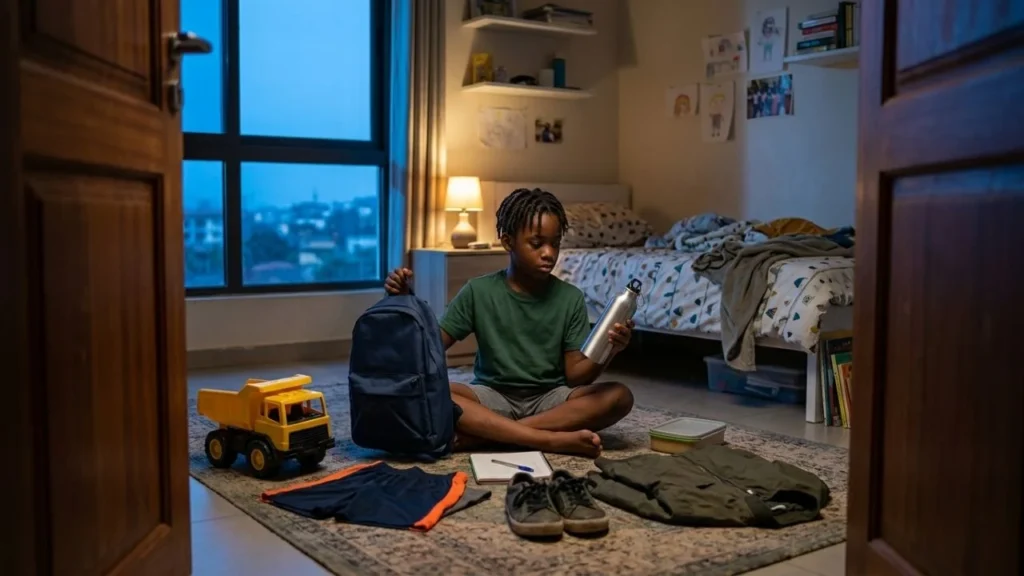
Life skills activities for kids work best when you start with one manageable task, rather than trying to teach 21 new things this weekend.
Pick one skill they are ready to practice and let them get better at it over time.
Here is a quick starting point:
| Age | Good skills to begin with |
|---|---|
| 3–5 | Put things away, wipe spills, wash produce, choose clothes, help set the table |
| 6–8 | Make a simple snack, fold laundry, pack a school bag, count money, sweep |
| 9–12 | Prepare simple food, compare prices, clean shared spaces, organize belongings, make a basic phone call |
| Teens | Cook basic meals, manage laundry, plan spending, shop with a list, communicate and plan more independently |
A few rules make these life skills activities for kids much easier to teach:
DOWNLOAD THE FREE LIFE SKILLS CHECKLIST
A child can know exactly how to open your phone, find YouTube, and locate the snack cupboard in record time.
Then you ask them to put a towel in the washing machine.
Blank stare.
That does not automatically mean they are lazy.
It may simply mean nobody has taught that particular skill yet.
A lot of life skills activities for kids are ordinary things adults barely think about anymore.
We make food.
Clean spills.
Find what we need.
Compare prices.
Ask questions.
Pack bags.
Deal with small problems.
Know who to call when something is wrong.
Children learn those things the same way they learn most things.
They watch.
They help.
They try.
They make slightly questionable decisions.
They try again.
The goal is not to raise a child who can run the household by age eight.
It is to give them safe chances to become more capable a little at a time.
Life skills are the everyday abilities children gradually learn so they can care for themselves, contribute at home, communicate with people, solve ordinary problems, and handle more responsibility as they grow.
They include things such as:
Some are household skills.
Some are independence skills.
Some are social skills.
Most overlap.
A child who learns to make a snack is also practicing:
That is why the best life skills activities for kids happen during real life instead of feeling like another class squeezed into the week.
One of the easiest mistakes is going from:
“You have never done this.”
straight to:
“You should be able to do this yourself.”
There are a few useful steps in between.
You do the task while your child watches.
Talk through the important parts.
Not every microscopic detail.
Just enough for them to see the order.
Give your child one part.
You might:
Your child takes the lead.
You are available if something becomes unsafe or they truly get stuck.
This is often the uncomfortable stage for adults because it is slower than doing the task ourselves.
The child can handle that version of the task safely and consistently enough without direct help.
That does not mean perfection.
A towel can be folded badly and still be folded.
You do not need special lessons for most of this list.
Use the things already happening in your house.
Doing laundry?
Teach one laundry step.
Making dinner?
Let your child wash the vegetables.
Going shopping?
Compare two prices.
Packing for Grandma’s house?
Let your child make the first attempt at their own bag.
The lesson already exists.
You are simply letting your child participate in it.
Kitchen skills could fill an entire article on their own, so keep this part simple.
The goal here is not teaching full recipes.
It is helping children become familiar with a few basic jobs that eventually make preparing food feel normal.
Skill: food preparation
Easy starting point: berries, apples, cucumbers, peppers
Show them how to:
It gives a young child a kitchen job that does not require heat, blades, or complicated instructions.
It also starts building the idea that preparing food includes what happens before anybody eats it.
One strawberry does not need a 90-second spa treatment.
Show the job.
Let them practice.
Move on.
Skill: measuring + following directions
Good starting point: dry ingredients and cool liquids
Let children practice:
Practice with:
Do not make a child’s first measuring attempt the one tiny ingredient that will ruin an entire recipe if they triple it.
For younger kids, you can measure first and let them pour.
Later, move toward:
You measure. I check. Then you pour.
That is still real participation.
Skill: basic food independence
Good first snacks might include:
The skill is not finished at:
snack acquired.
Include:
That final part is easy to skip.
It is also part of feeding yourself.
IMAGE PLACEMENT: Broccoli-chef family image belongs here.
The message around the image should be simple:
Making food is a life skill. Cleaning up after making it is one too.
Cleaning is easier to teach when children learn small specific jobs.
“Clean your room” can mean fifteen different things.
“Put the books on the shelf” is something a child can actually start.
Skill: responding to a mess
This is one of the most useful early household skills because spills are guaranteed.
The child learns:
I made a mess. I know what to do next.
That is more useful than panic followed by:
“MOOOOOM!”
from three feet away.
Skill: basic cleaning
Start with a small target.
Not the entire kitchen.
Try:
Many children happily move dirt from one side of the room to another and call it sweeping.
Teach:
Finished matters.
Skill: caring for shared spaces
A child might start with:
Do not hand young children household chemicals simply because cleaning is on the life-skills list.
Poison Control recommends keeping cleaning sprays out of children’s sight and reach and warns that spray products can cause serious eye and skin exposure. Their cleaning product safety guidance is worth reading before deciding which cleaning jobs involve products at all.
For younger children, a cloth dampened with plain water may be all the job requires.
Adults should handle products that are not appropriate for the child’s age and ability.
Laundry is a good example of why life skills should grow in layers.
A preschooler can sort.
An older child can fold.
A preteen might learn the machine with supervision.
A teenager can gradually take responsibility for the whole process.
Skill: sorting + clothing care
Start with something easy:
Teach children to check:
A tissue discovered before the wash is a small domestic victory.
Skill: clothing care + organization
Start with:
Do not begin with a fitted sheet unless you are trying to end the lesson immediately.
This matters.
If your child folds a towel reasonably well and you silently redo it three minutes later, they notice.
The lesson becomes:
My attempt was wrong. Adult will fix it.
If it fits in the cupboard and the task was done safely, consider letting the towel live its slightly uneven life.
Organization is not just having matching storage bins.
It is knowing:
Skill: preparation + memory
Start by making a short list:
Ask:
“What will you need tomorrow?”
Let your child answer before you fill in every blank.
If something is missed, give a clue.
Do not automatically become the human backpack scanner.
A child who repeatedly forgets the same items may benefit from a simple visual or written routine.
That is different from giving the child another lecture about being responsible.
Skill: planning ahead
This might mean:
Ask:
That little pause can teach planning better than rescuing a forgotten item the next morning.
Money skills do not need to begin with spreadsheets or a detailed allowance system.
Children can start by noticing that money involves choices.
The Consumer Financial Protection Bureau’s kids money guide gives parents age-based ways to talk about earning, saving, planning, shopping, and spending.
Skill: understanding everyday money
Depending on where you live, teach your child to recognize the coins, bills, or other payment methods they regularly see.
Practice with real or play money.
Ask:
At a shop, let an older child:
It takes longer.
That is why it teaches something.
A money counting game (paid link) can be useful for children who learn well through play. It uses pretend coins and bills to practice recognizing and combining money values.
You do not need to buy a game to teach this skill.
Coins, paper, and pretend-shop play can do plenty.
Skill: shopping + decision-making
At the grocery store, ask:
“Which one costs less?”
For younger children, stop there.
For older children, move toward:
You might say:
“This one costs less, but the larger one gives us more for the price and we know we’ll use it.”
That shows children that “cheapest” and “best choice” are not always the same thing.
Skill: planning + trade-offs
Give your child a pretend or real example.
“You have $15.”
They could:
Then ask:
“What matters most to you?”
The point is not steering them toward the choice you would make.
The point is helping them see that saying yes to one thing can mean saying no to another.
Pretend-store play can make money less abstract.
A pretend cash register (paid link) is one optional way to practice paying, counting, and taking turns in a shop scenario.
Again, ordinary pretend money works too.
Self-care is more than hygiene.
It includes noticing what your body needs and managing basic personal belongings.
Skill: decision-making + self-care
Instead of choosing everything automatically, ask:
Give two sensible choices.
“It is cold. Hoodie or sweater?”
Both work.
The child still practices choosing.
Let natural feedback help where the stakes are low.
If a child chooses a light sweater and later says they were chilly, talk about what they might choose next time.
You do not have to turn every imperfect decision into a speech.
Skill: personal care + planning
Give the child a short list:
Then check together.
Instead of silently correcting everything, ask:
“What will you wear tomorrow morning?”
or:
“What do you need before bed?”
Help them find the missing category.
That teaches planning.
You packing it after they leave the room does not.
A child can be independent in practical tasks and still need help communicating clearly.
Real life often requires asking someone a question, explaining a problem, or saying:
“I don’t understand.”
Skill: communication + self-advocacy
Practice replacing:
“Help!”
with:
“I need help opening this.”
or:
“I don’t understand this step.”
or:
“I can’t find my bag. I checked my room and the hallway.”
That gives the other person useful information.
Use everyday situations.
Ask your child:
“What could you say if you couldn’t find your classroom?”
or:
“What could you say if you didn’t understand the instructions?”
They do not need a perfect script.
They need confidence starting the conversation.
Skill: speaking clearly + listening
For an older child, practice with a safe familiar person first.
The child could:
Later, they may practice a simple real-world call with you nearby.
Before calling, write:
That tiny structure makes the blank moment after someone says “Hello?” much less dramatic.
Independence does not mean never asking for help.
It means learning when there is something reasonable to try first.
Skill: problem-solving
For ordinary low-risk problems, teach a short sequence:
Is the missing thing nearby?
Where does it usually go?
Can instructions, labels, or a list help?
If you are still stuck, ask for help.
This does not apply to:
Safety beats independence.
Every time.
Skill: responding instead of panicking
Try a pretend scenario:
“You left your homework at home.”
Ask:
Other examples:
The lesson is not:
“How could you forget?”
It is:
“What can you do now?”
There is still room to discuss responsibility afterward.
But problem-solving comes first.
Safety skills are not about making children frightened of everything.
The goal is helping them know what to do when something is genuinely wrong.
Skill: emergency preparedness
Depending on age, children should gradually learn important details such as:
Ready.gov’s family emergency plan includes resources families can use to practice what children and teens should know before an emergency.
Phones:
Practice saying important information aloud too.
For children who carry a bag, an emergency contact card may also be useful.
Skill: safety + communication
Keep this age-appropriate.
A child does not need frightening disaster scenarios.
They do need simple answers to questions such as:
Walk to the family meeting spot.
Practice saying the address.
Show children where emergency numbers are kept.
Revisit the plan occasionally.
The American Red Cross notes that even young children can begin learning basic emergency recognition and how to call for help, with instruction matched to age and readiness. (redcross.org)
You do not need a separate giant household-skills list after those 21 activities.
Most household competence grows by building on the same tasks.
| Skill area | Beginner version | Later version |
|---|---|---|
| Kitchen | Wash produce | Make a simple meal |
| Cleaning | Wipe one spill | Clean a shared area |
| Laundry | Match and fold | Run a load with guidance |
| Organization | Put bag away | Plan for tomorrow |
| Money | Recognize money | Compare prices and plan spending |
| Self-care | Choose between two outfits | Pack independently |
| Communication | Ask for help | Make a basic call |
| Safety | Know parent name | Follow emergency plan |
The important part is progression.
Your child does not go from:
“I watched Dad do laundry.”
to:
“Congratulations, you’re responsible for laundry now.”
There is practice in between.
Parents often search for life skills by age because age feels like an easy benchmark.
Use it carefully.
Age can tell you where to start looking.
It cannot tell you exactly what an individual child should already know.
HealthyChildren’s age-based chore guide gives examples of household responsibilities children can gradually take on and also reminds parents not to expect perfection while children are learning.
Focus on short concrete jobs.
Try:
At this age, the goal is participation.
Not efficiency.
You could do the task faster.
That is not the point.
Possible skills include:
This is a good age to move from:
“Help me do this.”
toward:
“You try. I’m nearby.”
Possible skills include:
HealthyChildren lists meal preparation with supervision, laundry, bathroom cleaning, and other household responsibilities among the types of jobs older school-age children can gradually learn.
Again, that is a starting point.
Not a birthday deadline.
This stage is less about:
“Can you help?”
and more about:
“Could you handle this when I am not standing beside you?”
Useful skills include:
The best time to learn these things is before moving out, starting a job, or suddenly needing the skill.
Not the night before.
| Age | Main goal | Parent role |
|---|---|---|
| 3–5 | Participate | Show + help |
| 6–8 | Practice familiar jobs | Guide + remind |
| 9–12 | Build consistency | Stay nearby + reduce prompts |
| Teens | Prepare for greater independence | Coach + step back where safe |
Ask:
“Is my child ready to start practicing this?”
That changes the whole tone.
You are not checking what they failed to learn.
You are choosing what comes next.
Children do not need to hear:
“Today we are developing your independent living competencies.”
They are already standing in the kitchen.
Use the moment.
Making lunch?
Teach one food-prep step.
Folding laundry?
Hand over three towels.
Shopping?
Ask them to find one item and compare two prices.
Packing?
Let them make their own first attempt.
Life does the scheduling for you.
Step in when:
Consider letting go when:
There is a difference between:
wrong
and:
not how I would do it.
If your child cleaned the table and missed one little spot, point it out if it genuinely matters.
Do not grab the cloth and redo the entire table.
A child cannot build independence while an adult quietly erases every sign they participated.
Instead of:
“Clean up, put your clothes away, find your water bottle, pack your bag, and check tomorrow’s schedule.”
Try:
“Put the clothes away first.”
Then move to the next thing.
The number of skills a child is capable of does not mean they can process six instructions at once.
Be careful about making useful household jobs something children only receive when they are in trouble.
If cleaning always means:
“You behaved badly, so go scrub something,”
it becomes harder to present caring for the home as an ordinary part of family life.
Children can have consequences and still learn that household contribution is normal.
Those are two different things.
More independence should follow readiness, not pressure.
A child may be ready to do more independently when they can:
Your child may be able to:
but not:
They may be able to:
but not:
They may be able to:
but still need help understanding the bigger household budget.
Partial independence counts.
Sometimes that means:
I have never done this.
Sometimes it means:
This feels difficult.
Sometimes it means:
I know you will do it if I wait long enough.
And sometimes the task really is beyond what they can manage right now.
Instead of immediately doing it for them, try:
That tells you more.
Maybe they need:
Helping is not the opposite of independence.
Good help is often how independence begins.
Ask three questions.
If no, correct it.
If yes, you may not need to intervene.
Probably.
That means the slightly messy first attempt may be doing exactly what it needs to do.
A child who has folded towels for three weeks has had three weeks of practice.
You may have had twenty years.
That is not a fair folding competition.
Do not teach all 21 at once.
Try one small challenge each week.
| Week | Challenge |
|---|---|
| 1 | Make one simple snack |
| 2 | Fold five towels |
| 3 | Pack tomorrow’s bag |
| 4 | Compare two grocery prices |
| 5 | Clean one safe surface |
| 6 | Pack an overnight bag |
| 7 | Practice a phone call |
| 8 | Learn family emergency contacts |
Once a skill feels ordinary, pick another.
You are building a collection of things your child knows how to handle.
Not racing through a curriculum.
I made a printable version of the article so you do not have to keep returning to a 21-item list and wondering what your child has practiced.
DOWNLOAD THE FREE LIFE SKILLS CHECKLIST
The printable separates each skill into:
That distinction matters.
A child does not jump from “cannot do it” to “independent.”
There is a whole useful middle stage where they are learning.
Use the checklist as a planning tool.
Not a scoreboard.
Do not start by hunting for gaps.
Notice what is already working.
That becomes the next practice area.
Practice when the real task happens.
Not because a week passed.
Not because a sibling can do it.
When your child can manage that version safely and reliably enough.
“Make a snack” might eventually become:
“Make breakfast.”
Then:
“Prepare one simple family meal.”
Skills grow.
Children gradually benefit from learning how to care for themselves, prepare food, keep shared spaces usable, organize belongings, communicate clearly, manage basic money choices, solve ordinary problems, and respond to safety situations. The exact level of independence should grow with the child.
There is no universal checklist every seven-year-old must complete. Good skills to practice around this age may include packing a school bag, making a simple snack, setting the table, folding basic laundry, sweeping, recognizing money, and preparing a few things for the next day.
Home is one of the easiest places to practice food preparation, laundry, cleaning, organization, self-care, shopping, money choices, communication, planning, and problem-solving because those tasks already happen there.
Yes. Basic food preparation is a practical life skill. Children can begin with safe tasks such as washing produce, pouring pre-measured ingredients, stirring cool mixtures, and preparing simple snacks before gradually taking on more complex cooking skills.
Useful household skills include cleaning spills, sweeping, doing age-appropriate laundry tasks, preparing food, putting shared items back, organizing belongings, and helping care for common spaces. Introduce tasks gradually instead of assigning a large list all at once.
Show the task, do it together, let the child try while you remain available, then step back as the skill becomes safe and familiar. Independence grows through practice, not by removing help before a child is ready.
Before the teen years, children can begin practicing basic food preparation, laundry, cleaning, organization, money decisions, packing, communication, planning, and emergency information. They do not need full adult-level mastery. The goal is giving them a foundation they can build on during adolescence.
That is not why this list exists.
The point of life skills activities for kids is not to give parents one more thing to feel behind on.
It is to notice all the ordinary moments where children can gradually do a little more for themselves.
Maybe this week they make their own snack.
Next month they pack without you checking every pocket.
Later they can do a load of laundry, compare prices, make a call, cook dinner, or handle a small problem without immediately looking for someone to rescue them.
Those bigger skills begin with surprisingly small jobs.
So choose one.
Show them.
Do it together.
Then give them room to try.
A crooked towel is a perfectly respectable place to start.
Comments are closed.
Explore original printables, find another story or save your next creative project.




[…] you are already teaching children responsibility at home, these life skills activities for kids give you more ways to build age-appropriate household responsibility without making the puppy the […]