

POPULAR AT FAMILY HAVEN
POPULAR AT FAMILY HAVEN
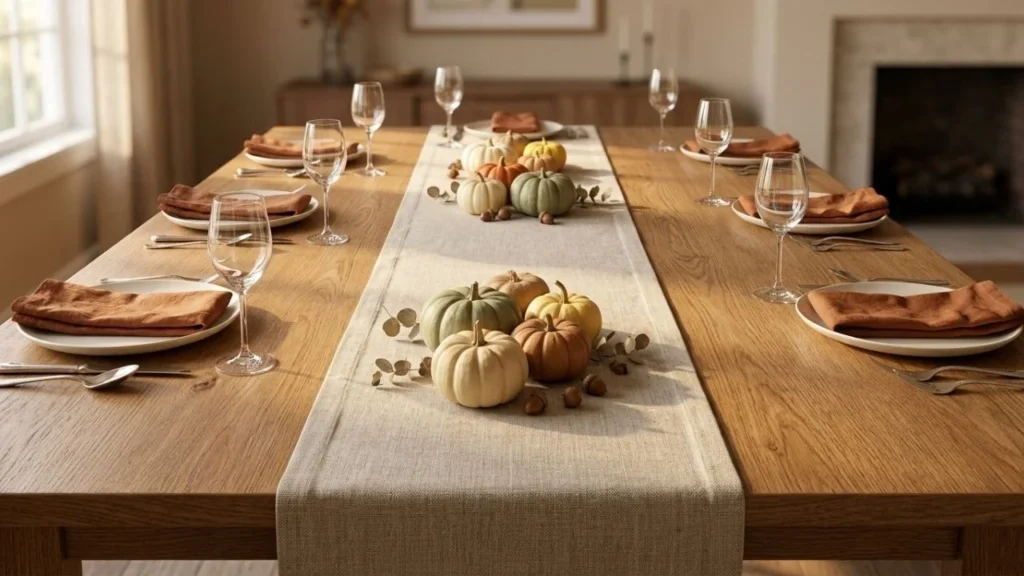
The best Thanksgiving tablescape ideas make the meal feel special without crowding the food or blocking conversation. Decide where the serving dishes will go first. Then add a low centerpiece, simple place settings, repeated fall colors, soft linens, and warm candlelight. For a small table, choose three strong details instead of covering every open inch.
Affiliate disclosure: This post may contain affiliate links. Family Haven Studio may earn a small commission from qualifying purchases at no extra cost to you.
You spend an hour arranging pumpkins, candles, flowers, napkins, glasses, and greenery.
The table looks lovely.
Then someone arrives with the mashed potatoes, and there is nowhere to put them.
Now the pumpkins are being moved, the candles are squeezed beside the water glasses, and someone is holding the gravy boat because the centerpiece has taken over dinner.
A Thanksgiving table should make the meal feel warm and memorable. It should also leave room for plates, serving bowls, elbows, and the people gathered around it.
These Thanksgiving tablescape ideas will help you create both.
A little planning can save you from rearranging the whole table five minutes before dinner.
Start with one question: Will the food stay on the dining table?
If you are serving dinner family-style, place the empty serving dishes on the table before adding decorations.
Include space for:
The open space left between those dishes is your decorating area.
Set your largest platters and bowls on the table.
Add the plates and glasses next.
Now decorate the space that remains.
This simple test prevents your centerpiece from becoming something you must remove as soon as dinner begins.
A buffet, kitchen island, or sideboard gives you more freedom in the center of the dining table.
You can use:
Keep the buffet easy to follow. Plates should come first, followed by the food, flatware, napkins, and drinks.
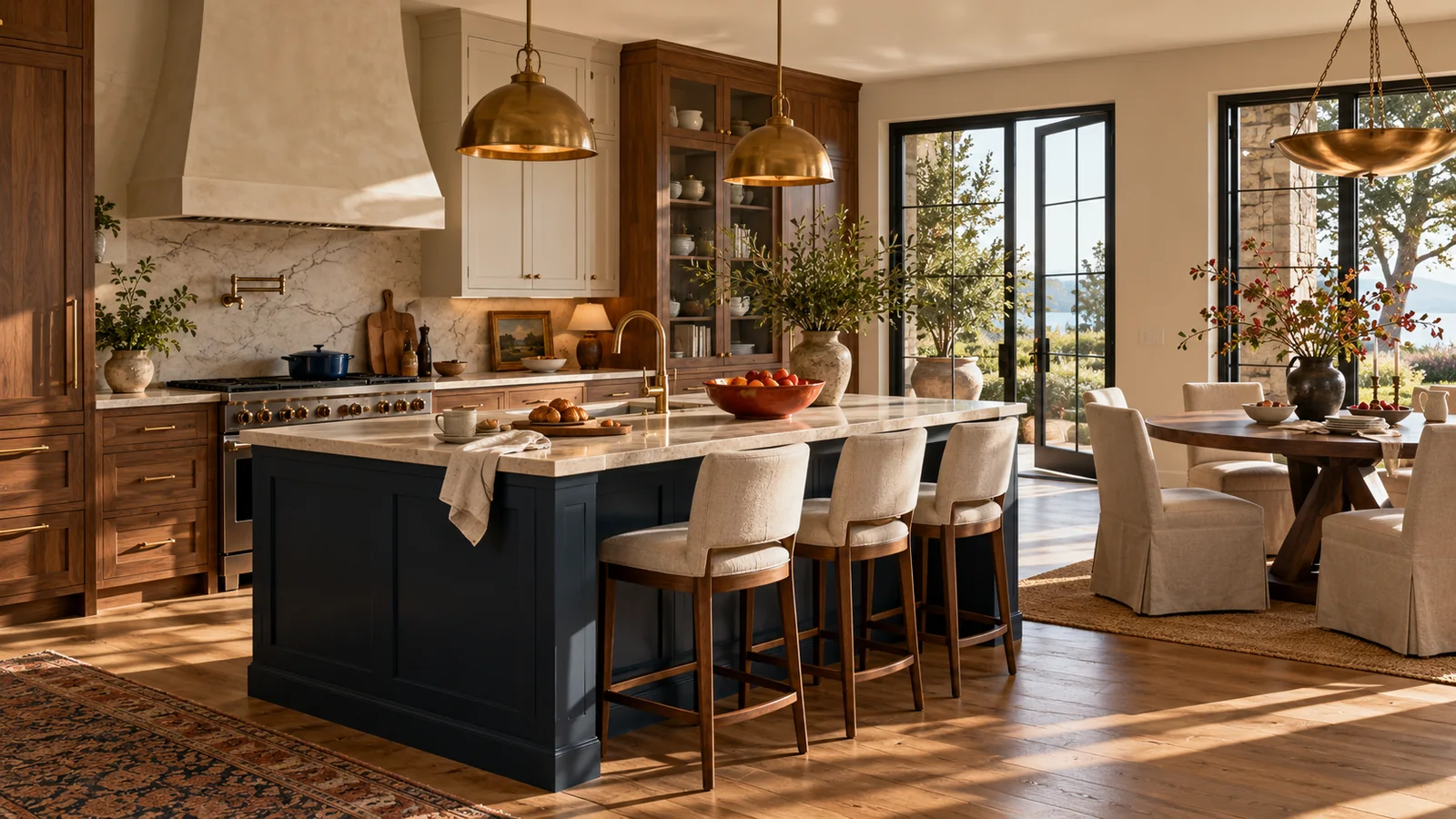
If your kitchen will hold part of the meal, these fall kitchen ideas can help you add seasonal warmth without crowding the worktops.
Each person needs enough room to use a fork, reach a glass, and sit without bumping the next guest.
Do not judge the table only while it is empty.
Pull out every chair and sit at a few places. Check the corner seats, which often have less room than they appear to have.
Ask:
Move extra decor to a console, windowsill, mantel, or entryway instead of forcing it onto the table. You can carry the same mood through the house with a few fall entryway details.
Sit in one chair and look across the table.
If a flower arrangement, branch, or pumpkin blocks the other person’s face, lower it or move it.
A centerpiece should support conversation, not make guests lean sideways all evening.
The formal table guide from the Emily Post Institute also recommends balanced spacing around the centerpiece and place settings.
You do not need new dinnerware, a giant dining room, or a box of matching fall decorations.
Start with what you own. Add a few seasonal details that change the mood without making the table harder to use.
A runner creates a clear path for the centerpiece while allowing the wood or finish of the table to remain visible.
Choose cream, oatmeal, olive, rust, or muted plaid. Let the runner fall a few inches over each end, but keep it away from guests’ laps.
A neutral linen table runner can work through Thanksgiving, Christmas, and everyday dinners.
Avoid a runner so wide that glasses become unstable along its raised edges.
A tablecloth can hide a worn table, soften a folding table, or add color to a neutral dining room.
Try:
If the cloth has a strong pattern, keep the plates, napkins, and centerpiece quieter.
The tablecloth, napkins, plates, and placemats do not all need competing patterns.
Choose one noticeable pattern. Let everything else support it.
White plates create a calm base for pumpkins, foliage, patterned linen, and colored glasses.
Place them on woven round placemats to add texture without buying seasonal plates.
Try this simple place setting:
The woven texture makes plain dishes feel warmer while keeping the place setting relaxed and useful.
One large pumpkin can swallow the center of a small table.
A loose row of mini pumpkins is easier to arrange around serving dishes.
Mix several natural shades:
A set of mini harvest pumpkins can be reused on a mantel or console after dinner.
Do not build one solid line of pumpkins. Leave open sections for hot dishes, serving spoons, and water.
A tall bouquet may look beautiful from the doorway, but it can block everyone at the table.
Divide the flowers between three or five small vases.
Use one or two stems in each:
Repeat the same flower or color in each vase. This makes separate containers feel like one planned centerpiece.
Seasonal fruit adds shape and color without looking like store-bought holiday decor.
Place a few pieces in a shallow bowl or mix them with short greenery along the runner.
Pears work well with sage and cream. Red apples look warm beside brass. Pomegranates add a deeper burgundy accent.
Keep whole fruit clean and uncut. It can return to the kitchen after dinner instead of becoming waste.
Dried flowers bring texture and soft fall color to a Thanksgiving tablescape.
Choose a few stems instead of a large, brittle arrangement.
Good colors include:
Keep dried flowers, leaves, fabric, and paper well away from lit candles.
The U.S. Fire Administration recommends keeping candles at least 12 inches from anything that can burn and placing them in stable holders. Its candle safety advice is worth checking before hosting.
A small bundle of wheat or dried grass can create a simple harvest centerpiece.
Trim it short and place it in:
Cut the stems until seated guests can see across the table without moving.
Amber glass brings warmth without filling the table with bright pumpkin orange.
Use amber water glasses, small bottles, candleholders, or bud vases.
Pair amber with:
Two or three amber elements are enough. Repeating the color around the table will make it feel planned.
Matching glassware is not required.
Vintage-looking glasses can add charm beside simple white plates and solid napkins. Use one shared detail to connect the mix, such as color, shape, or height.
Try clear glasses at every other seat and amber glasses in between. Another option is to use one glass style for water and a different matching set for wine.
Avoid giving one guest a glass that is much smaller or harder to use than everyone else’s.
You do not need gold flatware, gold chargers, gold candlesticks, and gold-rimmed glasses at the same table.
One small brass detail can provide enough warmth.
Try:
Brass works especially well with cream, rust, forest green, navy, brown, and black.
Rust napkins can turn everyday dishes into a seasonal place setting.
Fold them loosely, knot them, or place them beneath the fork.
Repeat rust once in the centerpiece with:
If the napkins are bold, use cream pumpkins or green foliage instead of adding more bright orange.
Olive green feels seasonal but can remain on the table after Thanksgiving.
Use it through napkins, taper candles, foliage, or small dishes.
Add one deeper accent such as chocolate brown, burgundy, brass, or black.
Black and ivory create a clean, modern base.
Start with white or cream plates. Add black napkins, slender candleholders, or dark place cards.
Bring the harvest feeling back with:
Too much black can make the table feel heavy. Use it to create contrast, not cover every surface.
Taper candles create height without using as much table space as a wide floral arrangement.
Space them between low pumpkins, fruit, or bud vases.
Vary the candleholder heights slightly, but keep the overall arrangement balanced.
A narrow candle may still block someone’s view when placed directly in front of them. Shift the holders between sight lines.
Flameless candles are useful when children, pets, loose sleeves, paper place cards, or dried foliage will be near the table.
Use them:
A set of flameless taper candles gives you the glow without an exposed flame.
Choose warm-white candles with a gentle flicker. Avoid cold blue light, which can make an otherwise warm table feel harsh.
Complicated napkin folding is optional.
Fold a cloth napkin into a long strip and tie one loose knot in the middle. Place it across the plate or above it.
A tight knot can leave the napkin wrinkled and difficult to use. The guest should be able to open it with one easy pull.
Slide one small seasonal detail beneath the napkin knot or ring.
Try:
Do not use anything wet, dusty, sharp, strongly scented, or likely to shed onto the plate.
Name cards can reduce confusion and make each place feel cared for.
They are especially helpful when:
Set the card above the plate, on the napkin, or in a small holder. Do not hide it beneath glassware.
Write each guest’s name on a paper tag and tie it to a mini pumpkin.
Place the pumpkin above the plate or beside the water glass.
Do not place an unwashed pumpkin directly on a plate that will hold food. Use a small card, saucer, or the table surface.
Chargers can add color and frame a plain plate, but they also make every place setting wider.
Before using them, ask:
If chargers must be collected as soon as guests sit down, they may create more work than value.
A woven placemat can often provide the same visual frame while protecting the table.
A round table works best with one compact centerpiece.
Try:
Arrange the pieces so the table still feels balanced from every seat.
Do not force a long rectangular runner across a small round table. A round placemat, shallow bowl, or circular grouping will suit the shape better.
A small table does not need tiny decorations everywhere.
Choose only three noticeable details.
For example:
Another simple combination could be woven placemats, a bowl of pears, and flameless candles.
When every object is decorative, nothing stands out. Open space helps your best details look more intentional.
Some of the most practical Thanksgiving tablescape ideas begin by moving the serving bowls elsewhere.
Set food on a sideboard, island, or sturdy folding table. Then keep water, salt, pepper, butter, and a few shared items on the dining table.
Arrange the buffet in this order:
Place drinks on a separate surface when possible. This prevents a traffic jam around the food.
| Your situation | Best setup | Centerpiece | What to avoid |
|---|---|---|---|
| Small table | Three focal points | One compact grouping | Chargers and wide garlands |
| Round table | Balanced circle | Low bowl or short vase | Long rectangular decor |
| Family-style meal | Open serving zones | Small repeated clusters | Unbroken centerpieces |
| Buffet meal | More decorative freedom | Runner, candles, or bud vases | Blocking the buffet path |
| Children or pets | Stable, low decor | Flameless candles | Loose fabric and open flames |
| Budget setup | Use dishes you own | Fruit, leaves, or branches | Buying a full matching collection |
| Folding table | Full tablecloth | Lightweight low decor | Heavy unstable centerpieces |
A practical place setting can be simple.
Start with:
Add a salad fork, bread plate, wine glass, or dessert utensil only when the menu calls for it.
Better Homes & Gardens offers a helpful table-setting guide for hosts who want to build a more formal arrangement.
You do not need three forks because Thanksgiving feels fancy.
If an item has no job during the meal, leave it in the drawer.
Neat spacing, clean linens, balanced color, and thoughtful details can make a simple table feel polished.
Keep most decorations below your guests’ sight lines.
Low centerpiece options include:
You can still add height with narrow tapers or a few thin stems. Place them between sight lines instead of directly in front of a seat.
Sit down after the whole table is finished.
Move anything that:
This last check takes two minutes and can save the meal from constant rearranging.
A simple table needs repetition, not more objects.
Choose:
Martha Stewart’s collection of Thanksgiving centerpieces also shows how pumpkins, candle groupings, brown tones, and plaid runners can create distinct styles without changing the whole room.
Before buying anything, shop your home.
Look for:
Then add clean seasonal items such as pears, apples, mini pumpkins, clipped branches, or fallen leaves.
If you buy something, choose a piece you can use after Thanksgiving.
Good repeat-use options include:
Avoid buying a complete collection when two useful additions can update what you already own.
Prepare as much as possible before the cooking becomes busy.
Take a quick photo after setting the table.
If someone moves a place setting or you need to clear the table temporarily, the photo will help you rebuild it quickly.
You can arrange linens, plates, flatware, napkins, and place cards one or two days ahead if the room stays clean and undisturbed. Add glasses, fresh foliage, and candles closer to dinner.
Yes. Repeat one shared feature, such as color, shape, material, or pattern. The repeated detail will make the mix feel planned.
No. Use chargers only when the table has enough room and they improve the setting. Placemats, folded napkins, or the tablecloth can frame each plate instead.
Try pears, apples, pomegranates, mini pumpkins, wheat, clipped greenery, dried flowers, or a shallow bowl filled with seasonal produce.
Use a thin runner, tiny bud vases, and small grouped decorations. Move the serving dishes to a buffet and avoid wide chargers or bulky greenery.
Limit the palette to two or three colors, repeat the same materials, keep the spacing tidy, and use warm light. Elegance comes from restraint and care, not from adding more objects.
Children can make name cards, tie napkins, place unbreakable decorations, or write short gratitude notes. Keep them away from open flames, glass, and sharp floral tools.
Keep only the items guests will use, such as food, water, salt, pepper, butter, and safe low decorations. Remove anything that crowds the meal.
The best Thanksgiving tablescape ideas do not ask your guests to choose between a beautiful table and a comfortable meal.
They give both.
Start with the food and the people. Leave room for each chair, plate, serving bowl, and conversation. Then use color, texture, greenery, fruit, pumpkins, and warm light to make the open spaces feel special.
When the mashed potatoes arrive, they should have somewhere to land.
Choose your three main table details today, then set out your empty serving dishes before decorating anything else.
Comments are closed.
Explore original printables, find another story or save your next creative project.



[…] you already have neutral pieces from fall, reuse the same base from these Thanksgiving tablescape ideas and change the greenery, ribbon, and smaller details for […]