
POPULAR AT FAMILY HAVEN
POPULAR AT FAMILY HAVEN
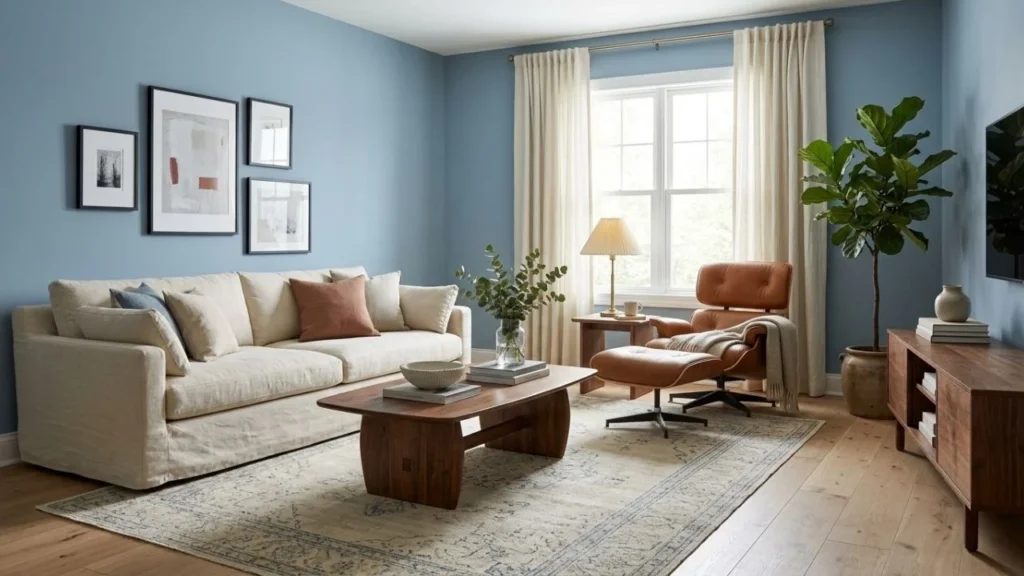
Blue living room ideas can feel airy or snug depending on the shade, with warm wood, soft textures and thoughtful accents helping the color feel at home.
A blue living room can be soft and calm at 10 a.m., then look moody enough for a movie night by 8 p.m. That range is exactly why blue is so easy to love and so easy to get slightly wrong.
The strongest blue living room ideas solve that problem with balance, not more matching color.
The problem usually is not the blue. It is what gets placed beside it.
Cool gray, icy white, and too much matching blue can leave the room feeling chilly, while warm wood, soft ivory, brown leather, rust, brass, and textured fabric give the color somewhere warmer to sit.
Blue also has unusual momentum in 2026. Dulux’s 2026 blue color family includes three blue directions, while a current blue room guide shows blue working through walls, furniture, rugs, trim, and layered color.
So the question is not, “Can blue work in my living room?” It can.
The better question is: what kind of room do you want blue to make?
Start by giving blue something warm to lean against.
Wood grain, ivory fabric, cognac brown, rust, aged brass, woven fibers, and warm lamp light can soften even a dark navy room.
If the room faces north or gets limited daylight, test your paint at different times of day before buying enough for every wall. Benjamin Moore’s living room paint advice also recommends judging color in the room’s actual light.
A simple starting guide helps:
| If your main blue is | Pair it with | Keep lighter |
|---|---|---|
| Powder blue | Walnut, cream, rust | Sofa or rug |
| Navy | Ivory, cognac, brass | Curtains or large rug |
| Denim blue | Oak, camel, warm white | Ceiling or trim |
| Blue-gray | Chocolate, olive, cream | Upholstery |
| Cobalt | Walnut, blush, ivory | Walls |
| Teal-blue | Rattan, tan, warm beige | Large textiles |
These blue living room ideas get easier once you choose the room’s main blue surface first.
You do not need every color in the table. Pick one warm partner, repeat it two or three times, then let the room breathe.
Powder blue is a good place to start if you like color but still want the room to feel light. Use it across the walls, then bring in walnut through the coffee table, media unit, or side tables so the room has a warmer center.
Keep the sofa cream, oatmeal, camel, or light gray. A faded rug with a little blue or brown can connect the floor to the walls without turning the room into a blue box.
A low walnut coffee table is a natural fit for this setup. The linked VAFON table is 47.24 inches wide, 23.62 inches deep, and 12.6 inches high, so check that low profile against your sofa height before ordering.
Try this with:
If the room begins looking too sweet, add one darker line through black frames or a dark lamp base.
Navy walls can make a living room feel tucked away from the rest of the house, which is lovely until every large object in the room is dark too. Use ivory across the sofa, curtains, or a generous throw so the furniture still has a clear outline after sunset.
Add a medium or dark wood table and one warm lamp. If you want another color, burgundy, rust, or olive can sit beside navy without making the palette loud.
An ivory textured throw blanket is an easy layer if your sofa is already blue, charcoal, or brown. The linked BATTILO HOME throw measures 60 by 80 inches and is made from acrylic and polyester.
Drape it over one arm instead of folding it into a perfect little rectangle.
Your living room is allowed to look as if someone actually lives there.
If you already own a blue sofa, you may not need blue paint at all. Put the sofa against warm beige, soft cream, or light mushroom walls and let it become the strongest color in the room.
Then use wood furniture and a rug that mixes beige with a little blue. That repeats the sofa color near the floor without building a matching set around it.
A blue beige area rug works well for this job. The linked DMOYEST version is a 9-by-12 low-pile polyester rug, so it suits a larger seating group better than a tiny rug sitting alone under the coffee table.
If your sofa is royal or cobalt blue, keep the other blues softer.
One sofa can sing lead. The curtains do not need to grab a microphone.
If you want a smaller living room to feel cocooning rather than airy, carry one dusty or medium blue over the walls, trim, and built-ins. Keeping those surfaces close in color reduces visual breaks and lets furniture, books, and art stand out more clearly.
Use a warm neutral sofa and a rug with texture rather than another solid blue block. A little dark wood can keep the room from feeling too pastel.
A Wooster paint roller kit gives you the basic wall-and-ceiling tools for a DIY paint job. Before buying gallons of paint, sample the shade on more than one wall and look at it in morning, afternoon, and lamp light.
Color drenching is a bigger commitment than one feature wall.
Test first. Your future self would like a vote.
Built-ins are a good place for deeper blue when you want color without wrapping the whole room in it. Paint shelves, cabinet fronts, and the wall inside the bookcase in navy or blue-gray, then keep the surrounding walls cream or pale blue.
Books, pottery, frames, and small objects will break up the darker surface naturally. Use fewer items per shelf so the blue still shows between them.
A brass rechargeable picture light can sit above artwork or a shelf arrangement without hardwiring. The linked Tassuowell light is about 15.7 inches wide, rechargeable, dimmable, and comes with a remote.
Warm brass against navy is enough of a statement.
You do not need every shelf accessorized like it is waiting for inspection.
Blue curtains work best when you treat them as a large color surface. Put navy velvet panels against cream, putty, pale taupe, or warm white walls, then keep the main sofa lighter.
Hang the rod high enough that the curtains feel connected to the ceiling rather than squeezed around the window. Let the panels reach close to the floor for a cleaner finish.
The navy velvet curtain panels from RYB HOME come as two 52-by-84-inch panels in the linked version. Measure both window width and desired drop before ordering.
If the room already has navy walls and a navy sofa, use lighter curtains instead.
At some point blue needs a day off.
A blue rug is one of the easiest ways to change the room without painting. It works especially well under a cream, tan, soft brown, or pale gray sofa because the floor gets color while the largest upholstered piece stays quiet.
Choose a rug with beige, ivory, or brown mixed into the blue if you want the room to feel warmer. Repeat one of those non-blue shades in the coffee table or curtains.
The large blue beige rug from DMOYEST is a 9-by-12 option with an abstract blue-and-beige pattern. That scale can work under a full seating group where the front legs of the sofa and chairs sit on the rug.
A rug should connect the furniture.
It should not look stranded in the middle holding the coffee table hostage.
Rust and navy sit beautifully together because one feels cool and the other brings earthy heat. Use navy on the sofa or walls, then add rust through two cushions, a ceramic pot, or one piece of art.
Keep the rest of the room in cream, brown, walnut, or soft black. That gives the two stronger colors enough space.
Rust velvet pillow covers are a simple seasonal move if you do not want to replace furniture. The linked MIULEE set includes two 18-inch polyester velvet covers; inserts are not included.
This pairing works especially well for a September update because rust adds warmth without making the living room look decorated for one holiday.
Keep the pumpkins out of it unless you actually want pumpkins.
Blue and olive can feel calm without becoming bland. Use dusty blue or navy as the main color, then add olive through pillows, one chair, or a small section of the rug.
Wood and cream help the two colors sit naturally together. Dark walnut gives the palette more weight, while lighter oak keeps it easygoing.
Olive velvet pillow covers from JUSPURBET are an easy way to test the combination. The linked covers are 18-inch squares in olive green velvet.
If the sofa is navy, place the olive cushions beside one cream cushion rather than stacking green on blue from end to end.
Your sofa does not need a color chart for a backrest.
Cognac brown gives blue a warmer, more grounded look and works especially well with navy, denim, and blue-gray. If a leather chair is outside the budget, use smaller brown touches first.
Try cognac on pillows, an ottoman, a frame, or a tray. Then repeat brown through wood so the color does not appear once and disappear.
Cognac faux leather covers from HOMFINER come as two 18-inch pillow covers. They can bring a leather note to a blue fabric sofa without adding another large chair.
Keep the rug cream, faded blue, or warm beige.
Blue and brown already have enough depth together. They do not need six extra colors trying to help.
Blush beside navy can look grown-up when the pink stays muted and the room includes brown, walnut, ivory, or brass. Avoid surrounding a navy sofa with sugary pink on every side.
Use one or two blush cushions, then repeat the color once in art or flowers. Let cream and wood do the rest.
Blush chenille pillow covers from MIULEE come as two 18-inch covers with inserts sold separately. The textured fabric keeps the pink from looking too slick beside dark blue.
This palette is a good choice if navy feels slightly stern in your room.
A little blush can loosen the tie without sending the whole living room to a tea party.
Mustard gives blue an old-library-meets-modern-home feeling when you use it sparingly. Drape one throw over a navy or denim sofa, then repeat the yellow once in artwork or a small object.
Walnut and cream help the combination feel settled. Avoid adding another loud color unless the room already has a clear multi-color plan.
A mustard chenille throw blanket from RECYCO measures 50 by 60 inches and has fringe at the ends. That is enough fabric to add color to one sofa arm or reading chair without covering the whole seat.
If the room has strong blue walls, use mustard on one or two small pieces.
Mustard is excellent company.
It does not need to move in.
Dark blue walls can make brass look especially warm because the metal has a clear backdrop. Use a floor lamp near the sofa or reading chair, then keep other metal finishes quiet.
A beige or linen shade softens the contrast and keeps the lamp useful for evening light. Add a wood table nearby and the room starts feeling much warmer without changing the paint.
A brass swing arm lamp gives you both the warm metal and adjustable task light. The linked lianheng floor lamp has a linen shade and a cantilever arm that can be adjusted.
Use the lamp where you actually sit.
A beautiful light six feet from the chair is just a decorative pole with good intentions.
Rattan works with almost every blue because it adds warm tan color and a visible woven surface at the same time. It is especially useful when the room has blue walls, a blue sofa, or a large blue rug and needs something lighter between them.
Use one rattan side table, basket, or chair instead of spreading woven furniture across the whole room. Keep the main wood finish nearby in a similar warm family.
A rattan glass side table from Bamworld uses a bamboo frame, corrugated glass top, and lower woven shelf. Its narrow footprint makes it useful beside a sofa or chair.
Pair it with cream linen and one plant.
That is enough coastal energy without placing a decorative anchor on anything.
If plain navy paint feels too smooth, a grasscloth-look wall adds fine texture and slight color movement. Use it behind the sofa, inside built-ins, or on one wall that gets enough light for the surface to show.
Keep large upholstered pieces plain so the wall remains easy to read. Walnut, camel, and ivory work especially well nearby.
A navy faux grasscloth wallpaper from NuWallpaper is peel-and-stick, repositionable during installation, and comes on a 20.5-inch by 18-foot roll that covers about 30.75 square feet.
Measure the wall before ordering and allow for trimming and pattern alignment.
Textured wallpaper is not the place to discover halfway through that “close enough” was, in fact, not close enough.
A blue ceiling can give the room a finished color story without making all four walls dark. Try a dusty blue ceiling over warm white walls, or take a medium blue overhead while the walls stay pale blue-gray.
Repeat the ceiling color once at floor level through a rug or cushion. That keeps the blue from feeling as if it lives only above everyone’s head.
A Wooster wall roller kit is useful for a DIY ceiling project because it includes a roller, tray, and painting tools for walls and ceilings. Use the correct extension setup for your ceiling height rather than balancing on furniture.
Protect the floor first.
Blue speckles on the sofa are not a design feature just because they match.
A television can sit comfortably in a blue living room when the wall behind it is darker and the media furniture adds warmth. Use navy or ink blue on the wall, then choose a walnut console beneath the screen.
Keep cables controlled and leave part of the console top empty. One ceramic piece, one short stack of books, or one small lamp is enough beside a large black screen.
A walnut fluted TV stand from LCRBOL is 54.3 inches wide and is listed for televisions up to 65 inches. It also includes cabinets, adjustable shelves, and cable openings.
Check your television’s actual width before ordering.
Screen size is measured diagonally. Furniture, annoyingly, continues to exist horizontally.
Small rooms do not need to avoid blue. Pale or dusty blue walls can give the room color while a larger rug helps the seating read as one zone instead of a cluster of small pieces floating around.
Use fewer furniture pieces with clear jobs. One sofa, one or two chairs, one coffee table, and one large rug usually feel calmer than a crowd of tiny tables and stools.
The blue beige living rug from DMOYEST comes in a 9-by-12 size that can suit a larger seating footprint. Measure your room and furniture layout before assuming that size is right for you.
If 9 by 12 overwhelms the floor plan, step down.
The goal is generous, not wall-to-wall accidental carpet.
If your living room is mostly neutral, use blue to create one destination. A navy chair, brass lamp, small wood table, and soft rug can turn an unused corner into a reading spot without changing the whole room.
Place the chair close enough to a table for a drink and close enough to a lamp to read comfortably. That sounds obvious until you meet the beautiful chair sitting alone in a corner with nowhere to put a cup.
A navy chenille accent chair from VINGLI measures 29.9 inches wide, 30.7 inches deep, and 33 inches high in the linked version. That makes it easier to assess for an apartment or smaller corner before ordering.
Add one cream throw and stop there.
The corner already has a job.
Blue does not automatically have to mean striped cushions, rope knots, and little wooden signs explaining that the beach exists.
For a quieter coastal room, use washed blue or navy with rattan, warm brown, cream linen, light wood, and one or two plants. Keep obvious seaside motifs out unless you genuinely love them.
A two tier rattan table from Bamworld adds natural woven texture beside a blue sofa without adding another strong color.
Choose art that references landscape, water, or sky through color rather than literal shells everywhere.
The room can know where the ocean is without carrying identification.
A tonal blue living room works better when every blue does not have the same finish. Put dusty blue on the walls, navy on the sofa, blue-gray on one pillow, and perhaps a faded blue in the rug.
Then interrupt the color with wood, cream, or brass. That separation helps each blue read as a layer instead of one large matching block.
Blue gray velvet covers from MIULEE come as two 18-inch pillow covers. Their softer blue-gray tone can sit beside a deeper navy sofa without needing an exact color match.
Current designer commentary also favors tonal variation over flat single-color rooms, with changes in shade and texture helping the room feel less rigid.
Matching every blue exactly sounds tidy.
In real rooms, it can look like the sofa ordered uniforms.
If you want the room to feel richer and less expected, put burnt orange beside navy. The warmth of orange gives dark blue more energy, while cream and walnut can stop the pair from becoming too loud.
Use orange on small surfaces first: two cushions, one vase, or one art detail. If the room already has rust or terracotta in a rug, you may not need another orange item at all.
Burnt orange pillow covers from MIULEE come as two 18-inch chenille covers with inserts sold separately.
This color pairing also fits current 2026 color coverage that places dusty and gray-infused blues beside warmer red and orange families.
Give the orange one clear role.
It does not need to start recruiting.
The answer depends on the blue and the feeling you want.
For a calmer room, pair blue with cream, oatmeal, warm beige, walnut, or soft brown. For a richer room, try burgundy, rust, cognac, olive, mustard, blush, or burnt orange.
Blue and brown are especially useful when you want the room to feel cozy because brown brings natural warmth through wood, leather, rattan, or textiles. Better Homes & Gardens also shows blue working with chocolate, green, gray, white, pink, orange, and other warmer shades across different schemes.
Do not choose an accent color because a chart says it works.
Look around the room first. Your floor, fireplace, sofa, and existing wood already have opinions.
You can, but decide what you want the room to feel like before choosing the depth of blue.
Pale blue across four walls can feel airy, while navy or ink blue can create a more enclosed, snug feeling. Farrow & Ball’s dark blue living rooms show the deeper end of the palette used for a more enclosed, restful room.
If you are unsure, sample a large patch on at least two walls. Benjamin Moore also recommends judging living-room color in the room’s actual light because exposure changes how paint reads through the day.
One small paint chip under store lighting has never met your 6:30 p.m. living room.
Let them meet before you buy five gallons.
Treat the sofa as a major color surface and work outward from it.
Start with the rug. A cream, beige, faded blue, warm brown, or patterned rug can decide what the rest of the room needs.
Then choose wood or rattan for tables and add one warm color through cushions or art.
IKEA’s blue sofa styling guide also leans on cushions, throws, mixed pattern, and personal color combinations rather than surrounding the sofa with matching blue furniture.
If the sofa is bright cobalt, give it more quiet space. If it is a softened navy or blue-gray, you can layer another blue nearby without making the room feel crowded.
Before you add another blue item, remember that the easiest blue living room ideas usually give one shade a clear job and use warmer materials around it.
No. Navy can work across a whole room or on one wall, but lighter upholstery, warm wood, rugs, and layered lighting help furniture remain distinct.
Test the shade in your actual daylight before committing.
Cream, warm beige, oatmeal, soft white, rust, or even navy can work.
If both sofa and walls are dark blue, lighter curtains usually give the window more separation.
Cream, beige, faded blue, rust, brown, olive, and multi-color rugs can all work.
Choose the rug based on the room’s other fixed colors, especially flooring, wall color, and wood.
Yes. Wood, leather, rattan, and cocoa textiles bring warmth to cooler blue, and current Pinterest discovery shows strong search interest around navy-and-brown and light-blue-and-brown rooms.
The pairing works especially well with navy, denim, dusty blue, and blue-gray.
Try cream first, then add one warmer shade such as rust, olive, mustard, blush, cognac, or burnt orange.
You do not need every pillow to be a different accent color.
Yes. Keep the furniture count sensible, use good lighting, and consider one larger light surface such as the sofa, curtains, or rug.
Dark color is not the same thing as clutter.
Yes. Current 2026 living-room coverage includes pale powder blues as a fresh background, and Dulux’s 2026 color family also includes a lighter blue alongside deeper indigo shades.
Use the shade because it suits your room, not simply because the calendar approves it.
The best blue living room ideas do not depend on finding one perfect shade and repeating it everywhere. They work because the blue has a clear job, then wood, fabric, light, and a warmer color keep the room comfortable.
Start with the largest blue decision you are ready to make. That may be the walls, sofa, rug, curtains, or one reading chair.
Then add one warm partner and live with the room before adding more.
Blue has range. Give it space to show you which version belongs in your home.
Explore original printables, find another story or save your next creative project.