
Our Location
304 North Cardinal St.
Dorchester Center, MA 02124

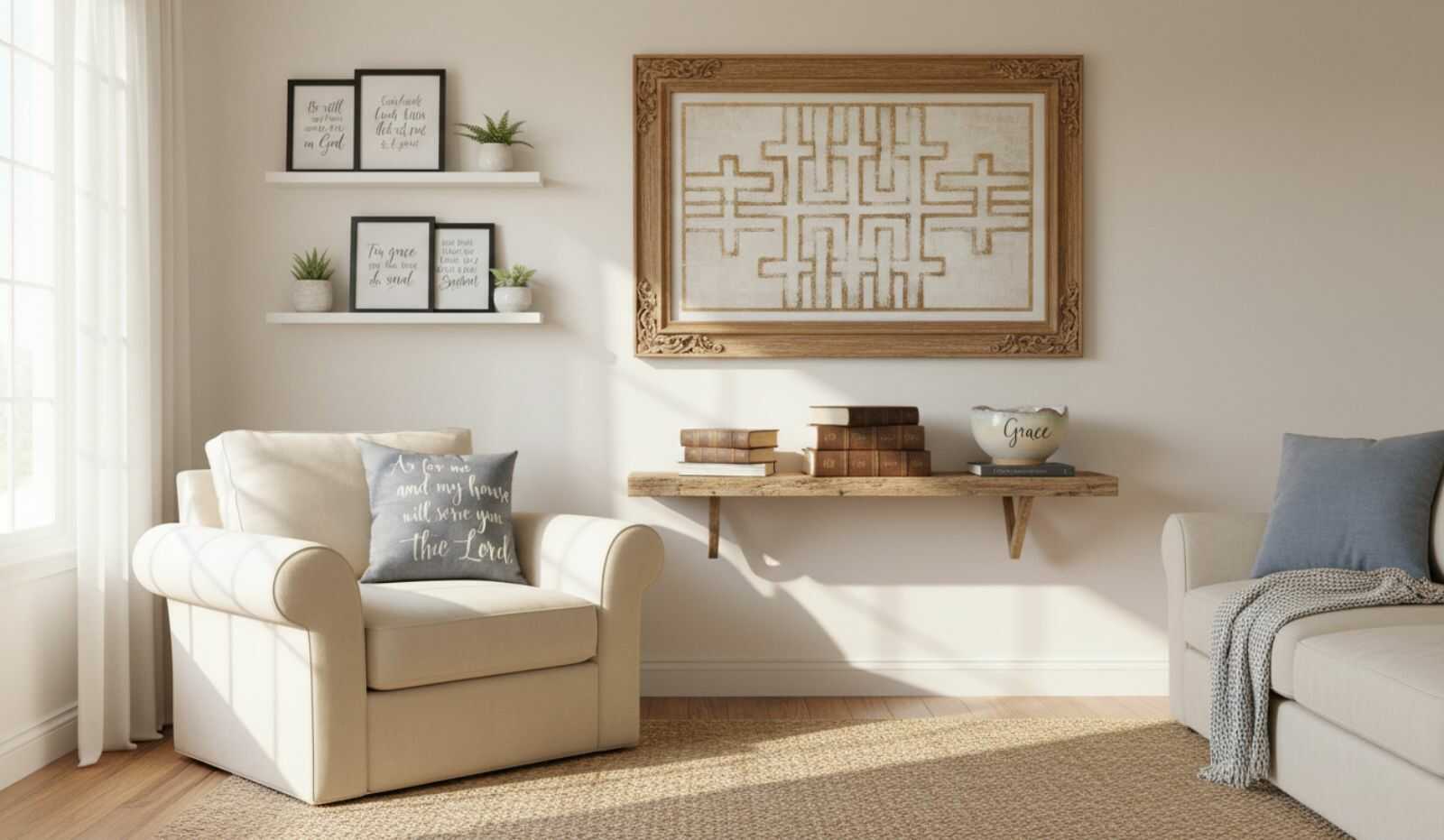
Wondering how to style Christian wall art without making your space feel cluttered? I’ve got you covered! Let’s make your faith shine beautifully.
Thinking about adding some Christian wall art to your place but worried it’ll end up looking like a cluttered mess? I get it. It’s totally possible to bring that faith-filled vibe into your home without making it feel overwhelming. We’re talking about making your space feel peaceful and personal, not like a gift shop. Let’s figure out how to style Christian wall art so it looks great and feels just right.
Okay, so you want to bring some faith into your home decor, which is awesome! But maybe you’re looking around your living room, or your bedroom, and you’re thinking, ‘How do I do this without making it look like a shrine exploded?’ It’s a totally valid concern. We all want our homes to feel like a peaceful sanctuary, a place that reflects who we are and what we believe, but nobody wants to feel like they’re living in a museum or, worse, a cluttered mess. The whole point here is to have beautiful faith on display, not just a bunch of stuff taking up space.
Think about it. When you walk into a room, what’s the vibe? Is it calm and inviting, or does it feel a bit chaotic? Our homes are supposed to be places where we can relax, recharge, and connect with what matters most. For many of us, that includes our faith. But sometimes, the idea of ‘Christian decor’ conjures up images of overwhelming displays or things that just don’t quite fit our personal style. We might picture walls covered in verses, shelves overflowing with figurines, or maybe just a general sense of ‘too much.’ And that’s where this whole idea of ‘beautiful faith, not clutter’ comes in. It’s about being intentional.
It’s not about having the most expensive pieces or filling every single inch of wall space. It’s about choosing items that genuinely speak to your heart and your walk with God. Maybe it’s a single, beautifully framed verse that you hold dear, or a piece of art that captures a moment from scripture in a way that feels fresh and modern. The goal is to create a space that feels authentic to you and your spiritual journey. This means being selective. Instead of grabbing every pretty thing you see, take a moment to ask yourself: Does this piece add to the peace and beauty of my home? Does it remind me of God’s presence in a meaningful way?
We’re aiming for a feeling of serenity, a quiet confidence that comes from knowing your home reflects your inner life. It’s like when you wear an outfit that just feels right – it boosts your confidence and makes you feel put-together. Your home decor can do the same thing for your spirit. When your space is thoughtfully arranged, with pieces that have meaning, it can actually make you feel more grounded and centered. It’s a visual reminder of the peace that faith can bring, even in the midst of a busy world.
So, what does this look like in practice? It means we’re going to be smart about our choices. We’re not just decorating; we’re curating. We’re thinking about how each item contributes to the overall atmosphere. This might mean opting for a more minimalist approach, where less is definitely more. It’s about finding that sweet spot where your faith is visible and celebrated, but your home still feels open, airy, and like a place you can truly live in. It’s about creating a visual language that speaks of hope, peace, and love, without shouting.
Here’s a little breakdown of what we’re trying to achieve:
It’s a balance, for sure. You want your home to feel lived-in and personal, but also organized and peaceful. This isn’t about perfection; it’s about creating a space that nourishes your soul. Think of it as creating a visual prayer, a way to bring the sacred into the everyday without making it feel overwhelming. We want our homes to be a reflection of the joy and peace that faith brings, not a source of stress because we feel like we have too much stuff. It’s about making your home a true haven, a place where beauty and belief go hand-in-hand, without the clutter.
Okay, so you’ve got the idea of bringing some faith into your home decor, which is awesome! But now comes the part where we actually pick out the art. This isn’t just about slapping any old picture on the wall; it’s about finding pieces that speak to you, that genuinely add to your space without making it feel like a cluttered shrine. Think of it as curating a personal gallery that reflects your journey of faith. We want beautiful faith, not a mess, right? So, let’s get into how to choose the perfect Christian wall art for your home.
This is a big one, and honestly, it’s where a lot of people stumble. You see a gorgeous piece of Christian wall art online or in a store, and you fall in love. Then you get it home, and it either looks like a postage stamp on your massive living room wall or it completely overwhelms your cozy reading nook. It’s all about balance. You need to match the size of the art to the size of the wall and the room it’s going in.
For a large, open wall, like over a sofa or a fireplace, you can go big. A substantial canvas, a triptych (that’s three panels, by the way), or even a collection of smaller pieces arranged together can work. But if you have a smaller space, like a hallway or a small bedroom, a huge piece will just make it feel cramped. In those cases, a single, smaller print or a thoughtfully arranged cluster of mini pieces is the way to go.
Here’s a little cheat sheet to help you visualize:
| Room Size | Wall Size | Recommended Art Size/Arrangement |
|---|---|---|
| Large Living Room | 8ft+ wide | Large single piece (30″x40″ or bigger), Triptych, Gallery Wall |
| Medium Bedroom | 5-7ft wide | Medium piece (20″x24″ to 24″x36″), Duo or Trio of smaller pieces |
| Small Hallway/Entry | 3-4ft wide | Small single piece (10″x12″ to 16″x20″), Small cluster of 2-3 mini prints |
| Tiny Nook/Corner | <3ft wide | Very small piece (5″x7″ to 8″x10″), Single framed quote |
Don’t forget to consider the height, too! Generally, art should be hung at eye level, which is typically around 57-60 inches from the floor to the center of the artwork. But this can vary depending on your ceiling height and furniture. If you’re hanging art above a sofa, leave about 6-10 inches of space between the bottom of the art and the top of the sofa. It’s all about creating a visual connection that feels natural, not disconnected.
This is where the personal part of Christian home decor ideas really comes in. What does your faith mean to you? What verses or stories uplift you? What artistic styles do you naturally gravitate towards? Your wall art should be a reflection of that.
Are you drawn to minimalist christian wall decor? Maybe a simple, elegant print of a single Bible verse like “Be still and know that I am God” (Psalm 46:10) in a clean font is perfect. Or perhaps you love the rustic charm of wooden signs with scripture. For some, it might be more traditional imagery – a depiction of the Nativity, a serene landscape with a subtle biblical quote, or even abstract art that evokes a spiritual feeling.
Think about your overall home style too. If you have a modern, minimalist christian living room, you’ll want art that complements that aesthetic. Clean lines, muted colors, and simple designs work best. If your home is more eclectic, you might enjoy a mix of styles – perhaps a beautifully framed print alongside a handcrafted wooden cross or a piece of abstract art inspired by a psalm. The goal is for the art to feel like a natural extension of your home, not an afterthought.
Don’t be afraid to explore different mediums. There’s canvas prints, framed paper prints, metal art, wood carvings, and even textile art. Each offers a different feel and can suit various decor styles. For example, a metal print of a dove might fit a modern home, while a watercolor painting of the Garden of Gethsemane could be perfect for a more traditional setting. The key is to choose something that genuinely speaks to your heart and aligns with your personal style.
This ties back to our main goal: beautiful faith, not clutter. It’s so tempting to fill every blank space with something, especially when there are so many beautiful christian home decor ideas out there. But honestly, a few well-chosen, high-quality pieces will always look better than a wall crammed with mediocre items.
When we talk about quality, we mean a few things. First, the actual artwork itself. Is the printing crisp? Are the colors vibrant (or intentionally muted, if that’s the style)? If it’s a painting, is the brushwork good? Second, the framing. A cheap, flimsy frame can really bring down even the most beautiful print. Look for solid wood frames, clean matting (if applicable), and secure hardware. If you’re buying a canvas, check that the canvas is stretched tightly and the image wraps around the sides nicely.
Think about it like this: you wouldn’t buy a designer handbag with a flimsy strap, right? The same principle applies to your home decor. Investing in a few quality pieces means they’ll not only look better but also last longer. They become cherished parts of your home, not just temporary decorations. This approach is central to minimalist christian living and faith based art display tips – letting each piece have its own space to shine and be appreciated.
When selecting Christian wall art, prioritize pieces that are meaningful to you and well-crafted. A single, impactful artwork can create a stronger spiritual atmosphere than multiple, less significant items. This mindful approach ensures your decor reflects genuine faith and personal style without overwhelming your living space.
So, before you hit ‘add to cart’ or grab that piece off the shelf, ask yourself: Does this truly speak to me? Is it well-made? Will it add beauty and meaning to my home without adding to the visual noise? If the answer is yes, you’re on the right track to creating a space that honors God and feels like you.
Okay, so you’ve picked out some awesome Christian wall art that really speaks to you. That’s half the battle, right? But now comes the tricky part: figuring out where to put it all without making your place look like a cluttered thrift store. It’s all about being smart with your space, and honestly, it’s not as hard as it sounds. Think of it like arranging furniture – a little planning goes a long way.
Every room has a natural “star” – a spot that your eyes are drawn to first. This could be above your sofa, over a fireplace, or even a blank wall that just begs for some attention. These are your prime real estate for hanging art. You want to place your most impactful pieces where they’ll get noticed. For example, if you have a beautiful cross or a meaningful scripture piece, putting it above your main seating area makes it a natural conversation starter and a constant reminder of your faith. It’s like giving your art a spotlight. Don’t try to fight the room’s natural flow; work with it. If a wall is naturally the first thing you see when you walk in, that’s a great place to hang something that sets the tone for your home. It’s about making a statement without shouting. You can even create a focal point if one doesn’t naturally exist. A well-placed piece of art can actually create that center of attention you’ve been looking for. Consider a larger piece or a small collection that draws the eye. This is especially helpful in rooms that feel a bit ‘blah’ or lack a clear design direction. Remember, the goal is to guide the eye, not overwhelm it. Think about what you want people to see first when they enter the room. Is it a comforting verse? A depiction of a biblical scene? Let that guide your choice of placement. For a more dedicated spiritual space, like a prayer room, establishing a clear focal point is even more important. A cross on a main wall can anchor the space, while a smaller niche can hold devotional items, keeping the main area clear and serene design a Christian prayer room.
Instead of scattering art randomly, think about creating little “zones” or groupings. This is especially useful if you have several smaller pieces or want to highlight different aspects of your faith. Imagine your living room: you might have a zone above the couch with a larger piece and a couple of smaller ones, and then another small zone on a side wall with a framed quote or a devotional image. This breaks up the wall space and gives each piece or group a chance to shine without competing with everything else. It’s like giving each artwork its own little stage. This method helps maintain visual order and prevents the “too much stuff” feeling. You can even use different types of art in different zones – maybe a more traditional piece in one area and a modern abstract faith-inspired print in another. This adds variety and keeps the eye moving around the room in an interesting way. It also allows you to tell different visual stories within the same space. Think about the function of each zone too. A zone near your reading chair might feature calming scripture, while a piece in the entryway could be more welcoming or celebratory. This thoughtful arrangement makes the art feel intentional, not just decorative.
This is where you think about how you move through your space. You don’t want to hang art so low that you’re constantly ducking under it, or so high that it feels disconnected from the furniture. Generally, the center of your artwork should be at eye level, which is typically around 57-60 inches from the floor. This rule applies whether you’re hanging one large piece or a gallery wall. When you’re arranging multiple pieces, imagine a straight line running through the center of the entire grouping. Also, consider the furniture it’s related to. Art hung above a sofa should generally be about two-thirds the width of the sofa, and there should be about 6-8 inches of space between the bottom of the art and the top of the sofa. This creates a balanced look. If you’re hanging art on a wall without furniture, make sure it’s placed at a comfortable viewing height. Think about sightlines from different parts of the room. Can you see the art from the doorway? From the kitchen? You want it to be visible and appreciated without feeling intrusive. It’s about creating a visual journey as you move through your home. Don’t forget about doorways and windows – you don’t want your art to feel crammed in or block natural light. The overall feeling should be one of harmony and ease. The key is to make the art feel like a natural extension of the room, not an afterthought.
Here’s a quick guide for placement relative to furniture:
| Furniture Type | Recommended Space Above | Recommended Width Relative to Furniture |
|---|---|---|
| Sofa | 6-8 inches | 2/3 width of sofa |
| Fireplace Mantel | 6-10 inches | Centered, or 2/3 width of mantel |
| Bed | 12-18 inches | Centered, or 2/3 width of headboard |
| Console Table | 6-8 inches | Centered, or 2/3 width of table |
When you’re planning where to hang your art, take a step back and look at the whole picture. Imagine yourself walking through the room. Does the art guide you? Does it feel balanced? Sometimes, the best spot isn’t the most obvious one. Trust your gut and don’t be afraid to try a few different spots before committing. It’s your space, after all!
Okay, so you’ve picked out some awesome Christian wall art that really speaks to you. That’s fantastic! But now comes the tricky part: how do you hang it all up without making your space feel like a cluttered antique shop? We’ve all seen those rooms where there’s just too much going on, right? It can actually take away from the beauty of the pieces themselves. The goal here is to create a peaceful, faith-filled atmosphere, not a visual free-for-all. So, let’s chat about a couple of simple but super effective ways to style your art so it shines without overwhelming your room.
This might sound a bit counterintuitive when you’ve got a bunch of art you love, but hear me out. Negative space, or ‘white space’ as it’s sometimes called, is basically the empty areas around your art. Think of it as the breathing room for your walls. When you give your art some space to breathe, each piece actually stands out more. It’s like when you’re talking to someone, and you don’t just blurt out every single thought you have all at once, right? You pause, you let things sink in. The same applies to your walls.
Imagine you have a beautiful framed Bible verse. If you cram it right next to another framed picture, and then another one right beside that, your eye doesn’t know where to land. It gets a bit confused. But if you hang that Bible verse with a good amount of wall showing on either side, and maybe a bit above and below, it becomes a clear statement. It draws your attention, and you can actually read and appreciate the words or the imagery.
This doesn’t mean you have to have huge blank walls everywhere. It’s more about being intentional with where you place things. Instead of filling every single inch, try to group your art in certain areas and leave other walls relatively bare. This contrast actually makes the art you do hang feel more significant and less like just decoration. It helps create a sense of calm and order, which is probably what you’re going for in a space that reflects your faith.
Think about it like this:
Using negative space is all about balance. It’s the quiet moments that make the music more beautiful, and it’s the empty walls that make your art more impactful. It’s a simple concept, but it makes a world of difference in how your room feels.
Now, let’s talk about grouping. Sometimes, one piece just isn’t enough, or you have a collection of smaller items you want to display together. This is where grouping comes in, and there’s a little trick that designers often use: the ‘Rule of Three’.
Why three? Well, our brains tend to find arrangements of three visually pleasing and balanced. It feels natural, not too symmetrical that it’s boring, and not too random that it’s chaotic. Think about it – most stories have a beginning, middle, and end. It’s a pattern we’re comfortable with.
When you’re grouping your Christian wall art, try to stick to threes. This could be:
Here’s a little table to show you what I mean:
| Arrangement Type | Example Description |
|---|---|
| Linear | Three small framed verses hung side-by-side at eye level. |
| Asymmetrical | One medium canvas, with a small print above and to the left, and another small print below and to the right. |
| Themed | Three abstract pieces with a subtle dove motif, hung in a small triangle formation. |
When you’re arranging your group of three, remember to keep the spacing consistent between the pieces. A good starting point is to have the space between each piece be roughly the same as the width of the frame of one of the pieces, or about 2-4 inches. Then, make sure the entire grouping has enough negative space around it, as we talked about before. Don’t push it right into a corner or cram it above a large piece of furniture.
This ‘Rule of Three’ isn’t a strict law, of course. Sometimes, two pieces can look great together, or a larger grouping might work if done carefully. But as a general guideline, especially when you’re trying to avoid that cluttered feeling, starting with groups of three is a really solid strategy. It helps create intentional displays that add beauty and meaning to your home without making it feel overwhelming. It’s about creating little moments of visual peace and reflection on your walls.
Alright, so we’ve talked about how to bring some faith-filled art into your home without making it look like a cluttered mess. It’s really about picking pieces you love and giving them the space they deserve to shine. Think about what speaks to you, maybe a favorite verse or a calming image, and build around that. You don’t need a ton of stuff to make a big impact. A few well-chosen pieces can totally transform a room and make it feel more like you, and more like a peaceful sanctuary. So don’t be afraid to hang that art up – just do it thoughtfully, and your space will feel so much better.
Think about the size of your wall and the art. A big, bold piece can be great on a large wall, but for smaller spaces, maybe go for a few smaller pieces or one medium-sized one. It’s all about making sure the art looks balanced and doesn’t fight for attention with everything else.
Instead of putting everything up at once, try rotating pieces. You can also group smaller items together in a thoughtful way, like using the ‘rule of three’ where you arrange three items together. This creates a nice display without looking cluttered.
Super important! Pick art that really speaks to your heart and your faith. Whether it’s a peaceful nature scene with a Bible verse or a more modern design, choose something that makes you feel good and reflects what’s important to you.
Negative space is just the empty areas around your art. It’s like the quiet pauses in music – they make the notes sound better! Giving your art some breathing room helps it stand out and makes your whole room feel more relaxed and intentional.
Totally! You can mix different styles, like a framed scripture with a small sculpture or a painting. The key is to keep a consistent theme or color scheme so it all feels like it belongs together, even if the pieces are different.
Look for the natural focal points in your room – like above a couch or fireplace. You can also create your own ‘zones’ by grouping art in a specific area. Just make sure it’s at a comfortable eye level and doesn’t block walkways.
No worries! You can find awesome stuff at thrift stores, make your own DIY art (like painting a favorite verse on a piece of wood), or even frame meaningful photos from your faith journey. It’s the meaning behind it that counts!
Not at all! While some coordination is good, you don’t want everything to look like it came from the same exact set. Mix textures, sizes, and even slightly different shades of colors to add depth and interest. The goal is a curated, personal feel.